
Contact-Type Voltage Stabilizer
±1% precision from a carbon-brush autotransformer.
- 10–30 kVA
- ±1% output
- Carbon brush
Rated capacity
10 / 15 / 30 kVA
Input
220 VAC ±20%, 1-phase 2-wire
Output
220 VAC ±1% (adjustable ±1–5%)
Rated range
10–30 kVA
- Rated capacity
- 10 / 15 / 30 kVA
- Input
- 220 VAC ±20%, 1-phase 2-wire
- Output
- 220 VAC ±1% (adjustable ±1–5%)
- Load current
- 45 A at 10 kVA
- Efficiency
- ≥ 95%
- Protection
- IP20, air-cooled
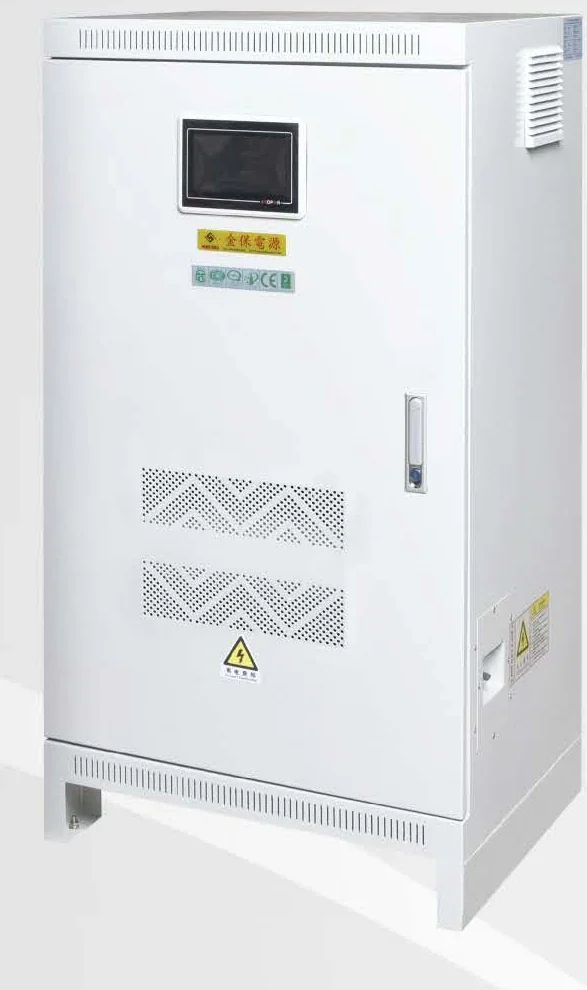
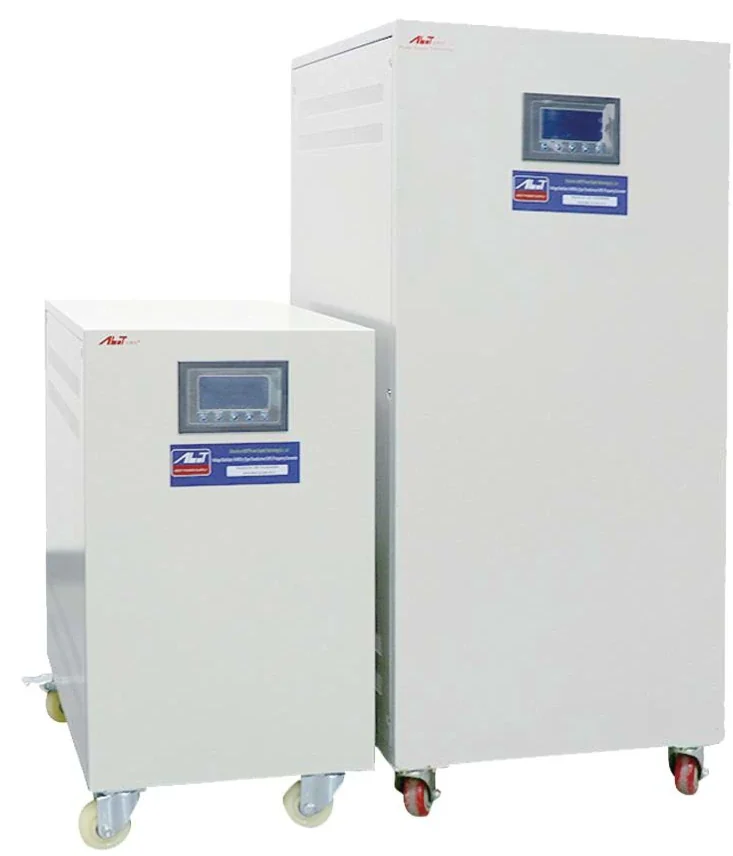
A contact-type (KPD) stabilizer from 10 to 30 kVA with ±1% output accuracy and a narrower input window than a servo unit. The trade is precision for simplicity: no servo motor and no brushes to replace, but less tolerance of deep sags.
What this platform is built to do.
The KPD series is a single-phase contact-type automatic voltage regulator. A servo motor moves a carbon brush across a disc-wound autotransformer, changing the turns ratio and correcting the output to within ±1% (adjustable to ±5%). It is a precision regulator for loads that need a tight voltage window but do not need a wide correction range.
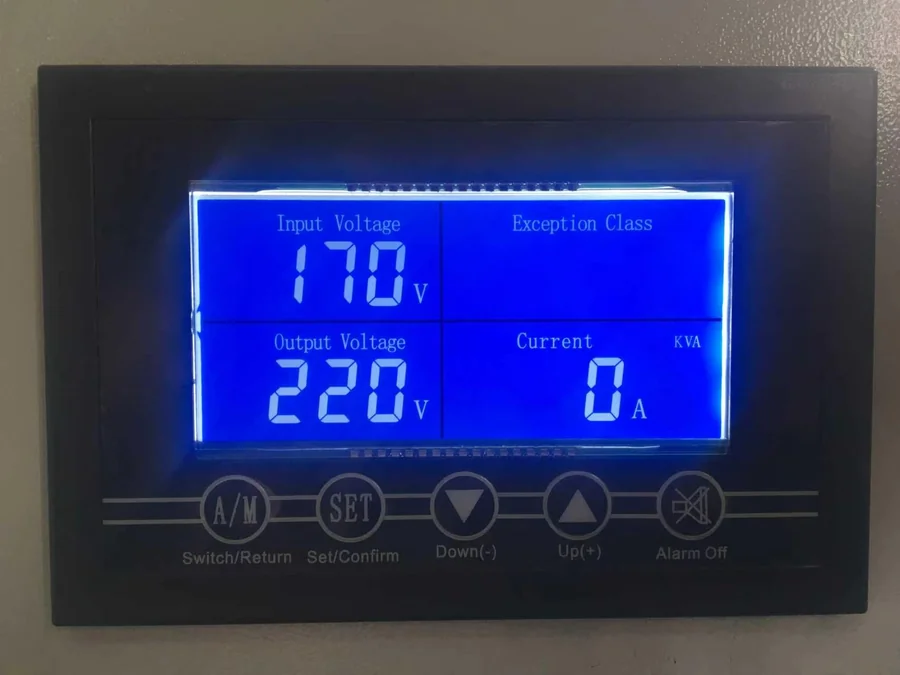
The KPD-10KVA accepts 220 VAC ±20% and delivers 220 VAC ±1% at up to 45 A. Efficiency is at least 95%, insulation resistance is above 100 MΩ, and the design life is 20 years. The unit is air-cooled, IP20, and rated for −10 to 40 °C ambient. The control system is microprocessor-based with high/low voltage alarm and short-circuit protection.
Contact-type regulators are often used in laboratories, medical equipment rooms, broadcast facilities, and small production lines where the grid is reasonably stable but the load is sensitive. They are not the best choice for very wide input swings; for 160–456 VAC correction, choose the SVC servo family.
Tight regulation
±1% output with an adjustable ±1–5% window for sensitive equipment.
Simple mechanism
Disc autotransformer and carbon brush, with a serviceable wear path.
Long design life
20-year design life with a 2,500 V dielectric test and >100 MΩ insulation.
Quiet operation
50 dB at 1 m and dry air cooling for indoor equipment rooms.
KPD Series · 10–30 kVA
Selected models and nominal values. The quotation confirms the exact configuration, battery, and documentation for the project.
Request a model sheetKPD contact-type stabilizer models
| Model | Capacity | Input | Output | Load current | Dimensions |
|---|---|---|---|---|---|
| KPD-10KVA | 10 kVA | 220 V ±20% | 220 V ±1% | 45 A | Confirm with datasheet |
| KPD-15KVA | 15 kVA | 220 V ±20% | 220 V ±1% | 68 A | Confirm with datasheet |
| KPD-30KVA | 30 kVA | 220 V ±20% | 220 V ±1% | 136 A | Confirm with datasheet |
Electrical
- Model
- KPD-10KVA / KPD-15KVA / KPD-30KVA
- Capacity
- 10 / 15 / 30 kVA
- Phase
- Single-phase, 2-wire
- Frequency
- 50/60 Hz
- Input voltage
- AC 220 V ±20%
- Output voltage
- AC 220 V ±1% (adjustable ±1–5%)
- Load current
- 45 A at 10 kVA
- Efficiency
- ≥ 95%
Protection and environment
- Voltage regulation
- Disc pressure regulating compensation type
- Protection
- Automatic regulation, high/low voltage alarm, short-circuit protection
- Insulation class
- B
- Withstand voltage
- AC 2,500 V / 1 min
- Insulation resistance
- ≥ 100 MΩ
- Overload
- 100% for 1 minute
- Noise
- ≤ 50 dB at 1 m
- Protection degree
- IP20
- Cooling
- Dry air cooling
- Design life
- 20 years
Environment
- Storage temperature
- −20 to 60 °C
- Operating temperature
- −10 to 40 °C
- Humidity
- 30–90% non-condensing
- Standard
- JB/T 10089, Q/KB 2001, GB 4376-1984
Key specifications
| Parameter | Value |
|---|---|
| Rated capacity | 10 / 15 / 30 kVA |
| Input | 220 VAC ±20%, 1-phase 2-wire |
| Output | 220 VAC ±1% (adjustable ±1–5%) |
| Load current | 45 A at 10 kVA |
| Efficiency | ≥ 95% |
| Protection | IP20, air-cooled |
Selection notes for this family
| Question | What to check | Why |
|---|---|---|
| Load profile | Running kW and largest step for 10–30 kVA | Avoid overload and oversizing |
| Runtime | Battery bank and charger for the target minutes | Actual autonomy |
| Environment | Temperature, altitude, dust and ventilation | Life and derating |
| Interface | Monitoring, bypass, parallel requirement | Integration with the room |
| Documentation | Conformity route and model test report | Customs and tender |
Where this family fits.
These are the load types the platform is specified for. If your load is outside this list, send the load profile before selecting the model.
- Laboratories
- Medical equipment rooms
- Broadcast studios
- Small production lines
- Precision test benches
Contact AVR: project questions.
Project-specific answers. If your question is not here, send the load list and the site conditions.
Talk to an engineer What is the difference between KPD and SVC?
KPD is a contact-type regulator with ±1% precision and a ±20% input window. SVC is a servo stabilizer with a much wider 160–456 VAC window and ±2% output. Choose KPD for precision on a moderate grid; choose SVC for wide swings.
Can the output be set to 230 V or 240 V?
The standard output is 220 VAC. Custom output voltages are possible on request; confirm the input range and the load current for the new voltage.
How often should the brush be serviced?
Inspect the brush and the disc track periodically. The wear rate depends on how often the input moves and the load current. Keep a spare brush for critical sites.
Does it protect against short circuits?
Yes, the KPD includes short-circuit protection and high/low voltage alarms. It is not a substitute for a correctly rated upstream breaker.
Can it be used outdoors?
No. The enclosure is IP20 and intended for indoor equipment rooms. For outdoor or dusty sites, use a protected cabinet or a higher-IP enclosure.
Related systems and guides.
Send the load list. We will return the configuration.
Tell us the kW, the backup time, the phase, and the site country. You will get a capacity recommendation, a battery configuration, and the model sheet.
- Capacity and topology recommendation
- Battery bank and runtime estimate
- Model sheet and commercial offer
Request a configuration and quotation
Send the load list, backup time, and site conditions. We will return a capacity recommendation, battery configuration, and commercial offer.