
Three-Phase Online UPS
Three-phase double conversion for facility and industrial loads.
- 10–200 kVA
- 3:1 crest factor
- 0 ms transfer
Rated capacity
10–200 kVA
Output power factor
0.9 (0.8 on selected frames)
Input power factor
≥ 0.99
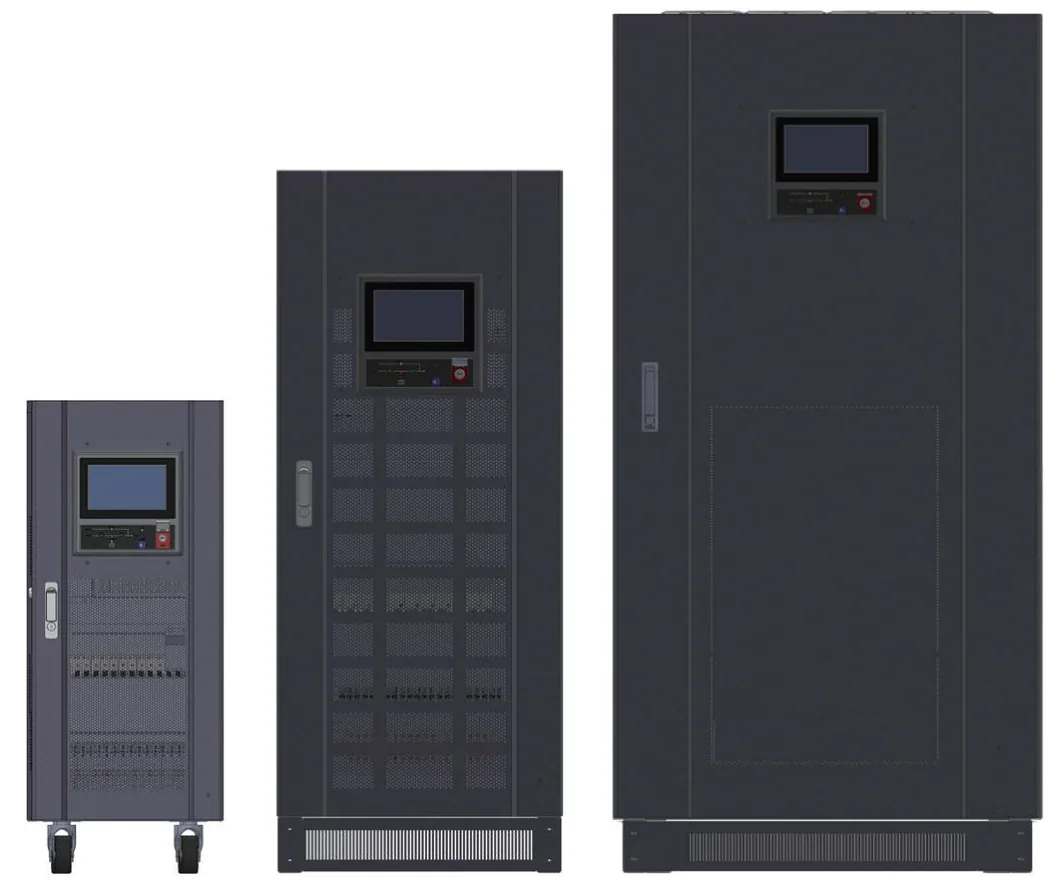
Rated range
10–200 kVA
- Rated capacity
- 10–200 kVA
- Output power factor
- 0.9 (0.8 on selected frames)
- Input power factor
- ≥ 0.99
- Efficiency
- Up to 95.5% AC–AC
- Output THD
- ≤ 2% linear / ≤ 5% non-linear
- Battery bus
- 192–240 VDC / 384 VDC by frame
A three-phase online UPS from 10 to 200 kVA with 0 ms transfer, 0.9 output power factor and 384 VDC battery frames. Parallel configurations are available for N+1 redundancy on data centre, hospital and industrial loads.
What this platform is built to do.
Three-phase online UPS systems protect loads that cannot tolerate a transfer gap: data centers, production lines, building services, telecom core sites, and process control rooms. The 3YT and GP families cover 10–200 kVA with double conversion, a 3:1 crest factor, and 0 ms transfer to battery.
The input stage uses IGBT rectification with input power factor ≥0.99 and THDi below 3% at full load, so the UPS does not pollute the generator or the upstream transformer. Output voltage is regulated to ±1%, and the inverter handles 3:1 crest-factor loads without derating. Overload capacity is 110% for 60 minutes, 125% for 10 minutes, and 150% for 1 minute.
The family includes tower and rack formats, 10–20 kVA three-phase/single-phase output models, and 30–200 kVA three-phase/three-phase models. Battery strings are 192–240 VDC for the smaller frames and 384 VDC for the larger frames, with optional parallel configurations for N+1 redundancy. RS-232, USB, dry contacts, MODBUS, and SNMP are available depending on frame.
IGBT rectifier
Low input THDi and a near-unity input PF reduce generator and transformer sizing.
3:1 crest factor
Handles switch-mode and non-linear loads without oversizing the inverter.
Parallel-ready
Selected frames support parallel operation for capacity or N+1 redundancy.
Project documentation
Model sheets, dimensions, battery configuration, and commissioning guidance.
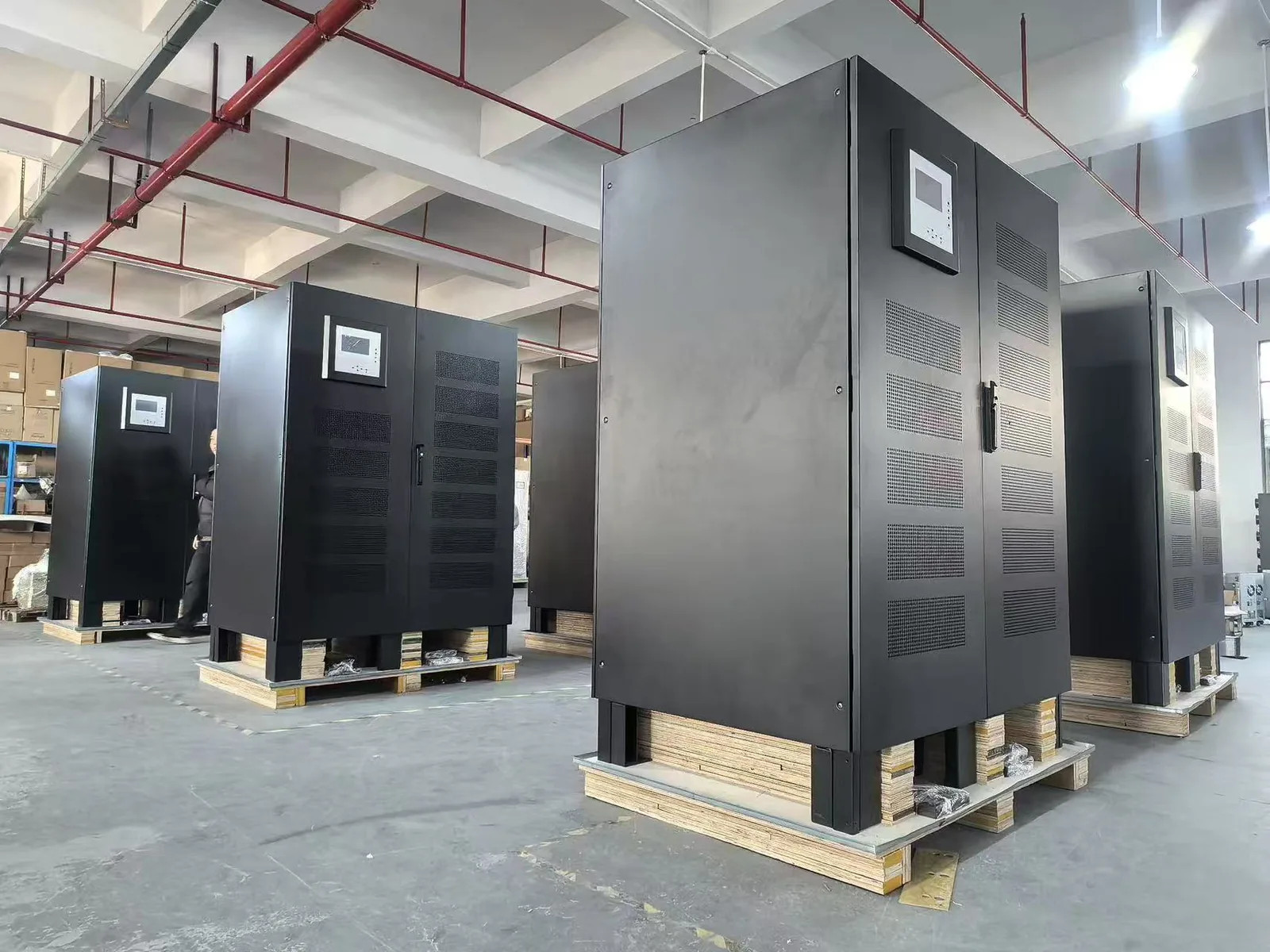
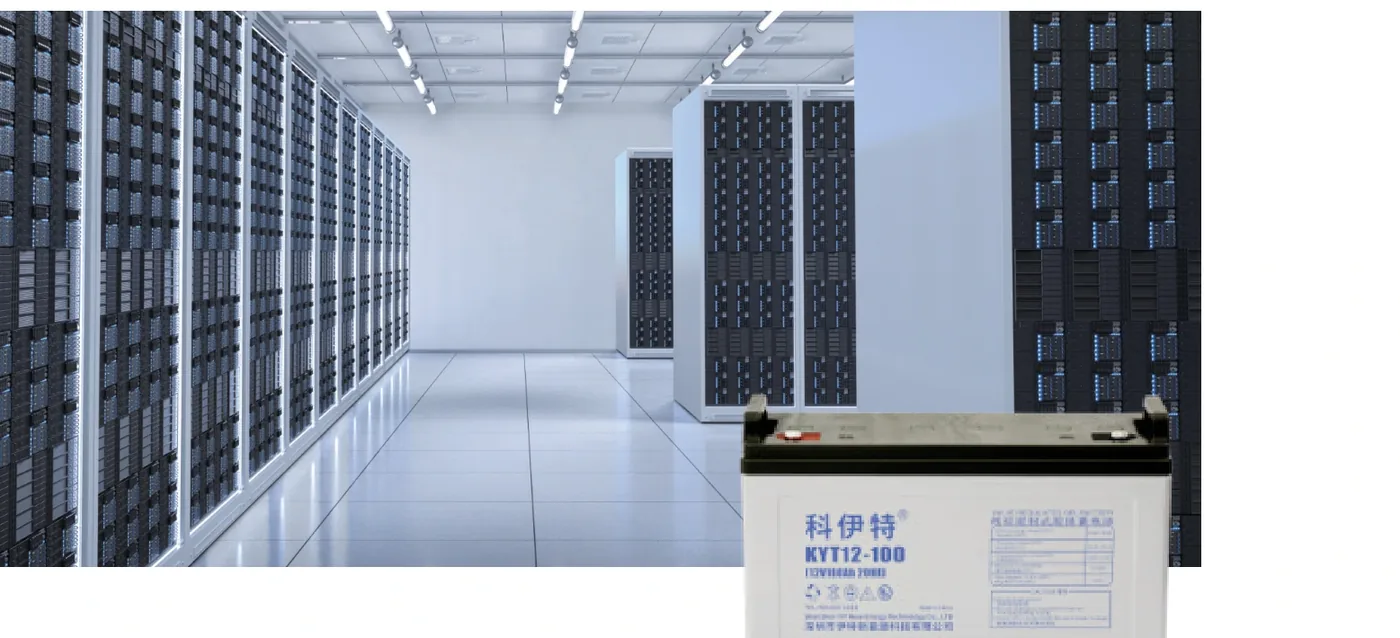
3YT / GP Series · 10–200 kVA
Selected models and nominal values. The quotation confirms the exact configuration, battery, and documentation for the project.
Request a model sheetThree-phase online UPS frames and power ratings
| Model family | Capacity range | Output PF | Battery bus | Typical application |
|---|---|---|---|---|
| 3YT 10–20 kVA | 10 / 15 / 20 kVA | 0.9 | 192/240 VDC | Server room, clinic, branch DC |
| 3YT 30–60 kVA | 30 / 40 / 50 / 60 kVA | 0.9 | 384 VDC | Data center, industrial line |
| 3YT 80–120 kVA | 80 / 100 / 120 kVA | 0.9 | 384 VDC | Plant, telecom core, hospital |
| GP 30–200 kVA | 30–200 kVA | 0.8–0.9 | 384 VDC | Large facility, process plant |
| Parallel frames | Up to 4–6 units | 0.9 | Shared battery | N+1 or capacity expansion |
| GP33 | 10–200 kVA | 0.9 | 384 VDC | Three-phase facility load |
| GP31 | 10–40 kVA | 0.9 | 192/240 VDC | 3-phase in / 1-phase out |
| GP11 | 6–10 kVA | 0.9 | 192/240 VDC | Single-phase IT room |
| HP33 | 30–200 kVA | 0.9 | 384 VDC | High-frequency three-phase |
| HP31 | 10–20 kVA | 0.9 | 192/240 VDC | 3-phase in / 1-phase out |
| HP11 | 1–10 kVA | 0.9 | 192/240 VDC | Single-phase high-frequency |
Input
- Configuration
- 3-phase + neutral + earth
- Rated voltage
- 380/400/415 VAC (line-line)
- Voltage range
- 305–478 VAC at 100% load; 208–304 VAC at <70% load
- Frequency
- 50/60 Hz, 40–70 Hz range
- Input PF
- ≥ 0.99 at 100% load
- Input THDi
- < 3% at 100% load
Output
- Rated voltage
- 360/380/400/415 VAC (line-line); 208/220/230/240 VAC (line-neutral)
- Voltage accuracy
- ±1%
- Frequency
- 50/60 Hz ±0.1% in battery mode
- Crest factor
- 3:1 maximum
- THD
- ≤ 2% linear load; ≤ 5% non-linear load
- Overload
- 100–110% 60 min; 110–125% 10 min; 125–150% 1 min; >150% immediate
- Transfer time
- 0 ms mains ↔ battery; 0 ms inverter ↔ bypass (sync)
Battery
- Battery bus
- 192/240 VDC (10–20 kVA); 384 VDC (30–200 kVA)
- Battery type
- VRLA or LiFePO4, external
- Charge current
- 1–12 A adjustable (small frames); up to 40 A on large frames
- Float voltage
- 13.65 VDC per 12 V block ±1%
Efficiency, environment, and monitoring
- AC–AC efficiency
- Up to 95.5%; 98.5% in ECO mode on selected frames
- Operating temperature
- 0–40 °C
- Protection
- IP20
- Noise
- < 65–75 dB depending on frame
- Monitoring
- RS-232/USB; SNMP, dry contact, MODBUS optional
Key specifications
| Parameter | Value |
|---|---|
| Rated capacity | 10–200 kVA |
| Output power factor | 0.9 (0.8 on selected frames) |
| Input power factor | ≥ 0.99 |
| Efficiency | Up to 95.5% AC–AC |
| Output THD | ≤ 2% linear / ≤ 5% non-linear |
| Battery bus | 192–240 VDC / 384 VDC by frame |
Selection notes for this family
| Question | What to check | Why |
|---|---|---|
| Load profile | Running kW and largest step for 10–200 kVA | Avoid overload and oversizing |
| Runtime | Battery bank and charger for the target minutes | Actual autonomy |
| Environment | Temperature, altitude, dust and ventilation | Life and derating |
| Interface | Monitoring, bypass, parallel requirement | Integration with the room |
| Documentation | Conformity route and model test report | Customs and tender |
Where this family fits.
These are the load types the platform is specified for. If your load is outside this list, send the load profile before selecting the model.
- Data centers
- Industrial production lines
- Hospitals and clinics
- Telecom core sites
- Commercial buildings
- Water and wastewater plants
Three-phase UPS: project questions.
Project-specific answers. If your question is not here, send the load list and the site conditions.
Talk to an engineer Do I need a three-phase UPS or three single-phase units?
Use a three-phase UPS when the load is three-phase, when the site has a three-phase supply, or when a single neutral reference and shared battery are required. Single-phase units are often better for small, distributed loads.
Can the UPS be paralleled for redundancy?
Selected 30–200 kVA frames support parallel operation. The exact number of units, shared battery arrangement, and bypass configuration must be confirmed against the frame datasheet.
What battery voltage should I specify?
Smaller frames use 192/240 VDC; larger frames use 384 VDC. The battery voltage determines the number of 12 V blocks in series and the DC current for a given runtime.
How much space does a 200 kVA UPS need?
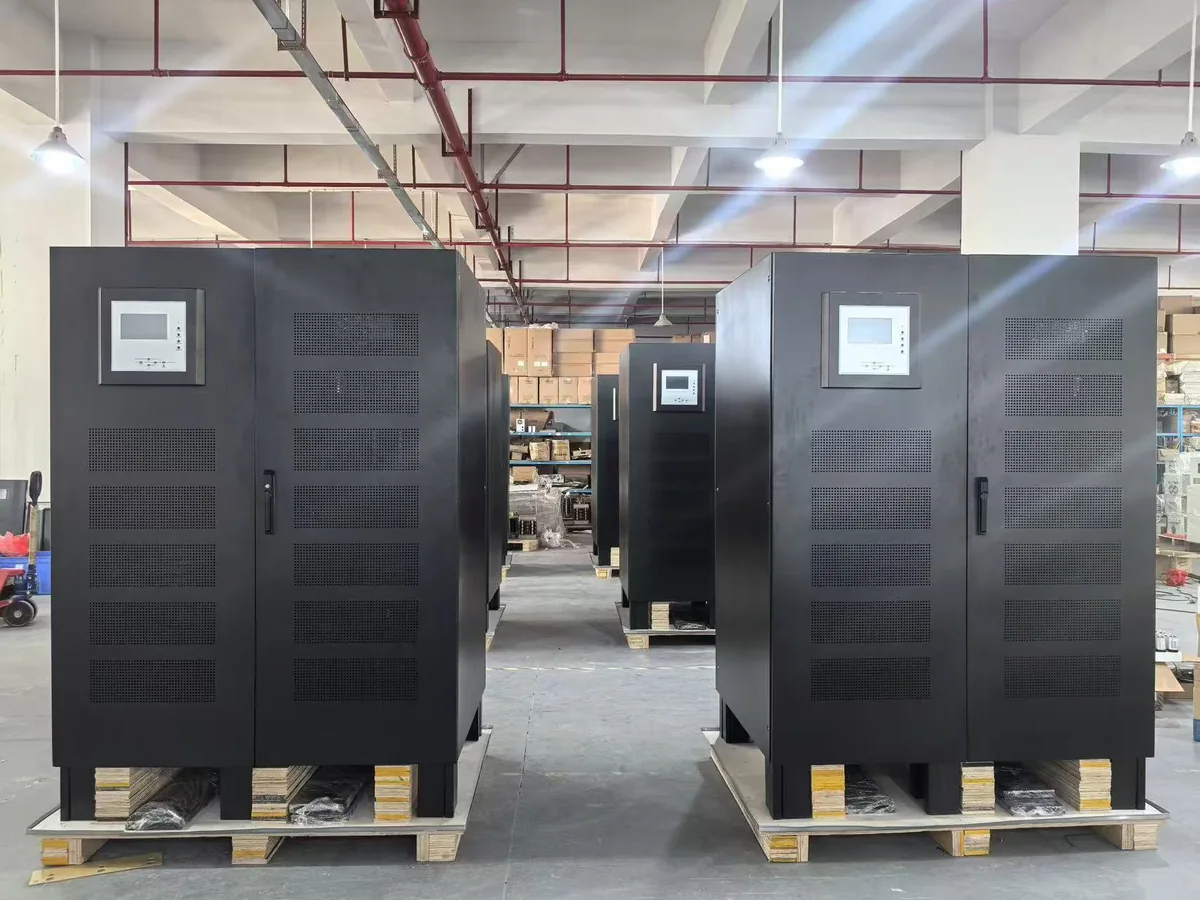
Plan for the UPS cabinet plus battery cabinets and maintenance clearance. The 200 kVA frame is approximately 705 mm wide, 1,051 mm deep, and 1,646 mm high before battery and clearance.
Is a 3:1 crest factor enough for my load?
It covers most switch-mode power supplies and IT loads. Welding, motor starting, and high-inrush loads need a load study and may require an industrial-frequency UPS with a higher overload rating.
What documentation is provided?
Model sheet, dimensions, input/output terminals, battery configuration, commissioning checklist, and available certificates are provided with the quotation.
Send the load list. We will return the configuration.
Tell us the kW, the backup time, the phase, and the site country. You will get a capacity recommendation, a battery configuration, and the model sheet.
- Capacity and topology recommendation
- Battery bank and runtime estimate
- Model sheet and commercial offer
Request a configuration and quotation
Send the load list, backup time, and site conditions. We will return a capacity recommendation, battery configuration, and commercial offer.