
Voltage stabilizers for grids that move more than they should.
Servo and contact-type voltage stabilizers from 0.5 to 100 kVA, single and three-phase, with ±1–3% output accuracy and 150–456 VAC input range.
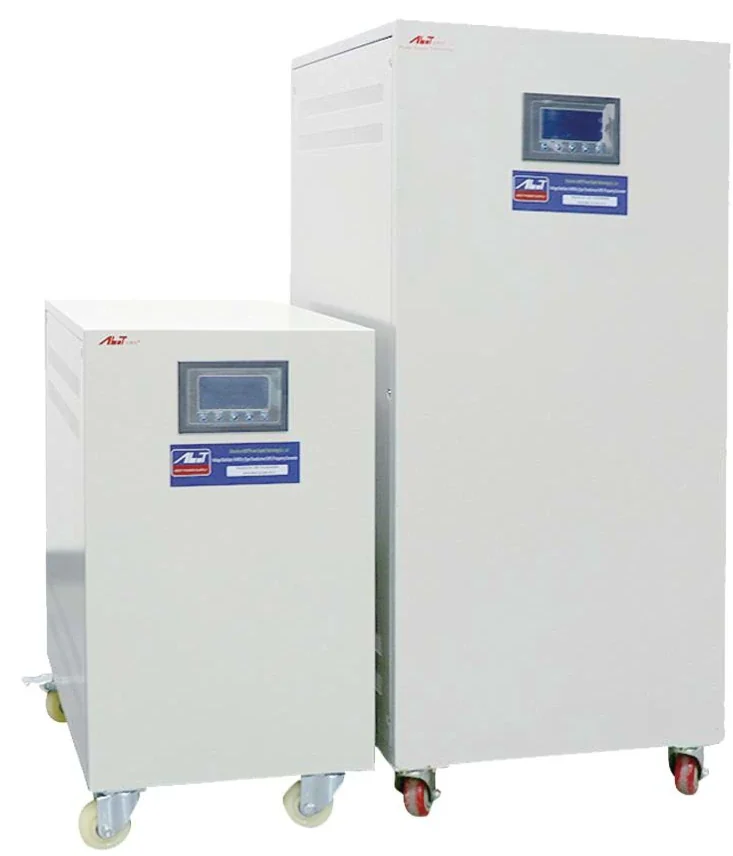
- Capacity range
- 0.5–100 kVA
- Output accuracy
- ±1–2%
- Input window
- 160–456 VAC
- Servo efficiency
- >98%
A voltage stabilizer holds the output voltage steady while the input moves. It does not store energy and it does not provide backup. Its job is to correct brownouts, swells, and phase imbalance before they reach the load, so equipment runs at its design voltage instead of at 180 V or 260 V.
The range covers two mechanisms. A servo stabilizer uses a motor-driven brush on a toroidal autotransformer for a wide correction window (160–260 VAC single-phase, 304–456 VAC three-phase) and ±2% output. A contact-type stabilizer uses a disc autotransformer and carbon brush for ±1% precision on a narrower input window. Both are available from 10 kVA to 100 kVA.
How does a voltage stabilizer work?
A servo stabilizer senses the output, compares it with a reference, and drives a servo motor to move a carbon brush along a toroidal autotransformer. The brush position changes the turns ratio, and a compensation transformer adds or subtracts voltage. The control loop repeats continuously, holding the output within ±2%.
A contact-type stabilizer uses the same brush principle but on a disc-wound autotransformer. It is mechanically simpler and gives tighter regulation, but the input window is narrower. It is the right choice when the grid is reasonably stable and the load needs ±1% precision.
Servo vs contact-type stabilizer
| Criterion | Servo (SVC) | Contact (KPD) |
|---|---|---|
| Input window | 150–260 VAC 1-phase (small); 160–260 VAC 1-phase; 304–456 VAC 3-phase | 220 VAC ±20% |
| Output accuracy | ±2–3% | ±1% (adjustable ±1–5%) |
| Capacity | 0.5–100 kVA | 10–30 kVA |
| Phase | Single and three-phase | Single-phase |
| Best for | Wide swings, three-phase loads | Precision on a moderate grid |
| Maintenance | Brush and toroidal track | Brush and disc track |
Single-phase or three-phase stabilizer?
A single-phase stabilizer is used for a single-phase load or a small equipment room: a clinic, a laboratory, a broadcast rack, a small production line. A three-phase stabilizer is used at the incoming supply of a factory, a hotel, a hospital, or a commercial building, where the load is three-phase or distributed across phases.
Three-phase units regulate each phase independently. That matters when single-phase loads are uneven: without independent regulation, one phase can be at 250 V while another is at 190 V. The SVC-T series corrects each phase to 380/400/415 VAC ±2%.
How do I choose the stabilizer capacity?
Add the running kVA of the loads that will be protected, then add 20–30% for growth and motor starting. A stabilizer is rated in kVA at a 0.8 power factor, so a 30 kVA unit delivers about 24 kW. If the load has a large motor, check the starting current; the stabilizer may need to be oversized or the motor may need a soft starter.
Do not include the whole building if only the critical equipment needs protection. A dedicated stabilizer for the production line, the lab, or the IT room is often more economical than a building-wide unit.
Typical stabilizer size by load
| Stabilizer | Real power at 0.8 PF | Typical load |
|---|---|---|
| 10 kVA | 8 kW | Small lab, clinic, broadcast rack |
| 15 kVA | 12 kW | Workshop, small production line |
| 20 kVA | 16 kW | Hotel floor, clinic, office floor |
| 30 kVA | 24 kW | Factory line, water treatment panel |
| 50 kVA | 40 kW | Commercial building, plant section |
| 100 kVA | 80 kW | Whole factory incoming, hospital block |
Stabilizer or UPS: which one do I need?
A stabilizer corrects voltage; a UPS also provides backup. If the problem is a brownout or overvoltage but the supply is continuous, a stabilizer is enough. If the supply also drops out, a UPS is required. For a weak grid with both problems, install the stabilizer upstream of the UPS so the UPS sees a stable input.
Do not use a stabilizer as a substitute for a UPS. It cannot carry the load through an outage, and it cannot provide a clean shutdown.
What maintenance does a stabilizer need?
- Inspect the carbon brush and the contact track every 6–12 months
- Clean dust from the enclosure and the cooling path
- Check the servo motor and drive belt for wear
- Verify the output calibration with a true-RMS meter
- Test the over/under voltage and phase-loss protections
- Check terminal torque and cable insulation
- Keep a spare brush and fuse set for critical sites
Which standards and documents are referenced on this page?
The table lists the model-specific standards and conformity documents a project buyer should ask for. Availability depends on the frame, the battery, and the destination market; request the document that names your model.
Voltage stabilizer and AVR standards
| Reference | What it covers |
|---|---|
| IEC 61558-1 | Safety of power transformers and supply units |
| IEC 61000-3-2 | Harmonic current emission limits |
| IEC 61000-3-3 | Voltage fluctuation and flicker limits |
| IEC 62040-3 | Interface performance when feeding a UPS input |
| JB/T 10089 | Contact-type AC voltage stabilizer standard |
| GB/T 12325 | Voltage deviation limits for supply systems |
| CE / RoHS | EU conformity and restricted-substance declaration |
| ISO 9001 | Manufacturing quality management system |
| RS485 / MODBUS-RTU | Remote monitoring interface |
| IP20 / IP21 | Enclosure protection for indoor installation |
Certificates are issued against the exact model and configuration. See the certifications page for how to confirm scope and revision, or send the model to request the current document.
Match the page to a platform.
SVC Series · 0.5–100 kVA
Servo Voltage Stabilizer
±2% output from a 160–456 V input swing.
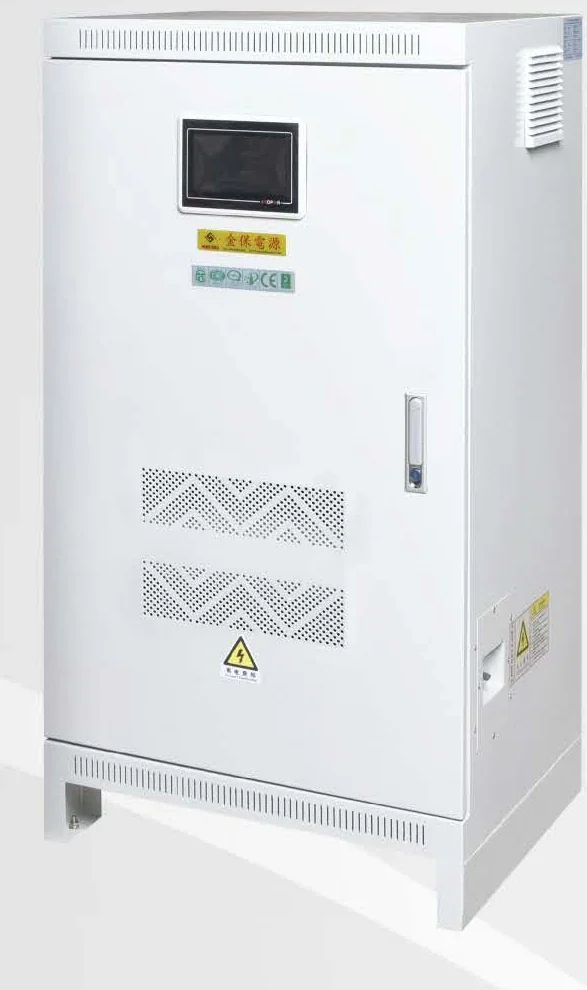
KPD Series · 10–30 kVA
Contact-Type Voltage Stabilizer
±1% precision from a carbon-brush autotransformer.
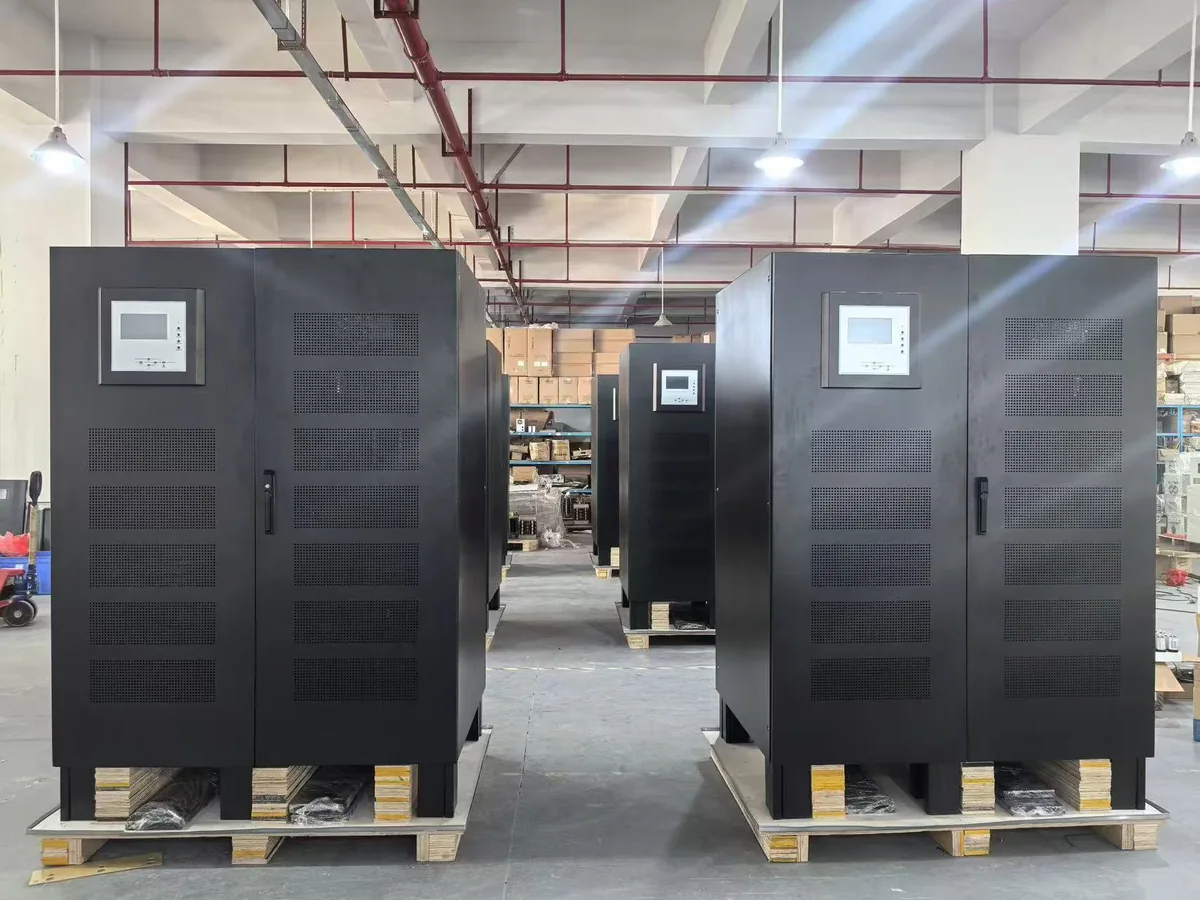
SVC-T Series · 10–100 kVA
Three-Phase Voltage Stabilizer
Independent phase regulation for unbalanced three-phase loads.
Questions from project buyers.
Project-specific answers. If your question is not here, send the load list and the site conditions.
Talk to an engineer Does a voltage stabilizer provide backup power?
No. It regulates voltage but does not store energy. For backup, add a UPS or an inverter with a battery bank.
What is the difference between a stabilizer and an AVR?
AVR stands for automatic voltage regulator. A stabilizer is an AVR for AC mains. The terms are often used interchangeably; the difference is the mechanism (servo, contact, or electronic) and the accuracy.
Can a stabilizer correct a 160 V input?
The SVC single-phase range accepts 160–260 VAC and outputs 220 VAC ±2%. The load current must be within the unit’s rating.
How accurate is a servo stabilizer?
±2% at the output, with a response time under 1 second for a 10% input step. The contact-type KPD is ±1% adjustable.
Can I use a three-phase stabilizer for single-phase loads?
Yes, through the neutral, but the load should be balanced. A large single-phase load can overload one phase even when the total kVA is within rating.
What happens during a phase loss?
The stabilizer detects phase loss and trips to protect the load. It cannot generate the missing phase. Correct the upstream fault before restarting.
Send the load list. We will return the configuration.
Tell us the kW, the backup time, the phase, and the site country. You will get a capacity recommendation, a battery configuration, and the model sheet.
- Capacity and topology recommendation
- Battery bank and runtime estimate
- Model sheet and commercial offer
Request a configuration and quotation
Send the load list, backup time, and site conditions. We will return a capacity recommendation, battery configuration, and commercial offer.