
Industrial UPS: built for the electrical room, not the IT closet.
Industrial UPS from 10 to 200 kVA with 165–280 VAC input, high overload, IP21 protection, and 0–55 °C operation for PLC, DCS, and process loads.
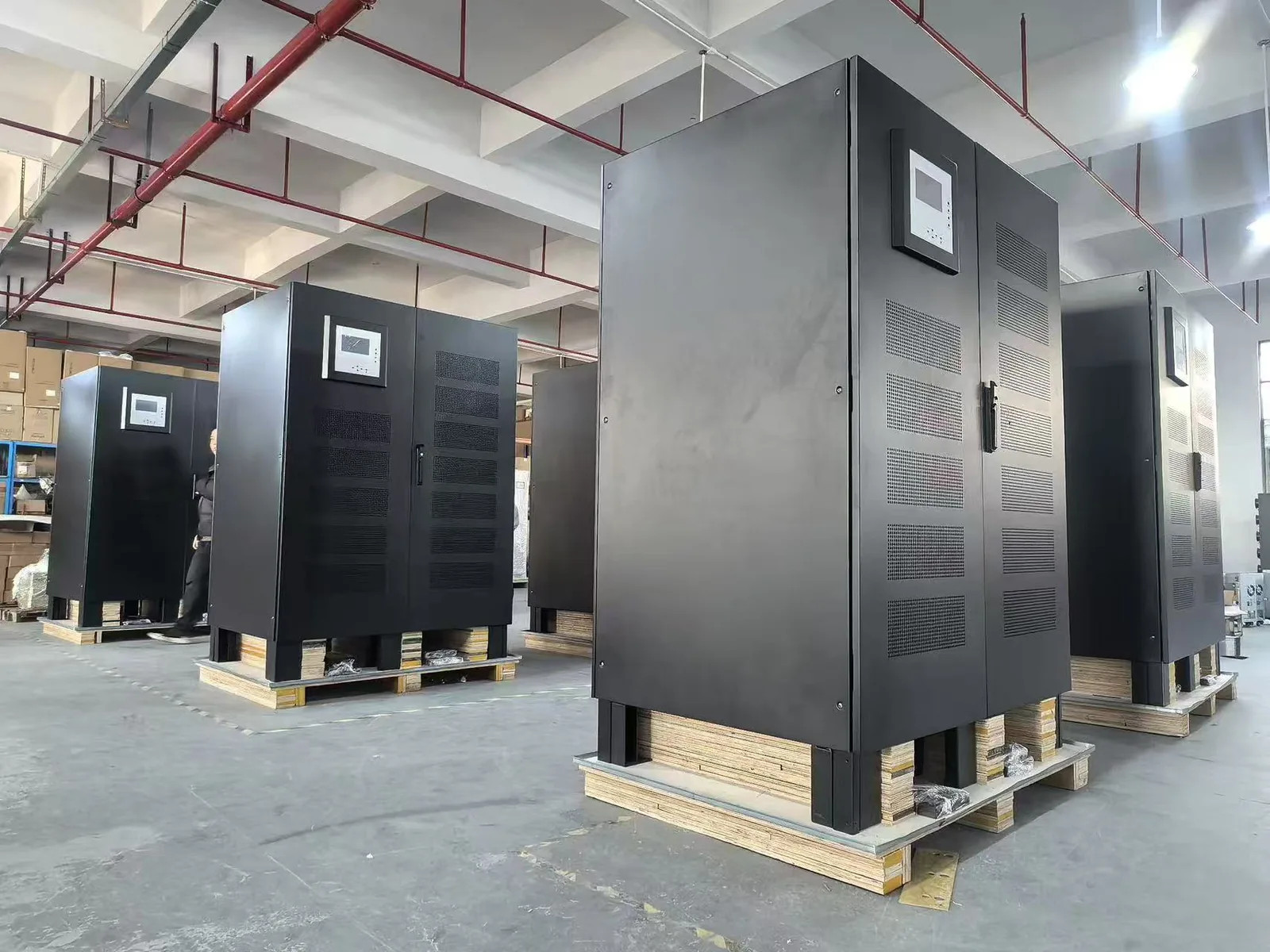
- Capacity
- 10–200 kVA
- Input range (Ph-N)
- 165–280 VAC
- Overload
- 150–180%
- Protection
- IP21
Industrial UPS systems protect the controls that keep a plant running: PLC racks, DCS cabinets, CNC lines, packaging machines, water-treatment panels, and safety systems. The electrical environment is different from a server room: weak feeders, generator changeover, motor starting, harmonics, dust, and heat.
The UPS must ride through voltage sags, frequency swings, and load steps without transferring to bypass. That requires a wide input window, a high overload rating, and an enclosure that can survive the room. A commercial UPS with a narrow input window will spend too much time on battery and may not survive the first motor start.
What industrial loads need a UPS?
The UPS should protect the control and instrumentation, not necessarily the motors. Motors can be left on the building supply with a restart sequence, while the PLC, HMI, sensors, and communications ride through the outage. That reduces the UPS size and avoids oversizing for motor starting.
- PLC and DCS control cabinets
- CNC machines and machining centers
- Packaging, filling, and labeling lines
- Water and wastewater treatment panels
- Oil, gas, and petrochemical control systems
- Steel, cement, and glass process lines
How much overload do I need for motor starting?
A direct-on-line motor can draw 5–7 times its rated current for a few seconds. A UPS with a 150% overload for 1 minute can support a small motor start, but a large motor may need a soft starter or a VFD. The UPS inverter is not a motor starter; its overload curve is designed for short load steps, not repeated high-current starts.
Share the motor nameplate, the starting method, the starting current, and the largest step change. The UPS can then be sized for the control load plus the acceptable step, and the motor can be started after the UPS is stable.
Industrial UPS overload capability
| Overload | Duration | Typical use |
|---|---|---|
| 110–125% | 10–60 min | Normal load growth and temporary overload |
| 125–150% | 1–10 min | Load step, small motor start |
| 150–180% | 30–60 s | Short inrush, transformer energization |
| >180% | Immediate trip / bypass | Fault protection |
What environment does the UPS need?
The standard industrial frame is IP21 with forced ventilation and a 0–55 °C operating range on selected models. IP21 protects against fingers and vertical drips, not fine dust or corrosive gas. For a dusty plant, specify a filtered cabinet, positive pressure, or a higher IP rating with the panel builder.
Battery life is the limiting factor in a hot room. A VRLA battery at 35 °C loses life roughly twice as fast as at 25 °C. Keep the battery in a cooler room or use a temperature-compensated charger and a larger bank.
Do I need a maintenance bypass?
Yes, for most industrial installations. A maintenance bypass allows the UPS to be serviced without interrupting the load. It must be interlocked with the UPS output and installed by a qualified electrician. For a plant that cannot stop, the bypass is not optional.
The bypass should be sized for the full load current and coordinated with the upstream protection. A poorly designed bypass can backfeed the UPS output and create a safety hazard.
Which standards and documents are referenced on this page?
The table lists the model-specific standards and conformity documents a project buyer should ask for. Availability depends on the frame, the battery, and the destination market; request the document that names your model.
UPS standards and documents
| Reference | What it covers |
|---|---|
| IEC 62040-1 | UPS general and safety requirements |
| IEC 62040-2 | UPS electromagnetic compatibility (EMC) |
| IEC 62040-3 | UPS performance and test requirements |
| IEC 60896-21 / -22 | VRLA stationary battery type and performance tests |
| IEC 62619 | Safety of lithium cells and batteries for industrial use |
| UN38.3 / MSDS | Lithium battery transport test and material safety data |
| CE / RoHS | EU conformity and restricted-substance declaration |
| ISO 9001 | Manufacturing quality management system |
| SNMP / MODBUS | Remote monitoring and BMS interface |
| IP20 / IP21 | Cabinet ingress protection for indoor installation |
Certificates are issued against the exact model and configuration. See the certifications page for how to confirm scope and revision, or send the model to request the current document.
Confirm the inputs and documents before quoting.
Project inputs to confirm
| Item | What to confirm | Why it matters |
|---|---|---|
| Load | Running kW, largest motor, load step | Sets kVA, overload and topology |
| Runtime | Minutes, generator availability, battery room | Sets battery bank and charger |
| Supply | Voltage, frequency, phase, input current | Sets model, breaker and cable |
| Site | Country, altitude, ambient temperature, dust | Sets derating, IP and documents |
| Battery | VRLA, LiFePO4, footprint, weight limit | Sets chemistry and room layout |
| Documentation | Conformity route, test report, language | Sets document package and lead time |
What does an 80 kW CNC line on a weak feeder look like?
Six CNC machining centres share an 80 kW load on a 380 V feeder that swings from 304 V to 456 V. The line needs 30 minutes of ride-through for the controllers, a 3:1 crest factor and 150% overload for spindle starts. The configuration pairs a 100 kVA industrial UPS with a 200 kVA three-phase AVR.
- CNC load
- 80 kW
- Industrial UPS
- 100 kVA
- Three-phase AVR
- 200 kVA
- Ride-through
- 30 min
Reference configuration
| Item | Reference value | Why it matters |
|---|---|---|
| CNC load | 80 kW / 6 machines | Largest spindle start sets the overload |
| UPS | 100 kVA industrial, 3:1 crest factor | Covers spindle starts and control ride-through |
| AVR | 200 kVA three-phase servo | Corrects 304–456 V before the UPS and drives |
| Runtime | 30 min at 80 kW | Controlled stop, not a full production shift |
| Protection | IP21, 0–40 °C, dust filter | Electrical room, not a clean IT closet |
- Measure the largest spindle start; nameplate kW is not the starting load.
- Put the AVR at the incoming supply, before the UPS and the drives.
- Use a maintenance bypass so the line can run while the UPS is serviced.
- Confirm the CNC builder’s tolerance for transfer time and input THD.
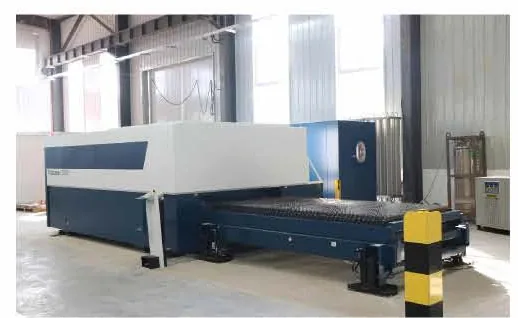
Reference configuration based on typical industry inputs. It is not a named customer project, and the image is illustrative.
Match the page to a platform.
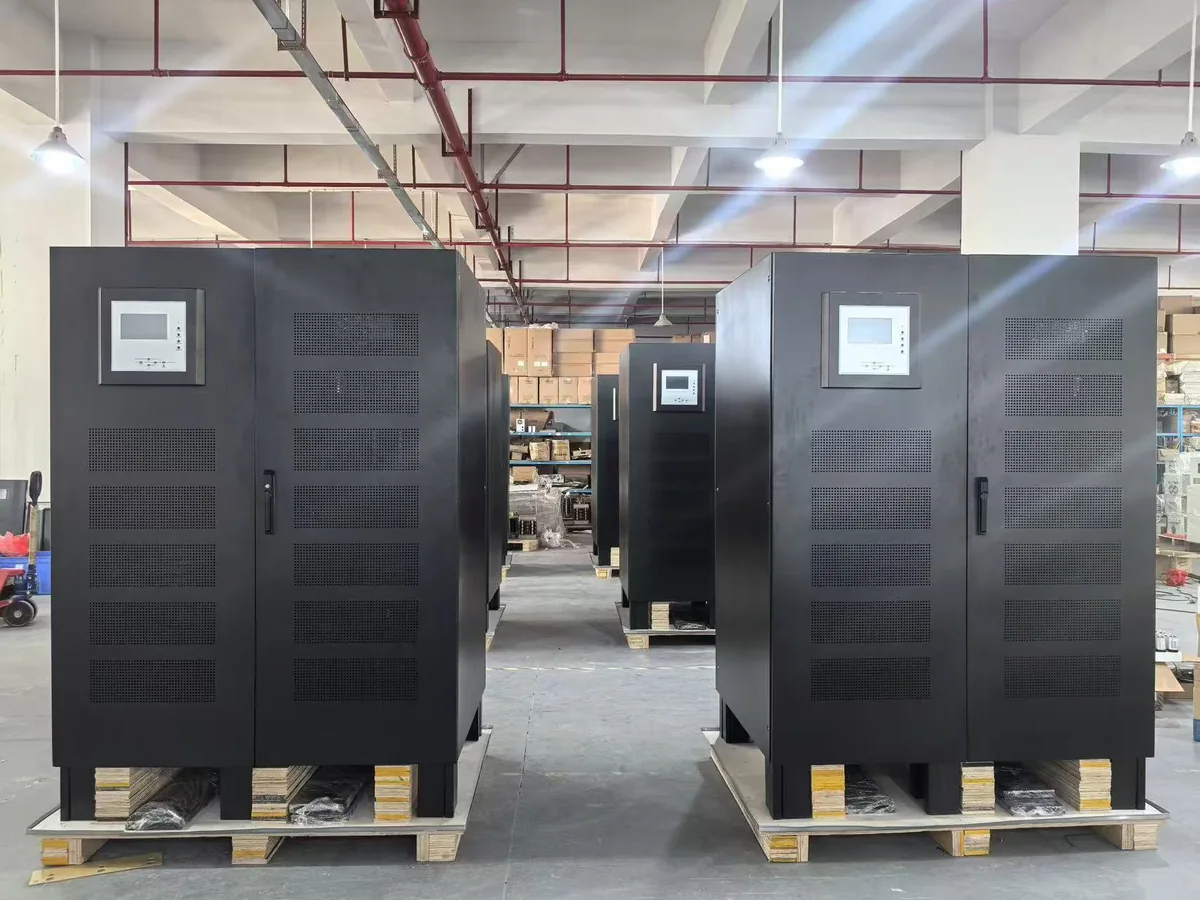
Industrial frame · 10–200 kVA
Industrial UPS
Wide input, high overload, and harsh-environment protection.
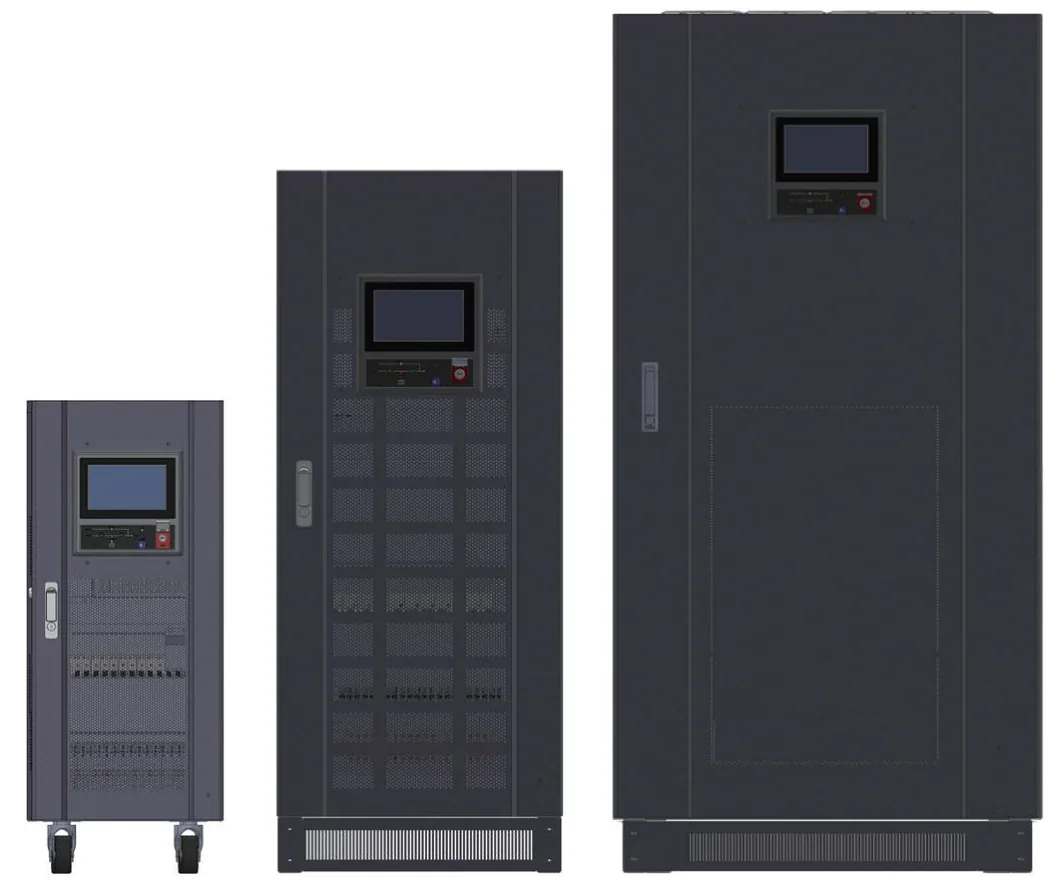
3YT / GP Series · 10–200 kVA
Three-Phase Online UPS
Three-phase double conversion for facility and industrial loads.
SVC-T Series · 10–100 kVA
Three-Phase Voltage Stabilizer
Independent phase regulation for unbalanced three-phase loads.
Questions from project buyers.
Project-specific answers. If your question is not here, send the load list and the site conditions.
Talk to an engineer Can an industrial UPS start a 15 kW motor?
It depends on the starting method. A direct-on-line 15 kW motor can draw 75–100 A for several seconds, which may exceed the UPS overload window. Use a soft starter or VFD, or size the UPS with the motor starting curve in hand.
Is IP21 enough for a cement plant?
No. IP21 is not dust-tight. For a cement or steel plant, specify a filtered positive-pressure cabinet or a higher IP rating with the panel builder.
Can the UPS operate at 50 °C?
Selected frames operate to 55 °C, but the battery life and the output derating must be checked. Above 40 °C, VRLA life falls quickly; consider a separate battery room.
What is the difference between industrial and commercial UPS?
Industrial frames have a wider input window, higher overload, a more robust enclosure, and a higher operating temperature. Commercial UPS is optimized for IT loads and efficiency.
Do you provide commissioning support?
We provide the commissioning checklist, drawings, and remote guidance. The physical commissioning is normally carried out by the local electrical contractor or our project partner.
Send the load list. We will return the configuration.
Tell us the kW, the backup time, the phase, and the site country. You will get a capacity recommendation, a battery configuration, and the model sheet.
- Capacity and topology recommendation
- Battery bank and runtime estimate
- Model sheet and commercial offer
Request a configuration and quotation
Send the load list, backup time, and site conditions. We will return a capacity recommendation, battery configuration, and commercial offer.