
Power surge protection: the layer a stabilizer cannot replace.
How surge protective devices coordinate with UPS and AVR systems: SPD types, placement, lightning risk, and regulation versus surge protection.
- SPD classes
- Type 1/2/3
- Typical protection level
- ≤1.5 kV
- Service / distribution / device
- 3 layers
- SPD standard
- IEC 61643
A voltage stabilizer corrects a sustained voltage deviation. A surge protective device (SPD) diverts a fast transient. They solve different problems, and one cannot replace the other. A site with a stabilizer but no SPD is still exposed to lightning and switching surges.
This page explains where an SPD belongs in a UPS/AVR system, the difference between Type 1, Type 2, and Type 3 devices, and how to coordinate them with the upstream breaker and the protected load.
What is the difference between a surge and a voltage swell?
A voltage swell lasts for several cycles to seconds; a stabilizer can correct it. A surge is a microsecond-to-millisecond transient with a very high peak; a stabilizer cannot respond fast enough. The SPD is designed to clamp the transient before it reaches the load.
A lightning strike can couple into the building wiring even without a direct hit. The SPD at the service entrance diverts most of the energy; a second SPD at the distribution board protects the branch circuits; a third at the equipment protects the sensitive load.
Where should the SPD be installed?
SPD placement in a UPS/AVR system
| Layer | Location | Device | Purpose |
|---|---|---|---|
| Service entrance | Main switchboard | Type 1 SPD | Divert lightning and large transients |
| Distribution | Sub-board feeding UPS/AVR | Type 2 SPD | Protect branch circuits and equipment |
| Equipment | UPS input / sensitive load | Type 3 SPD | Clamp residual transient at the terminals |
| DC side | Battery / DC bus | DC SPD | Protect inverter and battery from DC surges |
| Signal | Network / sensor cables | Signal SPD | Protect communication and control inputs |
How do I coordinate the SPD with the UPS and AVR?
The SPD must be installed upstream of the UPS/AVR, with a short and straight cable to the earth bar. A long cable adds inductance and raises the let-through voltage. The upstream breaker must be sized for the SPD’s maximum fuse rating, and the earth system must be bonded.
For a UPS, also protect the bypass path and the DC battery circuit. A surge on the battery cable can damage the inverter even if the AC input is protected. Follow the UPS manufacturer’s recommendations for the DC SPD.
How do I maintain an SPD?
- Check the status indicator after every storm season
- Replace the cartridge when the indicator shows end-of-life
- Verify the earth connection and the cable length
- Keep a spare cartridge for critical sites
- Record the replacement date and the event history
Which standards and documents are referenced on this page?
The table lists the model-specific standards and conformity documents a project buyer should ask for. Availability depends on the frame, the battery, and the destination market; request the document that names your model.
Application and protection standards
| Reference | What it covers |
|---|---|
| IEC 62040-1 / -2 / -3 | UPS safety, EMC and performance basis |
| IEC 61643-11 | Surge protective devices connected to low-voltage systems |
| IEC 61643-12 | SPD selection and application principles |
| IEC 61000-4-5 | Surge immunity test for electrical equipment |
| IEC 62305 | Lightning protection and risk management |
| IEC 62305-1 / -2 / -3 / -4 | Lightning risk, design, testing and inspection |
| IEC 60364-4-41 | Protection against electric shock |
| IEC 60364-5-53 | Switchgear, controlgear and protective device coordination |
| IEC 60364-5-54 | Earthing arrangements and protective conductors |
| UL 1449 | North American SPD safety standard |
| CE / RoHS | EU conformity and restricted-substance declaration |
| ISO 9001 | Manufacturing quality management system |
Certificates are issued against the exact model and configuration. See the certifications page for how to confirm scope and revision, or send the model to request the current document.
Confirm the inputs and documents before quoting.
Project inputs to confirm
| Item | What to confirm | Why it matters |
|---|---|---|
| Load | Running kW, largest motor, load step | Sets kVA, overload and topology |
| Runtime | Minutes, generator availability, battery room | Sets battery bank and charger |
| Supply | Voltage, frequency, phase, input current | Sets model, breaker and cable |
| Site | Country, altitude, ambient temperature, dust | Sets derating, IP and documents |
| Battery | VRLA, LiFePO4, footprint, weight limit | Sets chemistry and room layout |
| Documentation | Conformity route, test report, language | Sets document package and lead time |
How should a coastal site coordinate three SPD stages?
A coastal hotel with a long overhead feed and frequent lightning uses a three-stage SPD scheme: Type 1+2 at the service entrance, Type 2 at the sub-board, and Type 3 at the UPS output. The stages are coordinated by cable length and a backup fuse, and the earth bar is bonded to the building earth.
- Service entrance
- Type 1+2
- Sub-board
- Type 2
- UPS output
- Type 3
- Coordination distance
- 10 m
Three-stage coordination
| Stage | Location | Type and rating | Protected equipment |
|---|---|---|---|
| First | Service entrance | Type 1+2, 40 kA | Main switchboard and AVR |
| Second | Sub-distribution | Type 2, 20 kA | UPS input and floor boards |
| Third | UPS output / rack | Type 3, 10 kA | IT and security loads |
| Earthing | Building earth bar | < 10 Ω, equipotential bonding | All SPDs and equipment |
| Backup | Upstream fuse | Per SPD manufacturer | Prevents follow current |
- Coordinate the stages by cable length; two SPDs at the same point do not add up.
- Bond the earth bar; an SPD without a low-impedance earth is a decoration.
- Use status indication and a remote alarm so a failed SPD is visible.
- Check the SPD after every nearby lightning strike and at the annual service.
Reference configuration based on typical industry inputs. It is not a named customer project, and the image is illustrative.
Match the page to a platform.
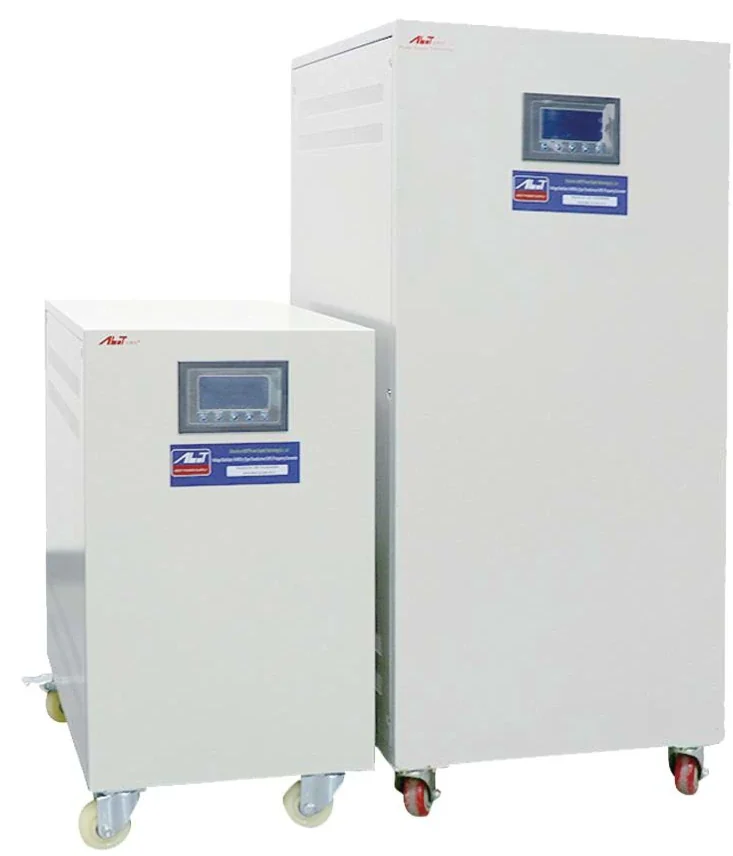
SVC Series · 0.5–100 kVA
Servo Voltage Stabilizer
±2% output from a 160–456 V input swing.
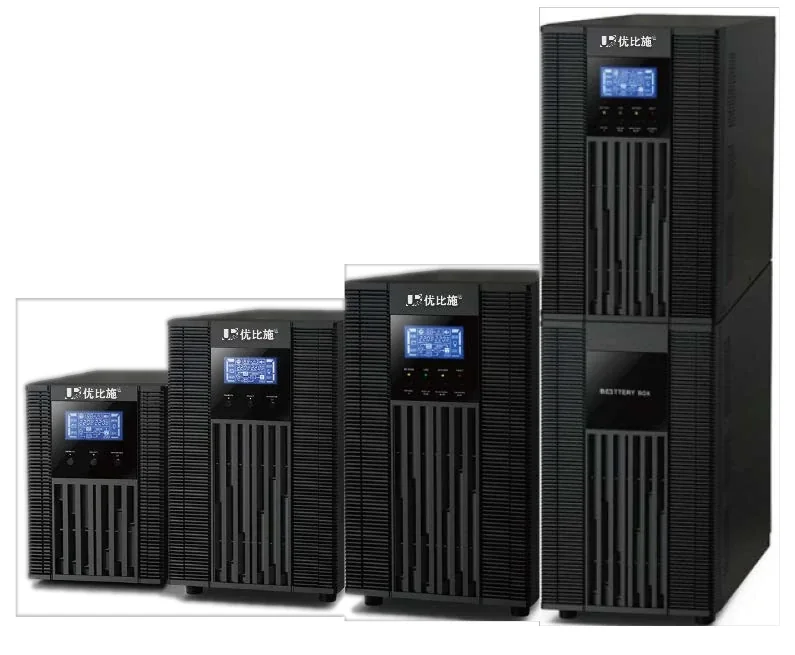
YT Series · 1–10 kVA
Single-Phase Online UPS
Double-conversion, 0 ms protection for servers, medical, and telecom loads.
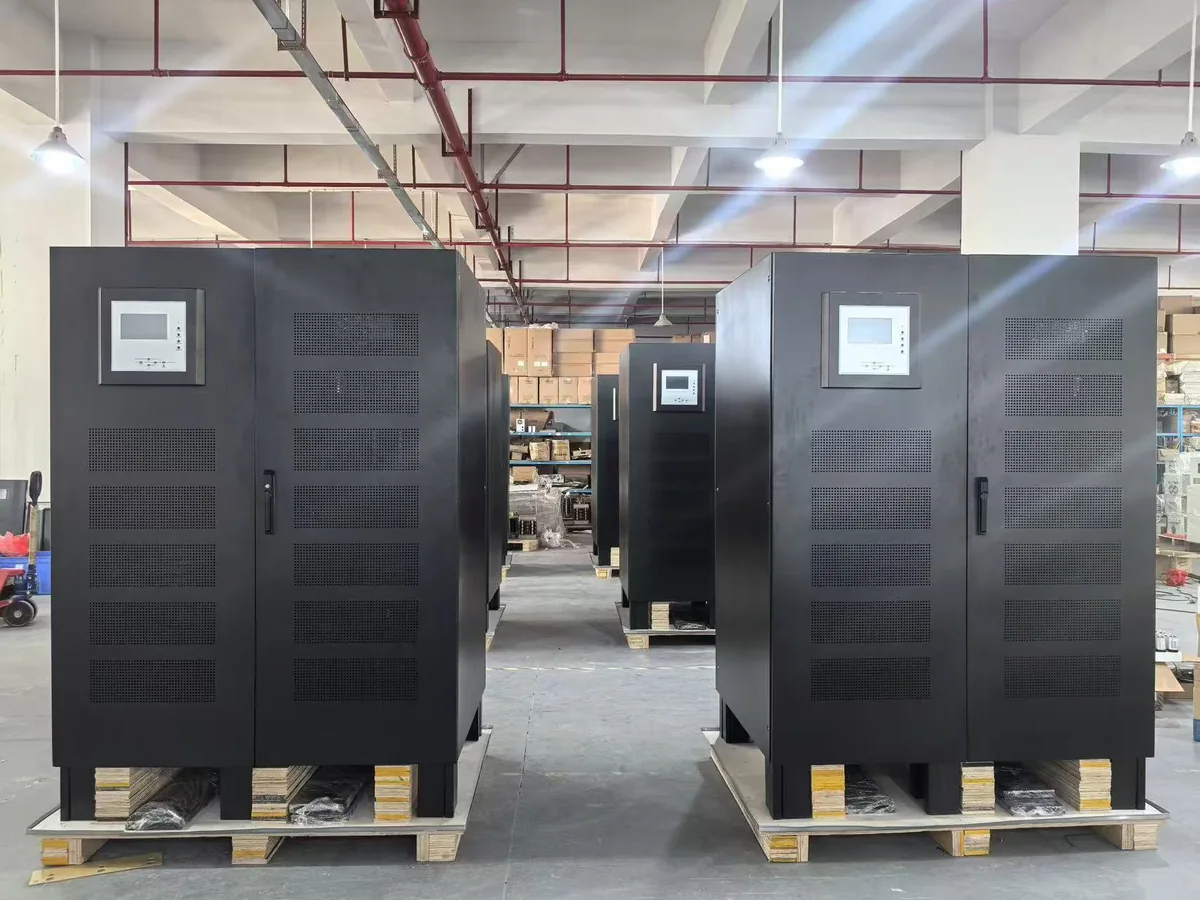
SVC-T Series · 10–100 kVA
Three-Phase Voltage Stabilizer
Independent phase regulation for unbalanced three-phase loads.
Questions from project buyers.
Project-specific answers. If your question is not here, send the load list and the site conditions.
Talk to an engineer Does a stabilizer protect against lightning?
No. A stabilizer corrects sustained voltage deviations; a surge protective device diverts fast transients. Use both.
Where does the SPD go relative to the UPS?
At the service entrance and the distribution board upstream of the UPS, plus a Type 3 device at the sensitive load if needed. Protect the DC side as well.
What is a Type 1 SPD?
A Type 1 SPD is installed at the service entrance and can discharge partial lightning current. Type 2 is for distribution boards, and Type 3 is for equipment terminals.
How often should I replace an SPD?
Replace it when the status indicator shows end-of-life, or after a large surge event. Inspect it after every storm season.
Can I install an SPD without an earth bar?
No. An SPD needs a low-impedance earth connection to divert the surge. Without it, the SPD cannot protect the load and may be a safety hazard.
Send the load list. We will return the configuration.
Tell us the kW, the backup time, the phase, and the site country. You will get a capacity recommendation, a battery configuration, and the model sheet.
- Capacity and topology recommendation
- Battery bank and runtime estimate
- Model sheet and commercial offer
Request a configuration and quotation
Send the load list, backup time, and site conditions. We will return a capacity recommendation, battery configuration, and commercial offer.