
Three-Phase Voltage Stabilizer
Independent phase regulation for unbalanced three-phase loads.
- 10–100 kVA
- Independent phases
- ±2% output
Rated capacity
10–100 kVA
Input
304–456 VAC, 3-phase + N
Output
380/400/415 VAC ±2%
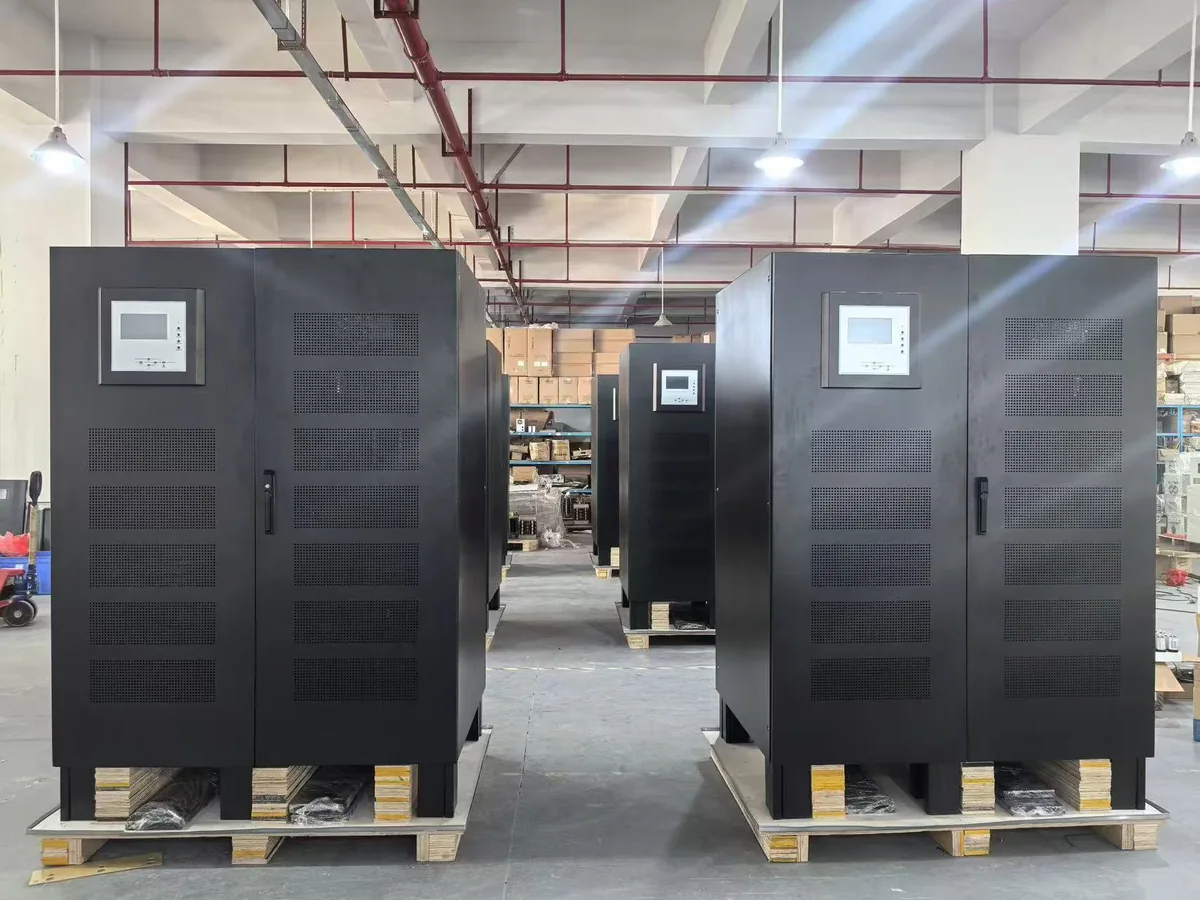
Rated range
10–100 kVA
- Rated capacity
- 10–100 kVA
- Input
- 304–456 VAC, 3-phase + N
- Output
- 380/400/415 VAC ±2%
- Phase regulation
- Independent per phase
- Efficiency
- > 98%
- Monitoring
- 5.5" LCD, RS485 / MODBUS-RTU
A three-phase stabilizer from 10 to 100 kVA with independent regulation on each phase. That is what unbalanced single-phase loads on a three-phase supply actually require; a single three-phase correction loop will let one loaded phase drag the other two.
What this platform is built to do.
A three-phase voltage stabilizer corrects each phase independently. That matters when single-phase loads are distributed unevenly across a three-phase supply: without independent regulation, one phase can sit at 250 V while another sits at 190 V. The SVC-T series regulates each phase to 380/400/415 VAC ±2%, even when the input phases differ.
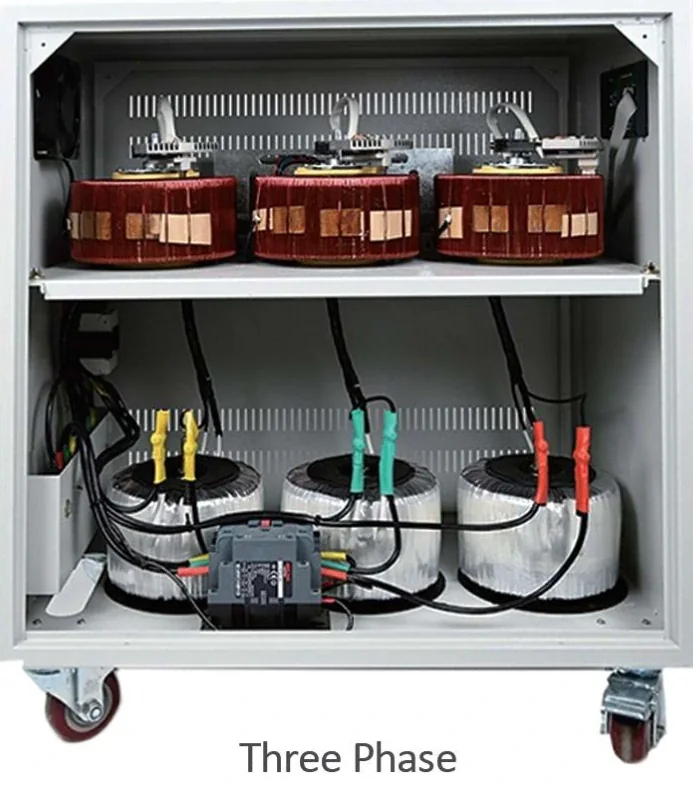
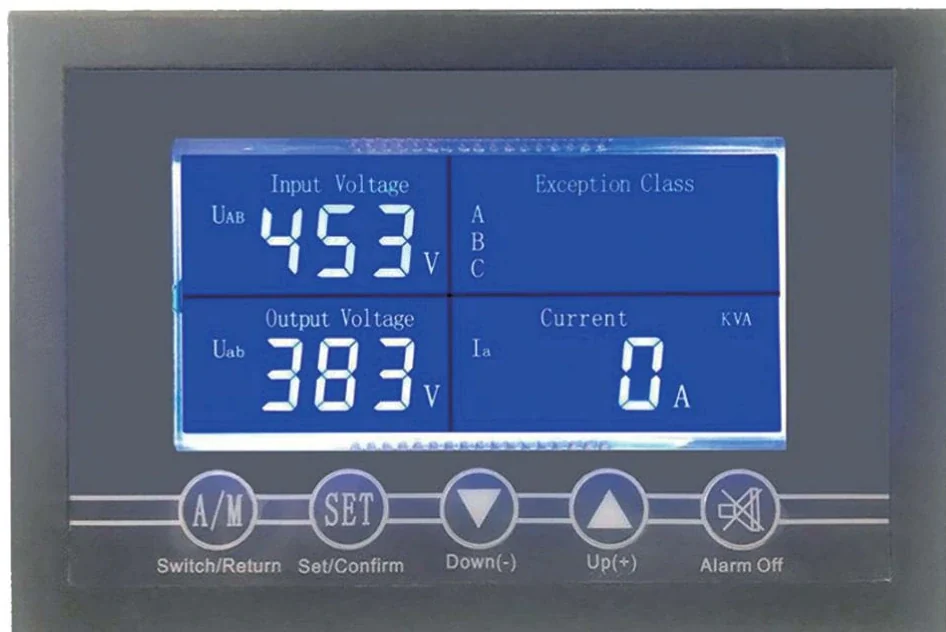
The input window is 304–456 VAC line-to-line, which covers the deep sags and overvoltage common at the end of a long feeder. The unit uses a servo motor, carbon brush, and toroidal autotransformer per phase, with a 5.5-inch LCD and RS485/MODBUS-RTU. Efficiency is above 98%, and the output waveform is not regenerated, so there is no additional harmonic distortion.
Three-phase stabilizers are installed at the incoming supply of a factory, a commercial building, a hotel, or a hospital. They protect HVAC plants, elevators, production machinery, and lighting. They do not provide backup; for outages, pair the stabilizer with a three-phase UPS or a generator.
Unbalanced-load ready
Each phase is corrected separately, so single-phase loads do not drag the other phases.
Wide input window
304–456 VAC line-to-line covers long feeders and weak transformers.
No waveform change
The stabilizer corrects voltage without regenerating the waveform.
28 protections
Phase loss, phase reversal, overload, overcurrent, and over/under voltage.
SVC-T Series · 10–100 kVA
Selected models and nominal values. The quotation confirms the exact configuration, battery, and documentation for the project.
Request a model sheetSVC-T three-phase models
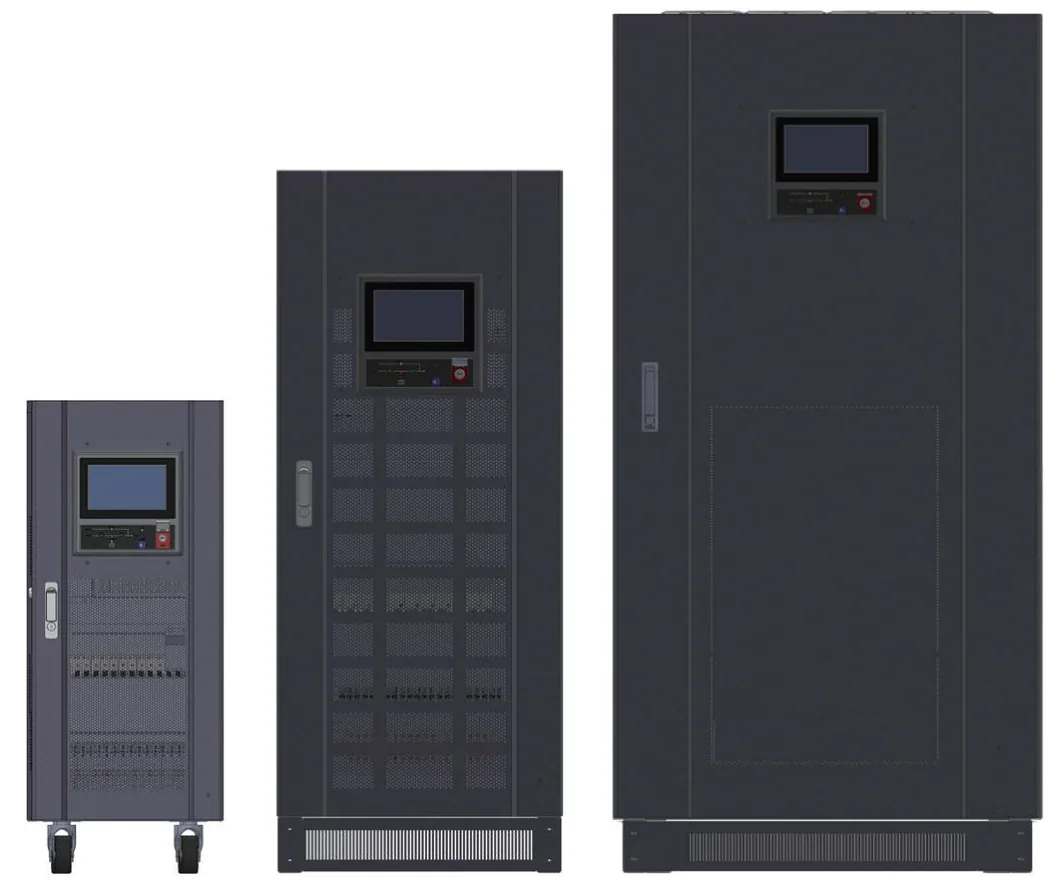
| Model | Capacity | Input range | Output | Dimensions (mm) | Weight |
|---|---|---|---|---|---|
| SVC-10KVA-T | 10 kVA | 304–456 VAC | 380/400/415 VAC ±2% | 380 × 450 × 755 | 55 kg |
| SVC-15KVA-T | 15 kVA | 304–456 VAC | 380/400/415 VAC ±2% | 380 × 450 × 755 | 60 kg |
| SVC-20KVA-T | 20 kVA | 304–456 VAC | 380/400/415 VAC ±2% | 400 × 650 × 760 | 102 kg |
| SVC-30KVA-T | 30 kVA | 304–456 VAC | 380/400/415 VAC ±2% | 400 × 650 × 760 | 118 kg |
| SVC-40KVA-T | 40 kVA | 304–456 VAC | 380/400/415 VAC ±2% | 450 × 700 × 850 | 130 kg |
| SVC-50KVA-T | 50 kVA | 304–456 VAC | 380/400/415 VAC ±2% | 450 × 700 × 850 | 145 kg |
| SVC-60KVA-T | 60 kVA | 304–456 VAC | 380/400/415 VAC ±2% | 450 × 700 × 850 | 160 kg |
| SVC-80KVA-T | 80 kVA | 304–456 VAC | 380/400/415 VAC ±2% | 450 × 600 × 1,000 | 200 kg |
| SVC-100KVA-T | 100 kVA | 304–456 VAC | 380/400/415 VAC ±2% | 520 × 700 × 1,200 | 230 kg |
Electrical
- Capacity
- 10 / 15 / 20 / 30 / 40 / 50 / 60 / 80 / 100 kVA
- Input
- 380/400/415 VAC, 3-phase + N, 304–456 VAC
- Output
- 380/400/415 VAC ±2%
- Frequency
- 50/60 Hz
- Power factor
- 0.8
- Efficiency
- > 98%
- Regulation
- Independent per phase
- Response time
- < 1 s for a 10% input step
Protection and environment
- Protections
- Over/under voltage, overload, overcurrent, short circuit, phase loss, phase reversal
- Manual bypass
- Optional
- Display
- 5.5" LCD
- Communication
- RS485 / MODBUS-RTU; Ethernet optional
- Operating temperature
- −20 to +50 °C
- Altitude
- < 3,000 m
- Humidity
- 0–95% non-condensing
- Noise
- ≤ 60 dB
Key specifications
| Parameter | Value |
|---|---|
| Rated capacity | 10–100 kVA |
| Input | 304–456 VAC, 3-phase + N |
| Output | 380/400/415 VAC ±2% |
| Phase regulation | Independent per phase |
| Efficiency | > 98% |
| Monitoring | 5.5" LCD, RS485 / MODBUS-RTU |
Selection notes for this family
| Question | What to check | Why |
|---|---|---|
| Load profile | Running kW and largest step for 10–100 kVA | Avoid overload and oversizing |
| Runtime | Battery bank and charger for the target minutes | Actual autonomy |
| Environment | Temperature, altitude, dust and ventilation | Life and derating |
| Interface | Monitoring, bypass, parallel requirement | Integration with the room |
| Documentation | Conformity route and model test report | Customs and tender |
Where this family fits.
These are the load types the platform is specified for. If your load is outside this list, send the load profile before selecting the model.
- Factory incoming supply
- Hotels and commercial buildings
- Hospitals
- Water treatment plants
- HVAC and elevator systems
- Telecom sites
Three-phase stabilizer: project questions.
Project-specific answers. If your question is not here, send the load list and the site conditions.
Talk to an engineer Why does independent phase regulation matter?
Single-phase loads are rarely balanced. Without independent regulation, one phase can be overvoltage while another is undervoltage. Independent regulation keeps each phase within ±2% of its setpoint.
Can a three-phase stabilizer fix a phase loss?
No. It detects phase loss and trips to protect the load. Phase loss must be corrected upstream; a stabilizer cannot generate the missing phase.
Does the neutral need to be sized for the full current?
Yes. Non-linear single-phase loads can produce neutral currents above the phase current. Size the neutral and the upstream protection for the harmonic content.
Should I install the stabilizer before or after the UPS?
For a weak grid, install the stabilizer upstream of the UPS to keep the UPS input within range. For a stable grid, the UPS may not need a stabilizer. The order depends on the load and the failure modes.
Can it be paralleled for higher capacity?
Standard SVC units are not designed for parallel operation. For capacities above 100 kVA, use a larger frame or a different product family; do not parallel standard units without factory approval.
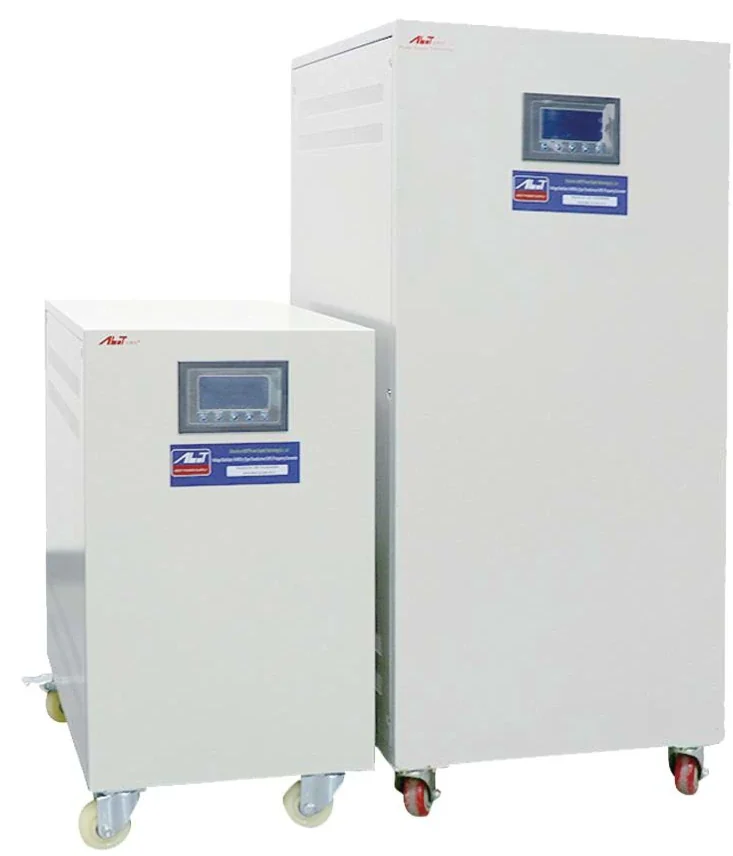
Send the load list. We will return the configuration.
Tell us the kW, the backup time, the phase, and the site country. You will get a capacity recommendation, a battery configuration, and the model sheet.
- Capacity and topology recommendation
- Battery bank and runtime estimate
- Model sheet and commercial offer
Request a configuration and quotation
Send the load list, backup time, and site conditions. We will return a capacity recommendation, battery configuration, and commercial offer.