
Data center UPS: redundancy, runtime, and room design.
Data center UPS architecture from 20 to 300 kW: modular N+1, parallel frames, battery runtime, cooling, monitoring, and commissioning checklist.
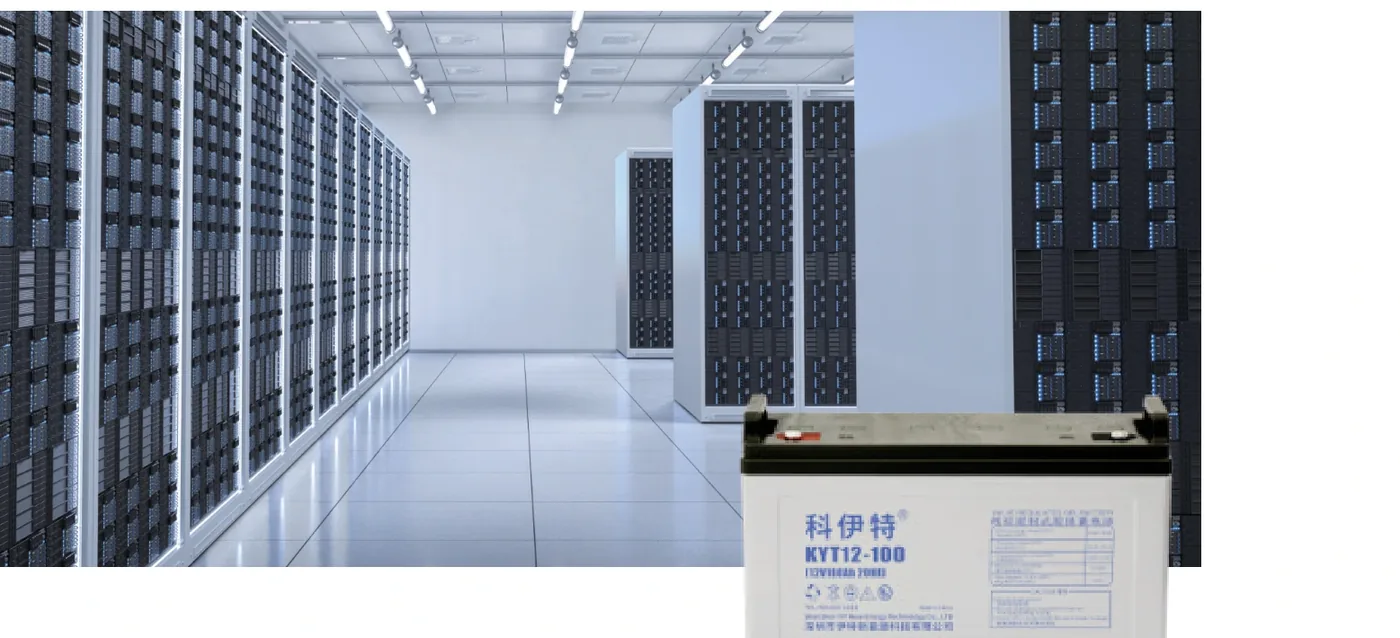
- Redundancy
- N+1
- Modular frames
- 90–300 kW
- Typical generator ride-through
- 5–15 min
- Transfer
- 0 ms
A data center UPS is a capacity and redundancy decision before it is a product decision. The IT load, the growth plan, the redundancy target (N, N+1, 2N), and the battery runtime define the frame, the module count, and the room layout. The UPS must also coordinate with the switchgear, the cooling, and the monitoring system.
For a phased build, a modular frame lets you install the full frame and only the modules needed today, then add modules as the IT load grows. For a fixed load, a parallel monolithic frame can be simpler. Both need a maintenance bypass and a battery room plan.
Which UPS architecture fits a data center?
N means the UPS capacity exactly matches the load. N+1 adds one redundant module or unit. 2N duplicates the entire path, including the UPS, battery, and distribution. Most enterprise data centers use N+1 for the UPS and either N+1 or 2N for the power path, depending on the tier target.
A modular N+1 frame is often the best balance for a single room: the frame is sized for the final load, the modules are added in 30 kW steps, and one spare module covers a failure. For a multi-room or colocation site, a parallel frame or a 2N topology may be required.
Data center UPS topology options
| Topology | Redundancy | Typical use | Trade-off |
|---|---|---|---|
| Single frame | N | Small server room | No redundancy |
| Parallel frames | N+1 | Medium data center | More floor space |
| Modular frame | N+1 / N+2 | Phased build | Frame cost upfront |
| 2N | Full duplicate | Tier III/IV target | Highest cost and space |
How much battery runtime does a data center need?
If the site has a reliable generator, 5–15 minutes is usually enough to cover the generator start and transfer. If the generator is absent or unreliable, the battery must carry the load for the full outage window, which can be 1–4 hours or more. The battery room, floor loading, and cooling become major design items.
For a 100 kW IT load and 10 minutes, the usable energy is about 16.7 kWh; at 80% depth of discharge, the nominal bank is about 21 kWh. For 2 hours, the nominal bank is about 250 kWh. The difference in room size and cost is significant.
How should the UPS be monitored?
The UPS alarm should be visible in the NOC, not only on the front panel. A UPS that transfers to battery without an alert is a single point of failure waiting to happen. Test the alert path during commissioning.
- SNMP card for network management and email alerts
- Dry contacts for BMS and alarm panels
- MODBUS TCP/RTU for DCIM integration
- Battery monitoring for string voltage, current, and temperature
- Generator and ATS status on the same dashboard
- Environmental sensors for room temperature and humidity
What should be in the data center UPS scope?
- IT load profile and growth plan
- Redundancy target and topology
- Battery runtime and generator availability
- UPS room layout, floor loading, and cooling
- Input switchgear, breaker, cable, and bypass
- Monitoring and DCIM integration
- Factory acceptance test and site acceptance test
- Commissioning, load bank test, and documentation
Which standards and documents are referenced on this page?
The table lists the model-specific standards and conformity documents a project buyer should ask for. Availability depends on the frame, the battery, and the destination market; request the document that names your model.
UPS standards and documents
| Reference | What it covers |
|---|---|
| IEC 62040-1 | UPS general and safety requirements |
| IEC 62040-2 | UPS electromagnetic compatibility (EMC) |
| IEC 62040-3 | UPS performance and test requirements |
| IEC 60896-21 / -22 | VRLA stationary battery type and performance tests |
| IEC 62619 | Safety of lithium cells and batteries for industrial use |
| UN38.3 / MSDS | Lithium battery transport test and material safety data |
| CE / RoHS | EU conformity and restricted-substance declaration |
| ISO 9001 | Manufacturing quality management system |
| SNMP / MODBUS | Remote monitoring and BMS interface |
| IP20 / IP21 | Cabinet ingress protection for indoor installation |
Certificates are issued against the exact model and configuration. See the certifications page for how to confirm scope and revision, or send the model to request the current document.
Confirm the inputs and documents before quoting.
Project inputs to confirm
| Item | What to confirm | Why it matters |
|---|---|---|
| Load | Running kW, largest motor, load step | Sets kVA, overload and topology |
| Runtime | Minutes, generator availability, battery room | Sets battery bank and charger |
| Supply | Voltage, frequency, phase, input current | Sets model, breaker and cable |
| Site | Country, altitude, ambient temperature, dust | Sets derating, IP and documents |
| Battery | VRLA, LiFePO4, footprint, weight limit | Sets chemistry and room layout |
| Documentation | Conformity route, test report, language | Sets document package and lead time |
What does a 120 kW data center configuration look like?
A 120 kW white-space hall with 42 racks, dual utility feeds and a 10-minute battery for generator start. The design uses three 50 kW modules in N+1, a maintenance bypass and two battery strings. The room is sized for 20% growth, so the initial 120 kW does not become a rebuild in year three.
- IT load
- 120 kW
- UPS redundancy
- N+1
- Battery runtime
- 10 min
- Input feed
- 2N
Reference configuration
| Item | Reference value | Why it matters |
|---|---|---|
| IT load | 120 kW / 42 racks | Measured load multiplied by a 1.25 design margin |
| UPS | 3 × 50 kW modular, N+1 | One module can be serviced without dropping the hall |
| Battery | 10 min at 120 kW | Covers generator start and transfer |
| Input | 2N, separate ATS | Loss of one feed does not drop the UPS |
| Monitoring | SNMP + DCIM | Alarms reach the NOC, not only a local buzzer |
- Keep the battery room separate from the white space and calculate floor loading.
- Specify a maintenance bypass so service does not depend on a shutdown window.
- Run a load-bank test at commissioning; a display that says “battery OK” is not a runtime test.
- Agree the alarm list with the DCIM team before the units ship.
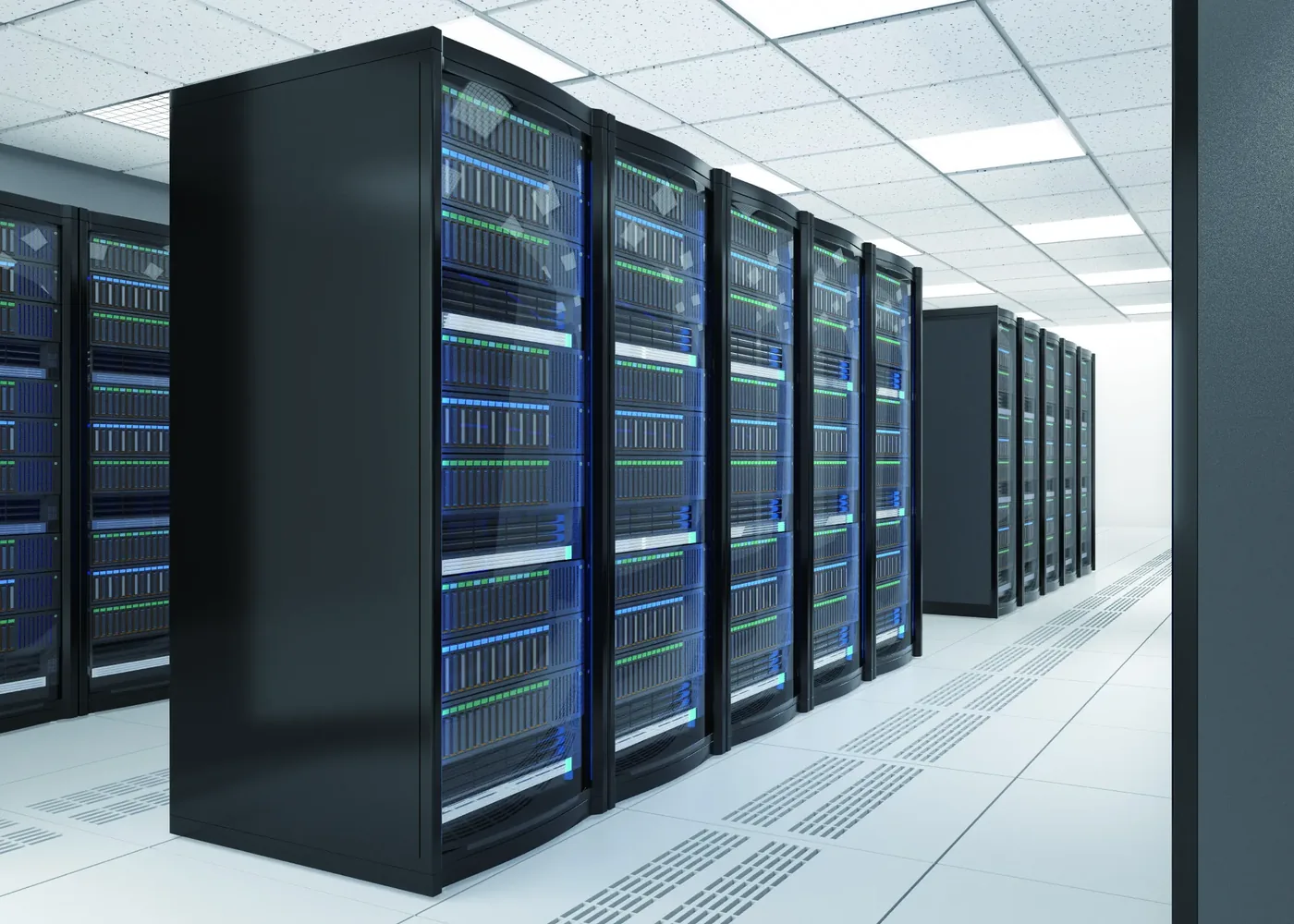
Reference configuration based on typical industry inputs. It is not a named customer project, and the image is illustrative.
Match the page to a platform.
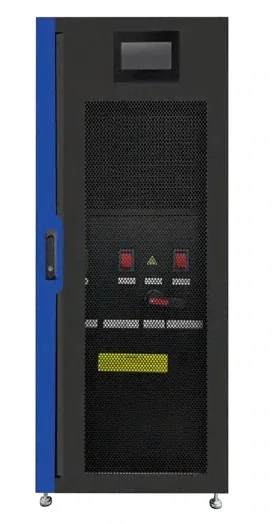
Modular frames · 10–600 kVA
Modular UPS
Scale capacity and redundancy one hot-swappable module at a time.
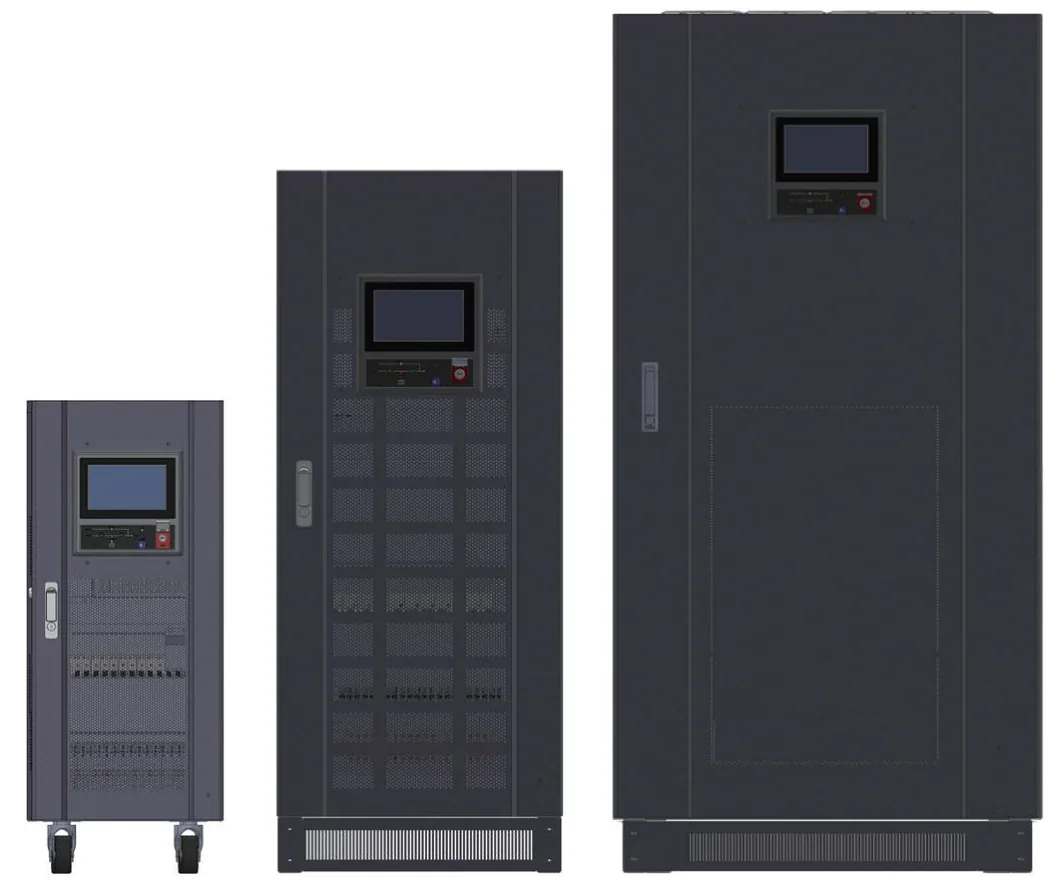
3YT / GP Series · 10–200 kVA
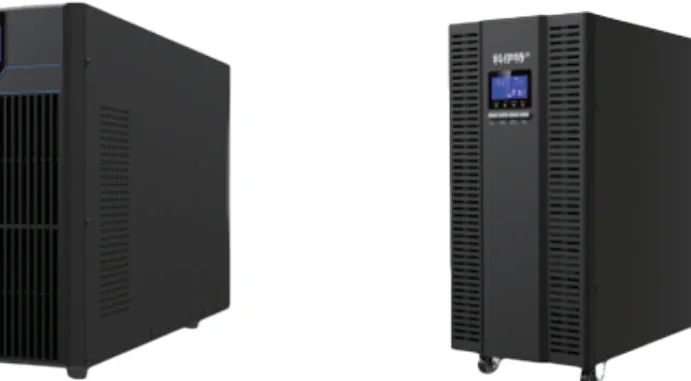
Three-Phase Online UPS
Three-phase double conversion for facility and industrial loads.
YT-R / UM / RT · 1–60 kVA
Rack-Mount UPS
Double conversion in 1U–3U, built for racks and edge rooms.
12 V blocks · 24–250 Ah
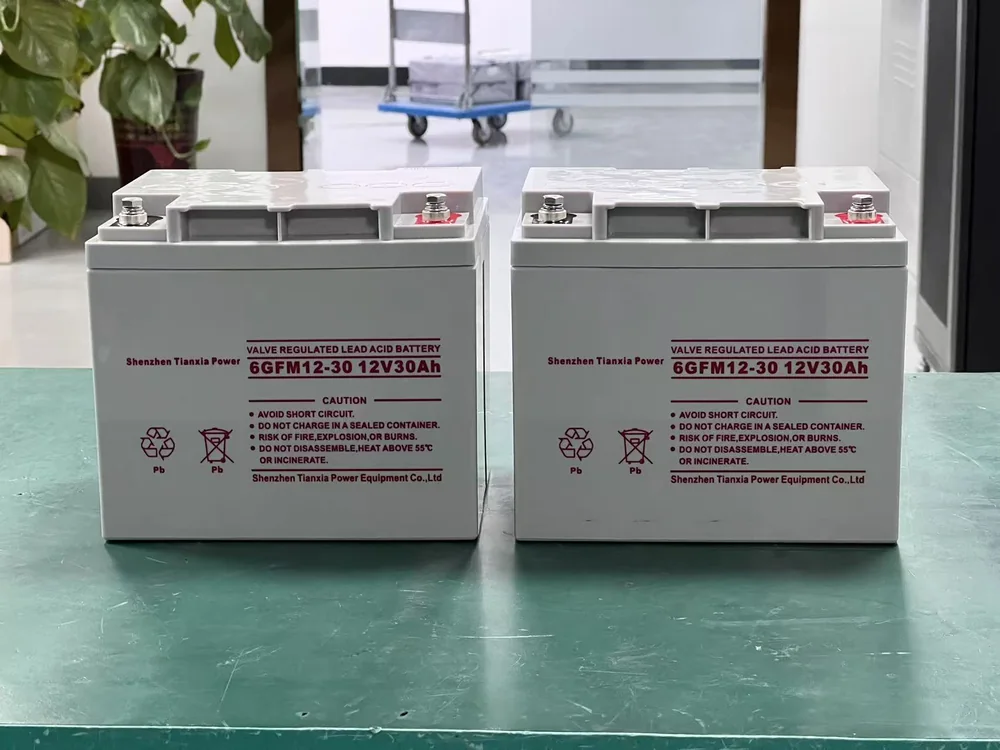
VRLA Battery
Maintenance-free sealed lead-acid blocks for UPS and telecom backup.
Questions from project buyers.
Project-specific answers. If your question is not here, send the load list and the site conditions.
Talk to an engineer Should a data center use a modular or monolithic UPS?
A modular frame is better for phased growth and N+1 without a parallel system. A monolithic frame is simpler and often lower cost for a fixed load. The decision depends on the growth plan and the redundancy target.
How much runtime is typical?
With a reliable generator, 5–15 minutes is common. Without a generator, size the battery for the full outage window, often 1–4 hours.
Do I need 2N redundancy?
Only if the site must survive the failure of an entire UPS path, including maintenance. 2N doubles the UPS, battery, and distribution cost. N+1 is sufficient for many enterprise rooms.
Can I add modules without shutting down?
Yes, on modular frames with hot-swap modules, provided the load is within the remaining N capacity and the frame has empty slots.
What monitoring should I specify?
SNMP for network alerts, dry contacts for BMS, and MODBUS for DCIM. Add battery monitoring if the string is large or the site is unmanned.
Send the load list. We will return the configuration.
Tell us the kW, the backup time, the phase, and the site country. You will get a capacity recommendation, a battery configuration, and the model sheet.
- Capacity and topology recommendation
- Battery bank and runtime estimate
- Model sheet and commercial offer
Request a configuration and quotation
Send the load list, backup time, and site conditions. We will return a capacity recommendation, battery configuration, and commercial offer.