
UPS battery: chemistry, runtime, and the real cost of autonomy.
UPS battery guide: VRLA vs LiFePO4, series strings, runtime calculation, charger limits, temperature effects and replacement planning.
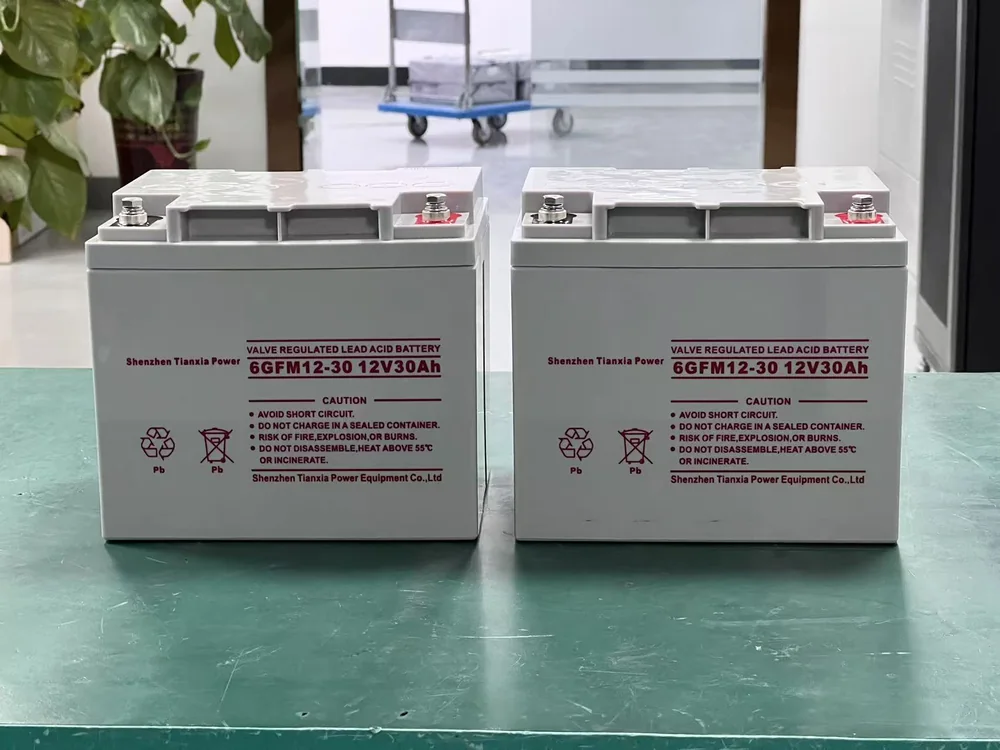
- VRLA block
- 12 V
- LiFePO4 module
- 51.2 V
- LiFePO4 cycles
- 6,000
- Runtime range
- 5 min–8 h
The battery is the part of a UPS that actually delivers autonomy. The UPS sets the power quality and the transfer time; the battery sets how long the load survives. A 10 kVA UPS with a small battery is a 10 kVA UPS for five minutes, not for an hour.
Two chemistries dominate: VRLA (sealed lead-acid) and LiFePO4. VRLA has a lower capital cost and a well-understood recycling path. LiFePO4 has more usable capacity, more cycles, and less weight, but it needs a compatible charger and BMS communication. The right choice depends on the runtime, the room, and the lifecycle cost.
How do I calculate the battery capacity for a UPS?
Start with the load in kW, the runtime in hours, the DC bus voltage, the inverter efficiency, and the usable depth of discharge. The simplified formula is: Ah = kW × 1,000 × hours ÷ (DC bus × inverter efficiency × depth of discharge). A 10 kVA UPS at 80% load and 0.9 PF draws 7.2 kW. At 192 VDC, 0.85 efficiency, and 0.6 usable depth, the required Ah is about 73.5 Ah for one hour.
That is a first estimate. The battery’s high-rate discharge curve reduces the available capacity at short runtimes, so the actual bank may be larger. Use the manufacturer’s discharge table at the expected end voltage for the final number.
Battery capacity estimate at 192 VDC, 0.85 efficiency, 0.6 DOD
| Load | 5 min | 15 min | 30 min | 60 min | 120 min |
|---|---|---|---|---|---|
| 1 kW | 10 Ah | 20 Ah | 33 Ah | 55 Ah | 110 Ah |
| 3 kW | 25 Ah | 55 Ah | 100 Ah | 165 Ah | 330 Ah |
| 7.2 kW | 55 Ah | 130 Ah | 240 Ah | 395 Ah | 790 Ah |
| 14.4 kW | 110 Ah | 260 Ah | 480 Ah | 790 Ah | 1,580 Ah |
These figures are derived from a simplified formula and are not a substitute for the battery discharge curve. Confirm the charger current and the maximum battery size.
VRLA or LiFePO4: which battery should I choose?
For a 5–15 minute ride-through in a temperature-controlled room, VRLA is usually the most economical. For a 2-hour runtime, a tight room, or a high-cycle solar application, LiFePO4 can be cheaper over the lifecycle despite the higher upfront cost.
VRLA vs LiFePO4
| Criterion | VRLA | LiFePO4 |
|---|---|---|
| Capital cost | Lower per kWh | Higher per kWh |
| Usable depth of discharge | 50–60% for good life | 80–90% with BMS |
| Cycle life | 300–600 cycles at 50% DOD | 6,000 cycles at 80% DOD |
| Weight | Heavy | About one-third of VRLA |
| Footprint | Larger for the same energy | Smaller |
| Charger | Lead-acid profile | Lithium profile + BMS communication |
| Temperature sensitivity | High | Moderate |
| Recycling | Established lead recycling | Emerging lithium recycling |
How does temperature affect battery life?
VRLA life halves for every 10 °C above 25 °C. A battery room at 35 °C can cut a 10-year design life to about 5 years; at 45 °C, to about 2.5 years. The battery may still deliver the runtime when new, but it will fail earlier.
Keep the battery room at 20–25 °C, provide ventilation, and use a temperature-compensated charger. Do not place the battery next to a UPS exhaust or in direct sunlight. For a hot site, consider LiFePO4 or a larger VRLA bank with a cooler location.
How do series and parallel strings work?
Batteries are connected in series to reach the UPS DC bus voltage, and in parallel to increase capacity. A 192 VDC bus uses 16 × 12 V blocks in series. Two parallel strings of 16 blocks double the Ah and the runtime, but also double the number of cells to monitor.
Do not mix old and new blocks in one string. Do not exceed the manufacturer’s recommended number of parallel strings. Use a battery monitor or a regular voltage check to catch a weak block before it drags down the string.
When should I replace the battery?
- Capacity test shows below 80% of rated capacity
- Blocks are swollen, hot, or leaking
- String voltage is unbalanced under load
- The battery is more than 4–5 years old in a warm room
- The UPS runtime no longer covers the generator start
- The charger fails or the battery has been deeply discharged
Which standards and documents are referenced on this page?
The table lists the model-specific standards and conformity documents a project buyer should ask for. Availability depends on the frame, the battery, and the destination market; request the document that names your model.
Battery standards and transport documents
| Reference | What it covers |
|---|---|
| IEC 60896-21 | VRLA stationary battery type tests |
| IEC 60896-22 | VRLA stationary battery performance tests |
| IEC 62485-2 | Safety requirements for stationary battery installations |
| IEC 62619 | Safety of lithium cells and batteries for industrial use |
| UN38.3 / MSDS | Transport test and material safety data for lithium |
| CE / RoHS | EU conformity and restricted-substance declaration |
| ISO 9001 | Manufacturing quality management system |
| IEC 61439-1 / -2 | Battery cabinet and assembly coordination (where supplied) |
Certificates are issued against the exact model and configuration. See the certifications page for how to confirm scope and revision, or send the model to request the current document.
Open the sizing calculator
Convert kW to kVA and estimate the battery bank.
Enter the load, the runtime, and the phase. The calculator applies a design margin and returns a standard size and a 12 V block estimate.
Match the page to a platform.
12 V blocks · 24–250 Ah
VRLA Battery
Maintenance-free sealed lead-acid blocks for UPS and telecom backup.
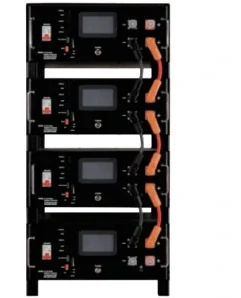
51.2 V rack · 50–280 Ah
LiFePO4 Battery
More usable cycles and less weight for long runtime.
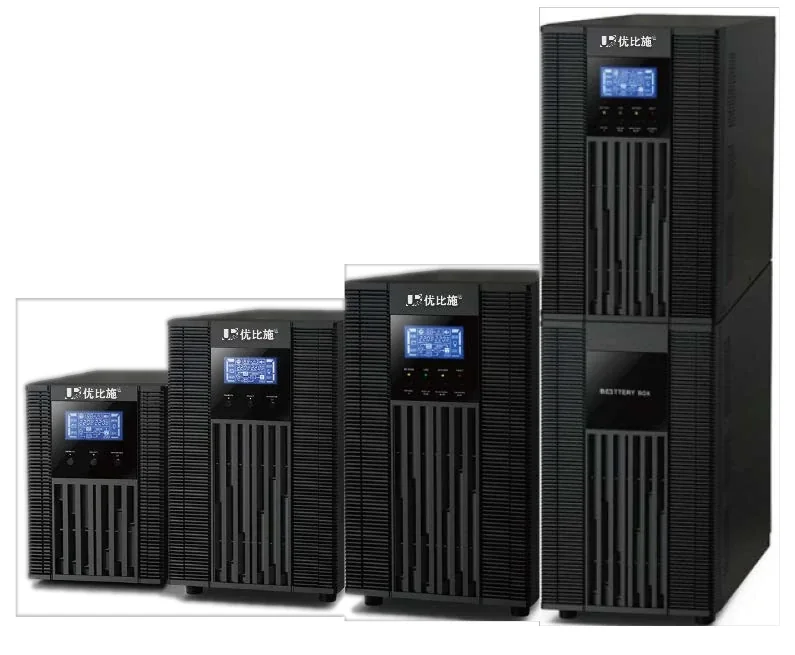
YT Series · 1–10 kVA
Single-Phase Online UPS
Double-conversion, 0 ms protection for servers, medical, and telecom loads.
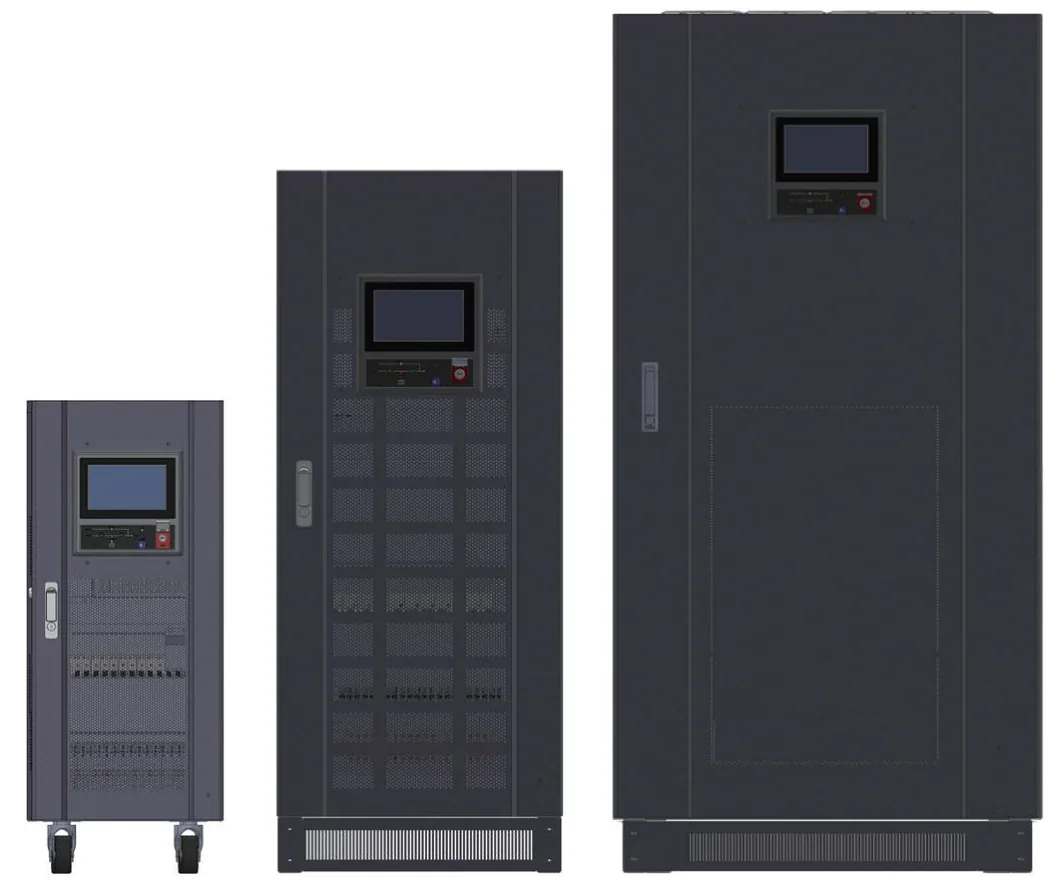
3YT / GP Series · 10–200 kVA
Three-Phase Online UPS
Three-phase double conversion for facility and industrial loads.
Questions from project buyers.
Project-specific answers. If your question is not here, send the load list and the site conditions.
Talk to an engineer How long do UPS batteries last?
VRLA blocks typically last 3–5 years in a warm room and 5–10 years at 25 °C, depending on the model. LiFePO4 modules are rated for 6,000 cycles at 80% DOD and can last longer, but the warranty and the charger compatibility must be confirmed.
How many batteries do I need for a 10 kVA UPS?
A 192 VDC bus uses 16 × 12 V blocks per string. For 1 hour at 7.2 kW, a 16 × 100 Ah string is roughly in the right range after derating; confirm with the discharge curve.
Can I use car batteries for a UPS?
No. Car batteries are designed for short, high-current cranking, not deep discharge. They will fail quickly in a UPS application.
Can I add a battery to an existing string?
Do not add a new block to an old string. The new block will be overcharged or the old blocks undercharged. Replace the whole string or use a separate string with its own protection.
Do I need a battery monitor?
For a critical site or a large string, yes. A monitor detects weak blocks, temperature excursions, and open circuits before the UPS fails on battery.
Can LiFePO4 be installed in a rack?
Yes, rack modules are available in 2U–3U. Confirm the rack depth, the weight, the BMS communication, and the charger profile.
Send the load list. We will return the configuration.
Tell us the kW, the backup time, the phase, and the site country. You will get a capacity recommendation, a battery configuration, and the model sheet.
- Capacity and topology recommendation
- Battery bank and runtime estimate
- Model sheet and commercial offer
Request a configuration and quotation
Send the load list, backup time, and site conditions. We will return a capacity recommendation, battery configuration, and commercial offer.