
Servo Voltage Stabilizer
±2% output from a 160–456 V input swing.
- 0.5–100 kVA
- ±2–3% output
- >98% efficiency
Single-phase
0.5–30 kVA, 150–260 VAC input
Three-phase
10–100 kVA, 304–456 VAC input
Output accuracy
±2%
Rated range
0.5–100 kVA
- Single-phase
- 0.5–30 kVA, 150–260 VAC input
- Three-phase
- 10–100 kVA, 304–456 VAC input
- Output accuracy
- ±2%
- Efficiency
- > 98%
- Response time
- < 1 s for a 10% input step
- Monitoring
- 5.5" LCD, RS485 / MODBUS-RTU
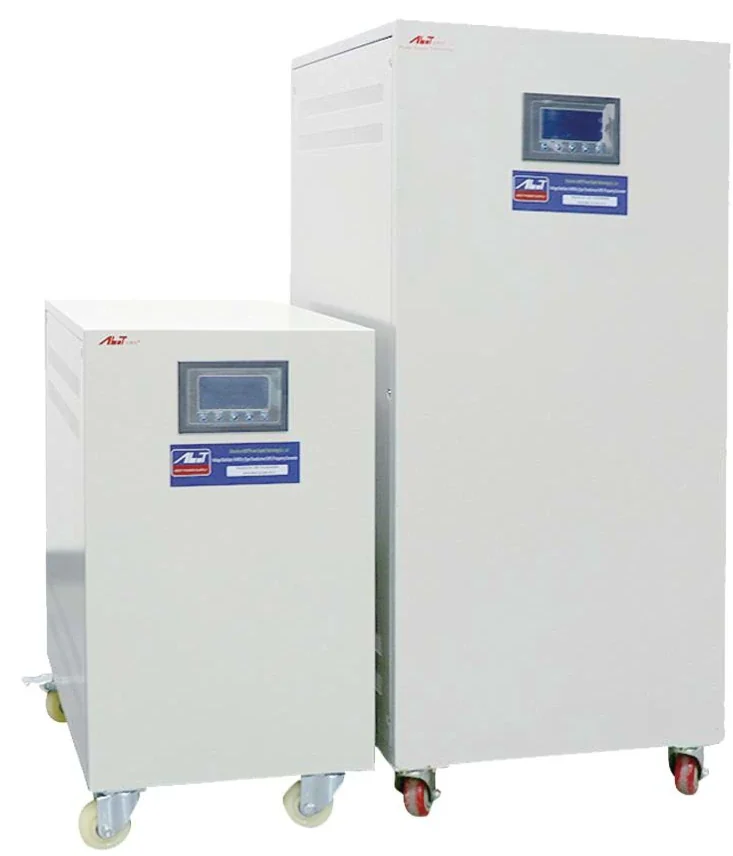
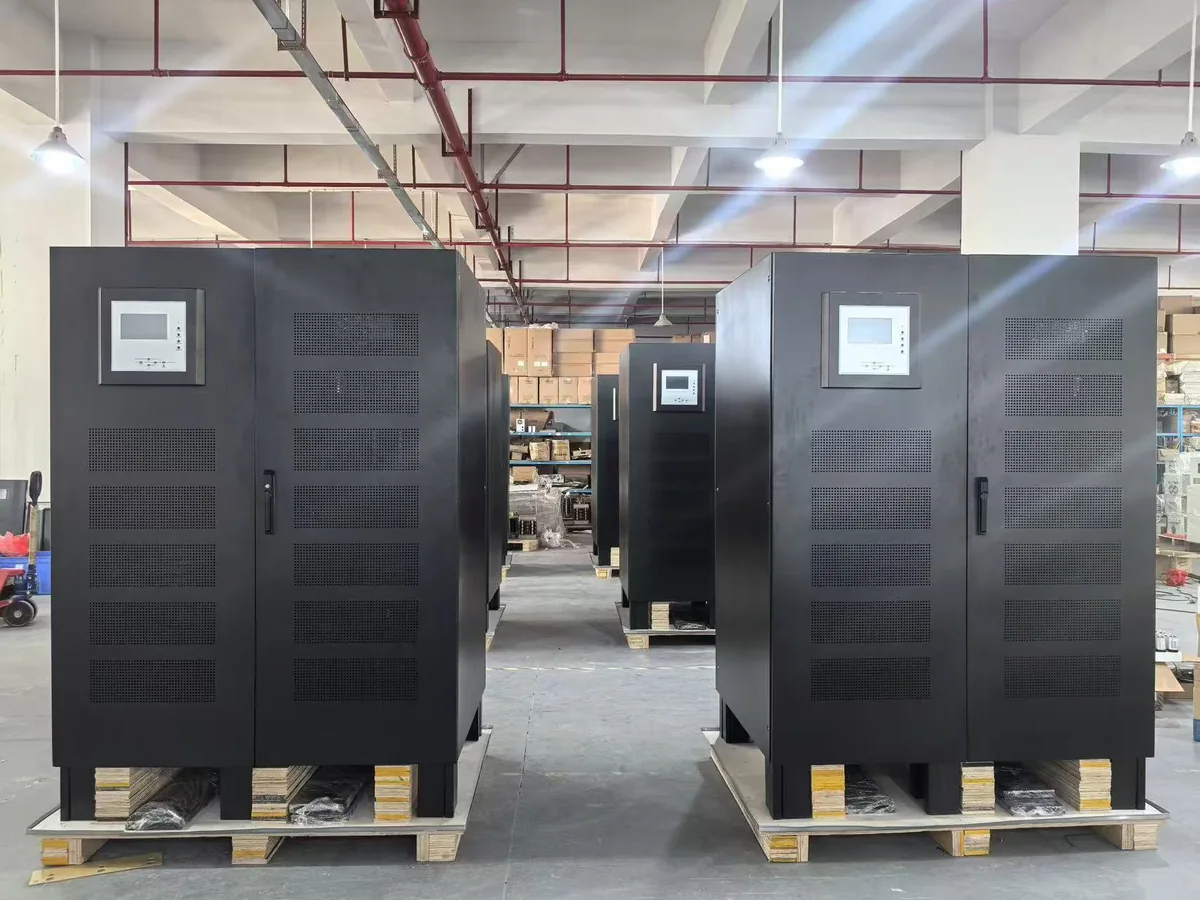
A servo (SVC) voltage stabilizer from 0.5 to 100 kVA that corrects a 150–456 VAC input to ±2–3% at above 98% efficiency, in single-phase and three-phase versions. It is the standard answer for a grid that sits persistently low or high, where a UPS would otherwise drain its battery every evening.
What this platform is built to do.
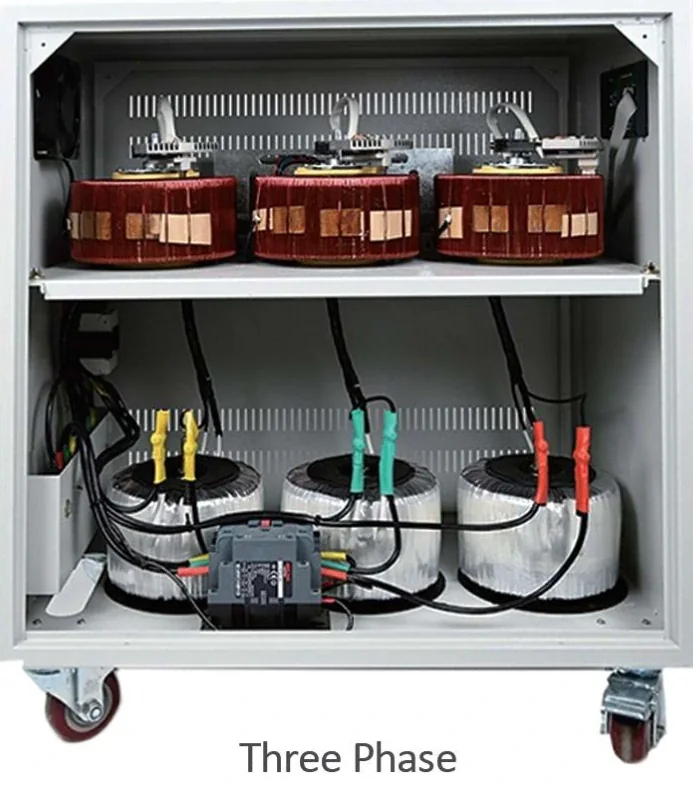
The SVC series is a servo-motor voltage stabilizer. A control circuit senses the output, drives a servo motor, and moves a carbon brush across a toroidal autotransformer. The compensation transformer adds or subtracts voltage, holding the output at ±2% even when the input moves across a wide window.
Single-phase models cover 0.5–30 kVA with a 150–260 VAC input and 220 VAC output (the 0.5–5 kVA series is ±3%; the larger single-phase and three-phase series are ±2%). Three-phase models cover 10–100 kVA with a 304–456 VAC input and 380/400/415 VAC output. Each phase is regulated independently, so an unbalanced load does not push the other phases out of tolerance. Efficiency is above 98%, response time is under 1 second for a 10% input step, and the waveform is not re-generated, so there is no additional distortion.
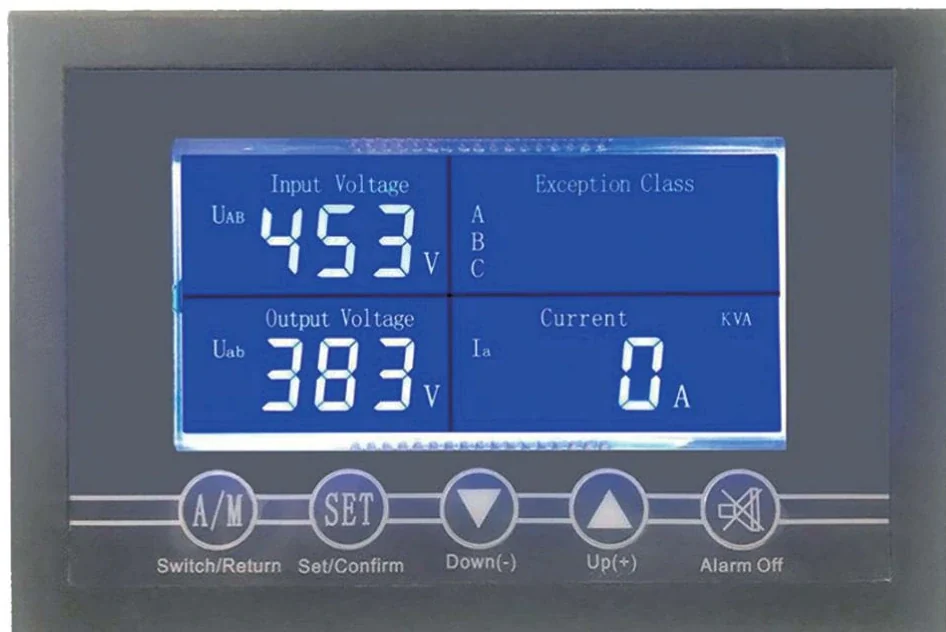
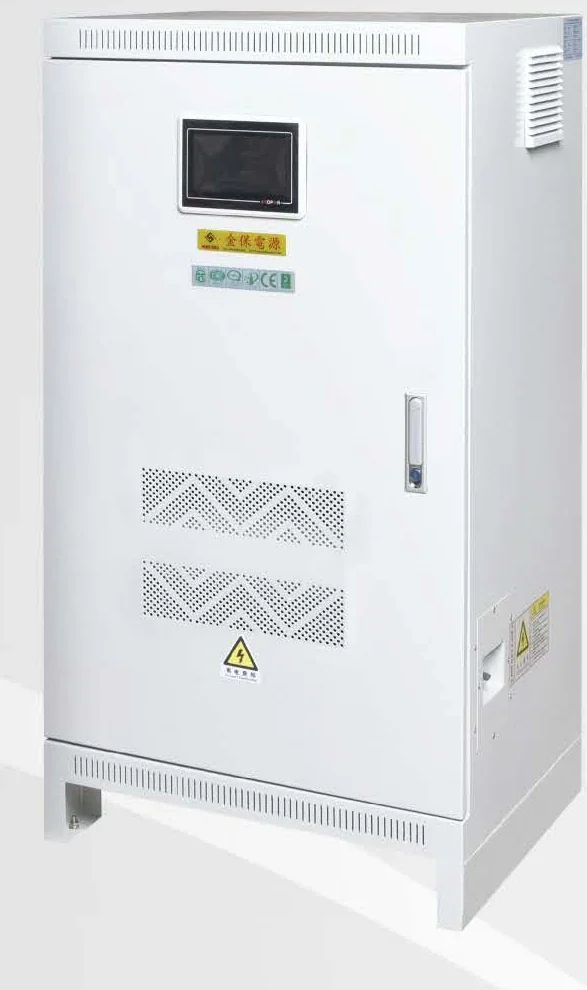
The family includes 28 protections, a 5.5-inch LCD, RS485 with MODBUS-RTU, and optional Ethernet. It is used at the front of a factory, a commercial building, a clinic, or a telecom site where the grid is weak but the load needs a stable voltage. The stabilizer does not provide backup; pair it with a UPS when outages must also be covered.
Wide correction range
160–260 VAC single-phase and 304–456 VAC three-phase input windows.
Independent phases
Each phase is regulated separately, so unbalanced loads stay within tolerance.
High efficiency
Above 98% with no waveform regeneration or additional distortion.
28 protections
Over/under voltage, overload, overcurrent, phase loss, phase reversal, and more.
SVC Series · 0.5–100 kVA
Selected models and nominal values. The quotation confirms the exact configuration, battery, and documentation for the project.
Request a model sheetSVC series single-phase and three-phase models (0.5–100 kVA)
| Model | Phase | Capacity | Input range | Output | Dimensions (mm) | Weight |
|---|---|---|---|---|---|---|
| SVC-500VA | 1-phase | 0.5 kVA / 0.4 kW | 150–260 VAC | 220 VAC ±3% | 190 × 170 × 140 | 5 kg |
| SVC-1KVA | 1-phase | 1 kVA / 0.8 kW | 150–260 VAC | 220 VAC ±3% | 200 × 200 × 160 | 6 kg |
| SVC-1.5KVA | 1-phase | 1.5 kVA / 1.2 kW | 150–260 VAC | 220 VAC ±3% | 200 × 200 × 160 | 7 kg |
| SVC-2KVA | 1-phase | 2 kVA / 1.6 kW | 150–260 VAC | 220 VAC ±3% | 270 × 250 × 200 | 9 kg |
| SVC-3KVA | 1-phase | 3 kVA / 2.4 kW | 150–260 VAC | 220 VAC ±3% | 300 × 240 × 230 | 11 kg |
| SVC-5KVA | 1-phase | 5 kVA / 4 kW | 150–260 VAC | 220 VAC ±3% | 320 × 240 × 280 | 16 kg |
| SVC-10KVA-S | 1-phase | 10 kVA / 8 kW | 160–260 VAC | 220 VAC ±2% | 350 × 400 × 650 | 55 kg |
| SVC-15KVA-S | 1-phase | 15 kVA / 12 kW | 160–260 VAC | 220 VAC ±2% | 350 × 400 × 650 | 70 kg |
| SVC-20KVA-S | 1-phase | 20 kVA / 16 kW | 160–260 VAC | 220 VAC ±2% | 380 × 450 × 755 | 90 kg |
| SVC-30KVA-S | 1-phase | 30 kVA / 24 kW | 160–260 VAC | 220 VAC ±2% | 380 × 450 × 755 | 130 kg |
| SVC-10KVA-T | 3-phase | 10 kVA / 8 kW | 304–456 VAC | 380/400/415 VAC ±2% | 380 × 450 × 755 | 55 kg |
| SVC-15KVA-T | 3-phase | 15 kVA / 12 kW | 304–456 VAC | 380/400/415 VAC ±2% | 380 × 450 × 755 | 60 kg |
| SVC-20KVA-T | 3-phase | 20 kVA / 16 kW | 304–456 VAC | 380/400/415 VAC ±2% | 400 × 650 × 760 | 102 kg |
| SVC-30KVA-T | 3-phase | 30 kVA / 24 kW | 304–456 VAC | 380/400/415 VAC ±2% | 400 × 650 × 760 | 118 kg |
| SVC-40KVA-T | 3-phase | 40 kVA / 32 kW | 304–456 VAC | 380/400/415 VAC ±2% | 450 × 700 × 850 | 130 kg |
| SVC-50KVA-T | 3-phase | 50 kVA / 40 kW | 304–456 VAC | 380/400/415 VAC ±2% | 450 × 700 × 850 | 145 kg |
| SVC-60KVA-T | 3-phase | 60 kVA / 48 kW | 304–456 VAC | 380/400/415 VAC ±2% | 450 × 700 × 850 | 160 kg |
| SVC-80KVA-T | 3-phase | 80 kVA / 64 kW | 304–456 VAC | 380/400/415 VAC ±2% | 450 × 600 × 1,000 | 200 kg |
| SVC-100KVA-T | 3-phase | 100 kVA / 80 kW | 304–456 VAC | 380/400/415 VAC ±2% | 520 × 700 × 1,200 | 230 kg |
Input and output
- Single-phase input
- 220 VAC (L+N), 160–260 VAC
- Three-phase input
- 380/400/415 VAC (3-phase + N), 304–456 VAC
- Single-phase output
- 220 VAC ±2%
- Three-phase output
- 380/400/415 VAC ±2%
- Frequency
- 50/60 Hz, no frequency conversion
- Power factor
- 0.8
- Efficiency
- > 98%
Regulation and protection
- Regulation method
- Servo motor + carbon brush + toroidal autotransformer
- Response time
- < 1 s against a 10% input deviation
- Regulation speed
- ≥ 25 V/s
- Phase regulation
- Independent per phase (three-phase models)
- Protections
- Over/under voltage, overload, overcurrent, short circuit, phase loss, phase reversal, fuse blown
- Manual bypass
- Optional, for maintenance
Display and environment
- Display
- 5.5" LCD: input/output voltage, current, settings, faults
- Communication
- RS485 / MODBUS-RTU; Ethernet optional
- Operating temperature
- −20 to +50 °C
- Altitude
- < 3,000 m
- Humidity
- 0–95% non-condensing
- Noise
- ≤ 60 dB
- Cooling
- Forced ventilation
Key specifications
| Parameter | Value |
|---|---|
| Single-phase | 0.5–30 kVA, 150–260 VAC input |
| Three-phase | 10–100 kVA, 304–456 VAC input |
| Output accuracy | ±2% |
| Efficiency | > 98% |
| Response time | < 1 s for a 10% input step |
| Monitoring | 5.5" LCD, RS485 / MODBUS-RTU |
Selection notes for this family
| Question | What to check | Why |
|---|---|---|
| Load profile | Running kW and largest step for 0.5–100 kVA | Avoid overload and oversizing |
| Runtime | Battery bank and charger for the target minutes | Actual autonomy |
| Environment | Temperature, altitude, dust and ventilation | Life and derating |
| Interface | Monitoring, bypass, parallel requirement | Integration with the room |
| Documentation | Conformity route and model test report | Customs and tender |
Where this family fits.
These are the load types the platform is specified for. If your load is outside this list, send the load profile before selecting the model.
- Factory incoming power
- Commercial buildings
- Clinics and laboratories
- Telecom sites
- Schools and hotels
- Water treatment plants
Servo stabilizer: project questions.
Project-specific answers. If your question is not here, send the load list and the site conditions.
Talk to an engineer Does a servo stabilizer provide backup during an outage?
No. It regulates voltage but does not store energy. For outage ride-through, add a UPS or an inverter with a battery bank.
What is the difference between servo and contact-type stabilizers?
A servo stabilizer uses a motor-driven brush on a toroidal transformer for a wide correction range. A contact-type (KPD) unit uses a disc autotransformer and carbon brush for high precision at a narrower range. Servo is better for wide swings; contact is better for ±1% precision on a stable-ish grid.
Can it correct a 160 V input to 220 V?
Yes, the single-phase SVC range accepts 160–260 VAC and outputs 220 VAC ±2%, subject to the load and the input current limit.
How often does the brush need maintenance?
The carbon brush and the toroidal surface wear with regulation cycles. Inspect the brush and clean the track on a scheduled maintenance interval; the interval depends on how often the input moves.
Does it work with a generator?
It can regulate generator voltage, but generator frequency and waveform must be stable. A generator with a fluctuating frequency may require a different control strategy or a UPS downstream.
Can I monitor it remotely?
Yes. RS485 with MODBUS-RTU is standard; Ethernet is optional on selected models.
Send the load list. We will return the configuration.
Tell us the kW, the backup time, the phase, and the site country. You will get a capacity recommendation, a battery configuration, and the model sheet.
- Capacity and topology recommendation
- Battery bank and runtime estimate
- Model sheet and commercial offer
Request a configuration and quotation
Send the load list, backup time, and site conditions. We will return a capacity recommendation, battery configuration, and commercial offer.