
Offline UPS
Standby backup for routers, POS, desktops, and small security loads.
- 400 VA – 3 kVA
- 2–8 ms typical
- Simulated / pure sine
Rated capacity
400 VA – 3,000 VA
Transfer time
2–8 ms typical, 13 ms max
Battery bus
12 V / 24 V / 48 V, by model
Rated range
400 VA – 3 kVA
- Rated capacity
- 400 VA – 3,000 VA
- Transfer time
- 2–8 ms typical, 13 ms max
- Battery bus
- 12 V / 24 V / 48 V, by model
- Waveform
- Simulated sine (MS series: pure sine)
- Recharge
- 8 hours to 90%
- Monitoring
- LCD; USB/RS-232 on selected models
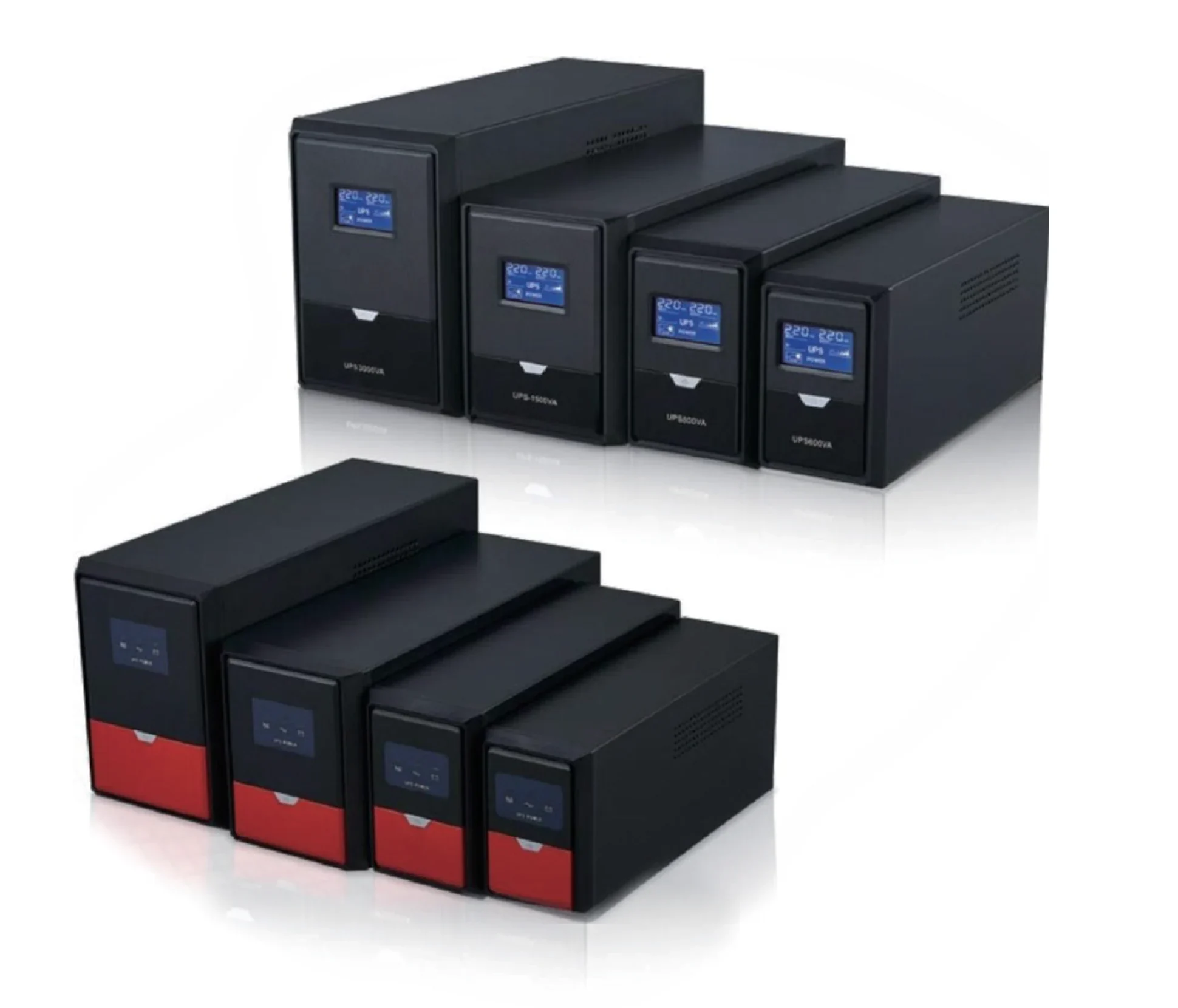
A standby UPS from 400 VA to 3 kVA with a transfer of under 10 ms and a simulated sine output in battery mode. The cheapest way to keep a single PC or router alive through short interruptions, and not suitable for anything with a motor in it.
What this platform is built to do.
The offline (standby) UPS family covers the small loads that need a few minutes of backup but do not justify a double-conversion system. The inverter is off during normal operation; when the input fails, the unit transfers in a typical 2–8 ms (13 ms maximum) and runs the load from a 12 V or 24 V battery.
Models run from 400 VA to 3,000 VA across the GP, GF, GS, GS BI, GI, GL, GSC, MU, and MS series. Most models output a simulated sine wave in battery mode; the MS series provides a pure sine wave for loads that need a cleaner waveform. Input voltage windows cover 110/120 V and 220/230 V markets, and the charger brings the battery back to 90% in about eight hours.
This is a B2B OEM and project family, not a retail line. Typical buyers are network installers, security integrators, and distributors who need a compact standby unit for routers, switches, POS terminals, access control, and small office equipment. For servers or medical loads, move up to the online range.
Compact standby
Small chassis and internal batteries for desktop, wall, and rack-edge installs.
Wide input window
162–280 VAC high-voltage models ride through many sags without switching.
Series choice
Simulated sine for IT, pure sine MS series for sensitive small loads.
OEM ready
Panel, outlet, and label options for distributor and OEM orders.
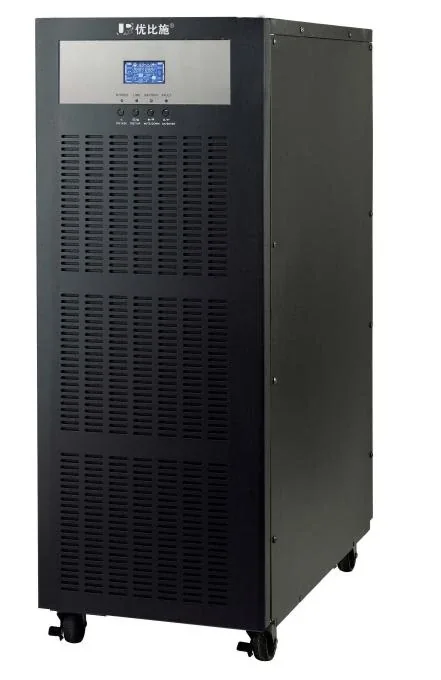
GP / GF / GS / GI / GL / MS · 400 VA – 3 kVA
Selected models and nominal values. The quotation confirms the exact configuration, battery, and documentation for the project.
Request a model sheetOffline UPS series and capacity ranges
| Series | Capacity range | Battery bus | Waveform | Typical use |
|---|---|---|---|---|
| GP | 400–2,000 VA | 12 / 24 V | Simulated sine | Router, desktop, POS |
| GF | 400–1,000 VA | 12 V | Simulated sine | Small office, CCTV |
| GS | 400–3,000 VA | 12 / 24 V | Simulated sine | Office IT, access control |
| GS BI | 400–2,000 VA | 12 / 24 V | Simulated sine | Backup with AVR |
| GI | 600–1,200 VA | 12 V | Simulated sine | Compact IT |
| GL | 1,000–2,000 VA | 24 V | Simulated sine | Branch office |
| GSC | 400–2,000 VA | 12 / 24 V | Simulated sine | Retail / POS |
| MU | 1,000–3,000 VA | 24 / 48 V | Simulated sine | Long-run small load |
| MS | 600–3,000 VA | 12 / 24 V | Pure sine | Sensitive small loads |
Input
- Voltage
- 110/120 VAC or 220/230 VAC
- Voltage range
- 81–145 VAC or 162–280 VAC, by model
- Frequency
- 50/60 Hz auto-sensing
- Connection
- IEC or local outlet, model-dependent
Output
- Voltage
- 110/120 VAC or 220/230 VAC
- Regulation (mains)
- ±10%
- Frequency (battery)
- 50/60 Hz ±1 Hz
- Transfer time
- 2–8 ms typical, 13 ms max
- Waveform
- Simulated sine; MS series pure sine
Battery and monitoring
- Battery
- 12 V 4.5–9 Ah internal; 24 V / 48 V long-run options
- Recharge
- 8 hours to 90% capacity
- Display
- LCD: mode, load, battery, input/output voltage
- Interface
- USB / RS-232 on selected models
Key specifications
| Parameter | Value |
|---|---|
| Rated capacity | 400 VA – 3,000 VA |
| Transfer time | 2–8 ms typical, 13 ms max |
| Battery bus | 12 V / 24 V / 48 V, by model |
| Waveform | Simulated sine (MS series: pure sine) |
| Recharge | 8 hours to 90% |
| Monitoring | LCD; USB/RS-232 on selected models |
Selection notes for this family
| Question | What to check | Why |
|---|---|---|
| Load profile | Running kW and largest step for 400 VA – 3 kVA | Avoid overload and oversizing |
| Runtime | Battery bank and charger for the target minutes | Actual autonomy |
| Environment | Temperature, altitude, dust and ventilation | Life and derating |
| Interface | Monitoring, bypass, parallel requirement | Integration with the room |
| Documentation | Conformity route and model test report | Customs and tender |
Where this family fits.
These are the load types the platform is specified for. If your load is outside this list, send the load profile before selecting the model.
- Home office and branch IT
- POS and retail
- CCTV and access control
- Routers and switches
- Small office equipment
Offline UPS: project questions.
Project-specific answers. If your question is not here, send the load list and the site conditions.
Talk to an engineer Is an offline UPS the same as a line-interactive UPS?
No. An offline UPS stays on mains and only starts the inverter after a failure; a line-interactive UPS adds an AVR stage and normally transfers faster. Offline units are the lower-cost option for small loads.
Can I run a motor or a fridge on an offline UPS?
No. The output is a simulated sine wave on most models and the inverter is not designed for motor starting. Use a pure sine online or industrial UPS.
What is the transfer time?
Typically 2–8 ms, with 13 ms maximum on the GP series. That is fast enough for most switch-mode power supplies, but not a substitute for a 0 ms online UPS.
Does the MS series really output a pure sine wave?
Yes, the MS series is specified with a pure sine wave output in battery mode. Confirm the exact model and load before ordering.
Can I get a 110 V version?
Yes. The family includes 110/120 VAC input and output variants. State the destination voltage and frequency at the time of order.
Send the load list. We will return the configuration.
Tell us the kW, the backup time, the phase, and the site country. You will get a capacity recommendation, a battery configuration, and the model sheet.
- Capacity and topology recommendation
- Battery bank and runtime estimate
- Model sheet and commercial offer
Request a configuration and quotation
Send the load list, backup time, and site conditions. We will return a capacity recommendation, battery configuration, and commercial offer.