
Modular UPS
Scale capacity and redundancy one hot-swappable module at a time.
- 10–600 kVA
- Hot-swap modules
- N+1 ready
Frame capacity
10–600 kVA
Module size
10–50 kVA
Redundancy
N+1, N+2 by frame
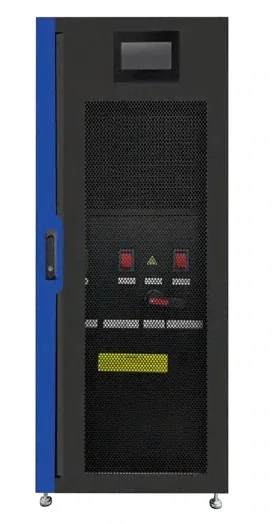
Rated range
10–600 kVA
- Frame capacity
- 10–600 kVA
- Module size
- 10–50 kVA
- Redundancy
- N+1, N+2 by frame
- Efficiency
- Up to 94.5%
- Input THDi
- < 3% at 100% load
- Battery
- External VRLA / LiFePO4; internal modules optional
A modular UPS from 10 to 600 kVA assembled from hot-swappable power modules, so capacity or N+1 redundancy can be added without shutting the load down. It is the format for rooms that will grow, or where a single frame failure is not acceptable.
What this platform is built to do.
A modular UPS separates the frame, the power modules, and the battery from the critical load. Capacity grows in 10–50 kVA module steps, and a failed module can be replaced while the rest of the system continues to supply the load. This is the preferred architecture for data centers that need to add IT load without replacing the whole UPS.
The frames cover 10–600 kVA across the NX, MK, and UMK series, with 10–50 kVA modules and 3–10 module slots. Input THDi is below 3% at full load, input PF is above 0.99, and AC–AC efficiency reaches 94.5%. Output voltage accuracy is ±1% and the inverter handles a 3:1 crest factor. Overload is 110% for 60 minutes, 120% for 10 minutes, and 150% for 60 seconds.
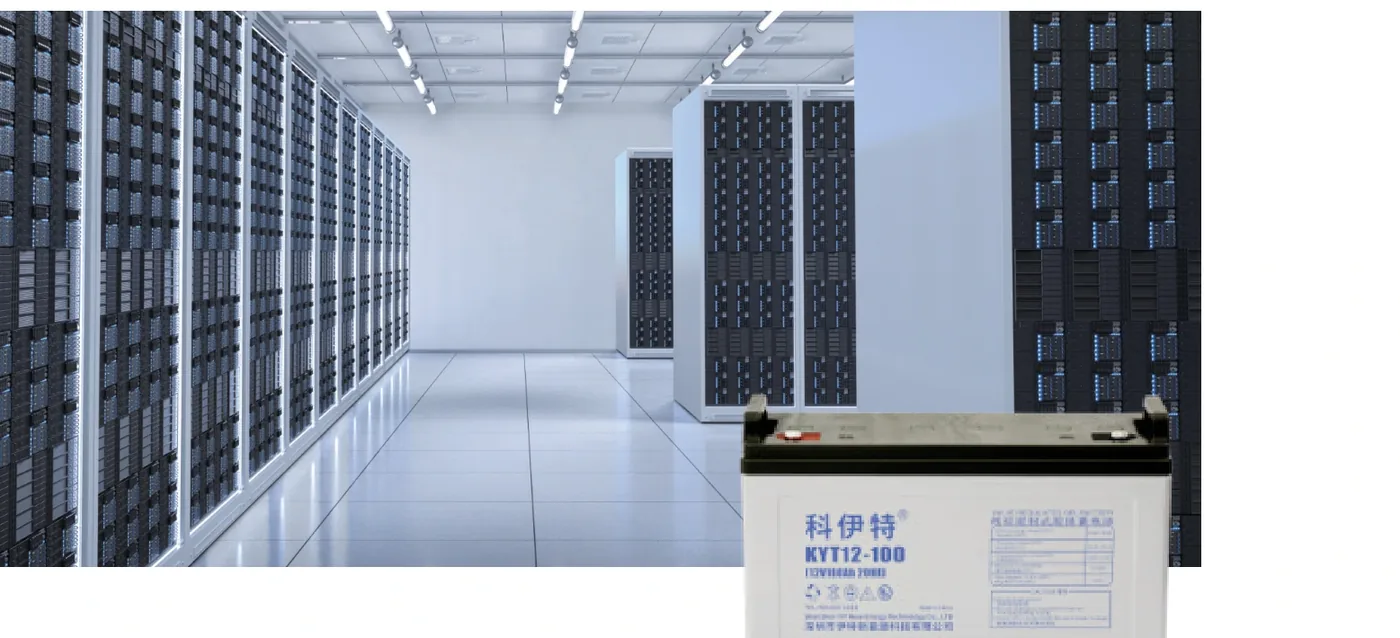
Battery options include external VRLA strings and internal battery modules on selected frames. Monitoring is through a 7-inch touch display, RS-232/USB, SNMP, and dry contacts. For a project, the key decisions are the frame size, the number of modules for N+1, the battery autonomy, and the upstream breaker and cable sizing.
Hot-swap modules
Replace a power module without transferring the load to bypass.
Pay as you grow
Install the frame and populated modules for today, add modules later.
Front access
Module and control access from the front, enabling row and wall layouts.
Efficient at part load
Module-level sleep and ECO mode reduce losses at low IT utilization.
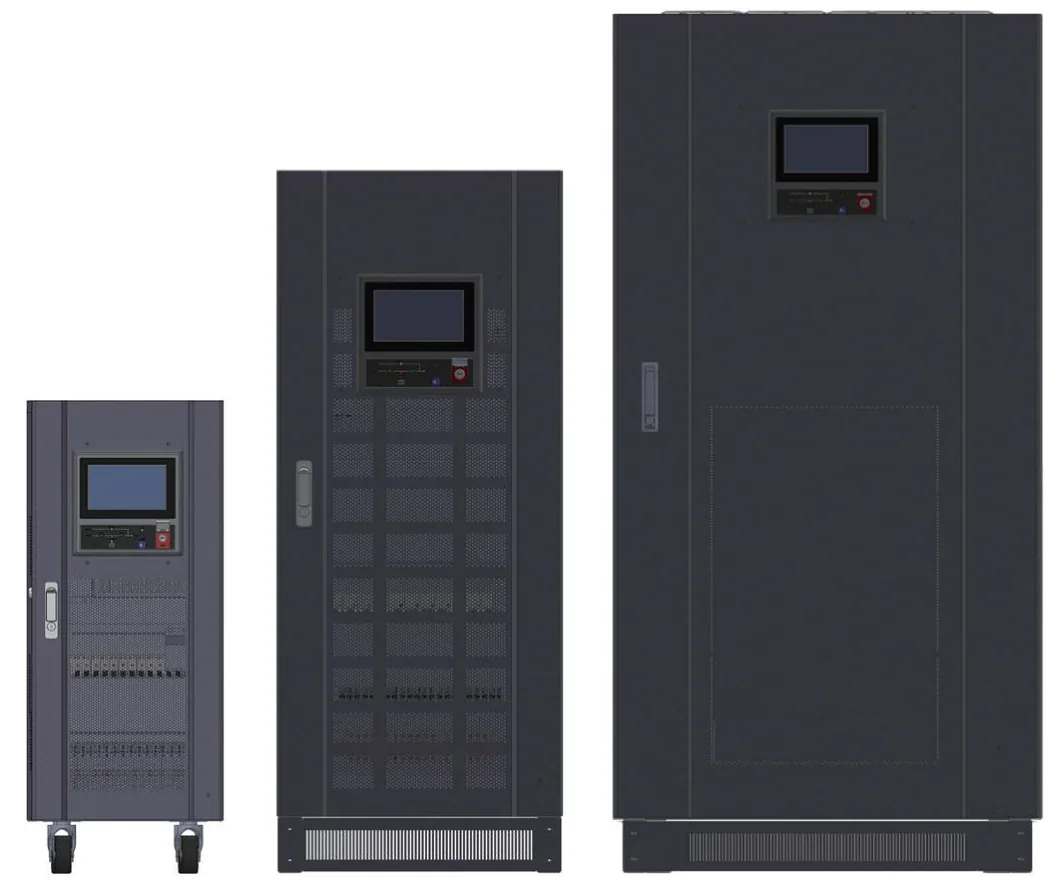
Modular frames · 10–600 kVA
Selected models and nominal values. The quotation confirms the exact configuration, battery, and documentation for the project.
Request a model sheetModular UPS frame configurations
| Frame | Rated power | Module capacity | Module slots | Typical redundancy |
|---|---|---|---|---|
| 5U-90 | 90 kW / 60 kW | 30 kW / 20 kW | 3 | N+1 with 3 × 30 kW |
| 30U-90 | 90 kW | 30 kW | 3 | N+1 |
| 42U-120 | 120 kW | 30 kW | 4 | N+1 |
| 30U-180 | 180 kW | 30 kW | 6 | N+1 / N+2 |
| 42U-200 | 200 kW | 30 kW | 10 | N+1 |
| 42U-210 | 210 kW | 30 kW | 7+1 | N+1 |
| 42U-300 | 300 kW | 30 kW | 10 | N+1 |
| MK60-P20 | 60 kVA | 20 kW | 3 | N+1 |
| MK90-P30 | 90 kVA | 30 kW | 3 | N+1 |
| MK120-P40 | 120 kVA | 40 kW | 3 | N+1 |
| MK100-P20 | 100 kVA | 20 kW | 5 | N+1 |
| MK150-P30 | 150 kVA | 30 kW | 5 | N+1 |
| MK200-P40 | 200 kVA | 40 kW | 5 | N+1 |
| MK200-P20 | 200 kVA | 20 kW | 10 | N+1 |
| MK300-P30 | 300 kVA | 30 kW | 10 | N+1 |
| MK400-P40 | 400 kVA | 40 kW | 10 | N+1 |
Input
- Configuration
- 3-phase + neutral + earth
- Voltage
- 380/400/415 VAC
- Voltage range
- 305–478 VAC at 100% load; 208–304 VAC at <70% load
- Frequency
- 40–70 Hz
- Input PF
- > 0.99 at 100% load; > 0.98 at 50% load
- THDi
- < 3% at 100% load
Output
- Voltage
- 380/400/415 VAC, 3-phase + neutral
- Voltage accuracy
- ±1% balanced; ±2% unbalanced
- Frequency
- 50/60 Hz ±0.1% in battery mode
- THD
- ≤ 1.5% linear; ≤ 4% non-linear
- Overload
- 110% 60 min; 120% 10 min; 150% 60 s; >150% 200 ms
- Efficiency
- Up to 94.5%
Battery and monitoring
- Battery bus
- ±192 to ±240 VDC (12 V × 32–40 blocks)
- Battery type
- VRLA or LiFePO4, external
- Charge current
- 8 A per 30 kW module, model-dependent
- Display
- Touch screen with system, module, and battery status
- Monitoring
- RS-232/USB, SNMP, dry contacts
Key specifications
| Parameter | Value |
|---|---|
| Frame capacity | 10–600 kVA |
| Module size | 10–50 kVA |
| Redundancy | N+1, N+2 by frame |
| Efficiency | Up to 94.5% |
| Input THDi | < 3% at 100% load |
| Battery | External VRLA / LiFePO4; internal modules optional |
Selection notes for this family
| Question | What to check | Why |
|---|---|---|
| Load profile | Running kW and largest step for 10–600 kVA | Avoid overload and oversizing |
| Runtime | Battery bank and charger for the target minutes | Actual autonomy |
| Environment | Temperature, altitude, dust and ventilation | Life and derating |
| Interface | Monitoring, bypass, parallel requirement | Integration with the room |
| Documentation | Conformity route and model test report | Customs and tender |
Where this family fits.
These are the load types the platform is specified for. If your load is outside this list, send the load profile before selecting the model.
- Colocation and cloud data centers
- Enterprise server rooms
- Telecom core sites
- Process control rooms
- Large commercial facilities
Modular UPS: project questions.
Project-specific answers. If your question is not here, send the load list and the site conditions.
Talk to an engineer How many modules do I need for N+1?
Add one more module than the load requires. For a 90 kW load with 30 kW modules, three modules carry the load and a fourth provides N+1, so the frame needs four slots and 120 kW of installed capacity.
Can I mix 20 kW and 30 kW modules?
Only in frames designed for mixed modules. Do not assume compatibility; confirm the frame bill of materials and the control firmware.
What happens when a module fails?
The remaining modules share the load if capacity allows. The failed module can be replaced hot-swap while the system stays online, provided the load is within the remaining N capacity.
Is a modular UPS more efficient than a monolithic UPS?
At partial load, yes, because idle modules can sleep. At full load, a modern monolithic UPS may be similar. Compare the annual load profile, not just the peak efficiency.
Can the battery be shared between frames?
Selected frames support a shared battery bank. The protection, cable length, and fuse coordination must be engineered for the parallel arrangement.
Send the load list. We will return the configuration.
Tell us the kW, the backup time, the phase, and the site country. You will get a capacity recommendation, a battery configuration, and the model sheet.
- Capacity and topology recommendation
- Battery bank and runtime estimate
- Model sheet and commercial offer
Request a configuration and quotation
Send the load list, backup time, and site conditions. We will return a capacity recommendation, battery configuration, and commercial offer.