
Server room UPS: right-size the rack, the runtime, and the room.
Server room UPS from 3 to 20 kVA: load calculation, rack vs tower, runtime, cooling, monitoring, and a selection checklist for IT rooms.
- Typical range
- 3–20 kVA
- Typical runtime
- 10–60 min
- Online transfer
- 0 ms
- Remote alerts
- SNMP
A server room is not a data center, but it has the same failure modes on a smaller scale: a single UPS, a single battery string, and no generator. The goal is to keep the IT load alive through short outages, shut it down cleanly during a long outage, and avoid a battery failure that goes unnoticed.
Most server rooms need 3–20 kVA. The exact size depends on the measured IT load, the growth plan, and the runtime. At this scale, a tower UPS with external batteries or a rack UPS with battery packs are both practical; the room layout and the rack depth decide.
How do I calculate the server room load?
Use the actual power draw, not the power-supply nameplate. A server with two 800 W supplies may draw 350 W. Add the switch, storage, firewall, KVM, and any floor equipment. Then add 20–25% for growth and battery aging.
For a room with 4 racks, measure each rack’s PDU current or use the server management interface. If the load is not yet installed, use the vendor’s typical configuration and a diversity factor of 0.7–0.8.
Typical server room UPS size
| Room size | IT load | UPS size | Runtime target |
|---|---|---|---|
| 1–2 racks | 1–3 kW | 3 kVA | 10–20 min |
| 3–4 racks | 3–6 kW | 5–6 kVA | 20–30 min |
| 5–8 racks | 6–10 kW | 10 kVA | 30–60 min |
| 8–12 racks | 10–18 kW | 15–20 kVA | 30–60 min |
Should the UPS be rack-mounted or freestanding?
A rack UPS saves floor space and keeps the battery in the same cabinet, but it consumes rack units and adds heat to the rack. A freestanding tower UPS is easier to service and can use a larger battery cabinet, but it needs floor space and a cable route.
For a small room with one or two racks, a rack UPS is convenient. For a room with four or more racks, a tower UPS with an external battery cabinet is often easier to expand and maintain.
How much runtime does a server room need?
If there is no generator, 10–30 minutes is enough to shut down the servers cleanly and protect the data. If there is a generator, 5–15 minutes covers the transfer. If the site has neither a generator nor a reliable utility, 1–2 hours may be needed for a controlled shutdown and a service visit.
The battery must be tested. A UPS that reports “battery OK” on the front panel may still fail under load. Schedule a capacity test every 12–24 months, and replace the string when it falls below 80% of rated capacity.
What monitoring does a server room need?
- SNMP card with email alerts for mains failure, low battery, and overload
- Temperature sensor in the room and at the rack inlet
- Battery monitoring for string voltage and temperature
- Shutdown agent on the servers and hypervisor
- Alarm escalation to the on-call engineer
Which standards and documents are referenced on this page?
The table lists the model-specific standards and conformity documents a project buyer should ask for. Availability depends on the frame, the battery, and the destination market; request the document that names your model.
UPS standards and documents
| Reference | What it covers |
|---|---|
| IEC 62040-1 | UPS general and safety requirements |
| IEC 62040-2 | UPS electromagnetic compatibility (EMC) |
| IEC 62040-3 | UPS performance and test requirements |
| IEC 60896-21 / -22 | VRLA stationary battery type and performance tests |
| IEC 62619 | Safety of lithium cells and batteries for industrial use |
| UN38.3 / MSDS | Lithium battery transport test and material safety data |
| CE / RoHS | EU conformity and restricted-substance declaration |
| ISO 9001 | Manufacturing quality management system |
| SNMP / MODBUS | Remote monitoring and BMS interface |
| IP20 / IP21 | Cabinet ingress protection for indoor installation |
Certificates are issued against the exact model and configuration. See the certifications page for how to confirm scope and revision, or send the model to request the current document.
Confirm the inputs and documents before quoting.
Project inputs to confirm
| Item | What to confirm | Why it matters |
|---|---|---|
| Load | Running kW, largest motor, load step | Sets kVA, overload and topology |
| Runtime | Minutes, generator availability, battery room | Sets battery bank and charger |
| Supply | Voltage, frequency, phase, input current | Sets model, breaker and cable |
| Site | Country, altitude, ambient temperature, dust | Sets derating, IP and documents |
| Battery | VRLA, LiFePO4, footprint, weight limit | Sets chemistry and room layout |
| Documentation | Conformity route, test report, language | Sets document package and lead time |
What does a 12 kVA branch server room look like?
Eighteen racks, 12 kW of IT load and a 30-minute runtime target. A 20 kVA online UPS leaves room for growth and battery aging; the 192 VDC bank uses 100 Ah blocks. The room has no generator, so the UPS also covers a controlled shutdown when the outage extends beyond 30 minutes.
- IT load
- 12 kW
- UPS size
- 20 kVA
- Runtime
- 30 min
- Racks
- 18
Reference configuration
| Item | Reference value | Why it matters |
|---|---|---|
| IT load | 12 kW | Servers, switches, storage and firewall |
| UPS | 20 kVA online, tower or rack | 1.5× margin for growth and battery aging |
| Battery | 192 VDC, 100 Ah blocks | About 30 minutes at the design load |
| Input | Three-phase, shared with HVAC | Confirm the input current and breaker |
| Monitoring | SNMP card + temperature sensor | Remote shutdown and room temperature alarm |
- Put the UPS and battery on a dedicated circuit, not the lighting circuit.
- Leave 1 U above and below the UPS for airflow and service.
- Use a rack temperature sensor; a hot aisle is a battery killer.
- Test the shutdown script before the first real outage.
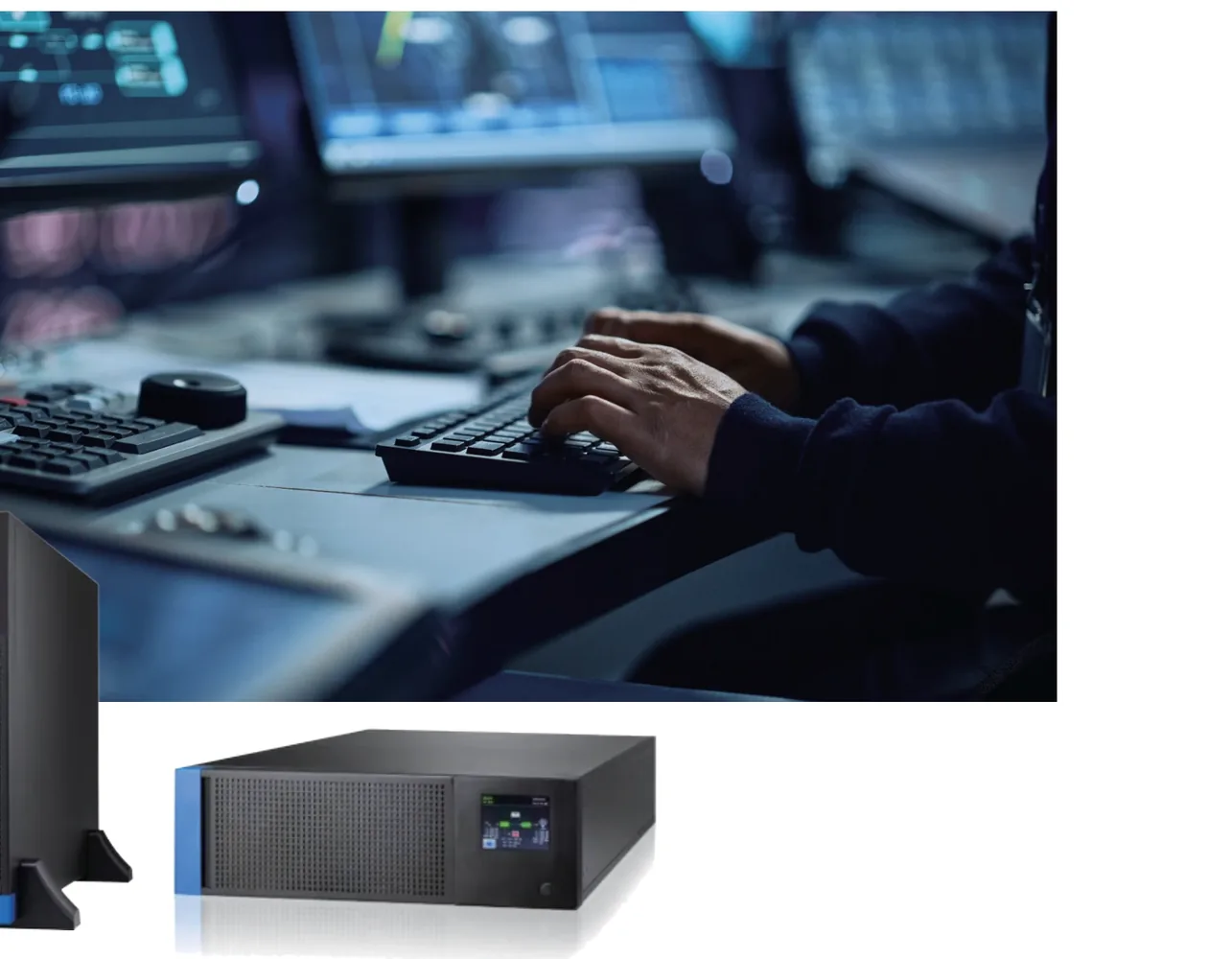
Reference configuration based on typical industry inputs. It is not a named customer project, and the image is illustrative.
Match the page to a platform.
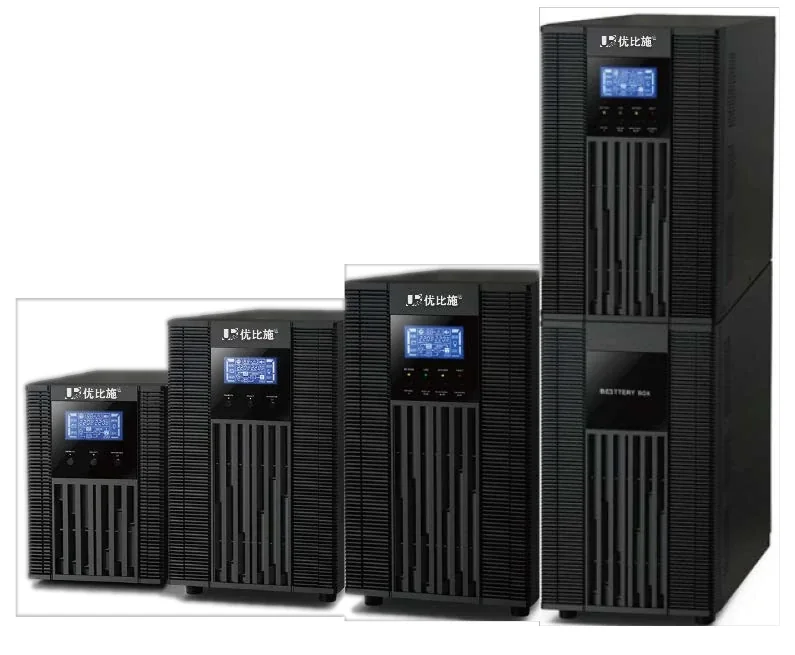
YT Series · 1–10 kVA
Single-Phase Online UPS
Double-conversion, 0 ms protection for servers, medical, and telecom loads.
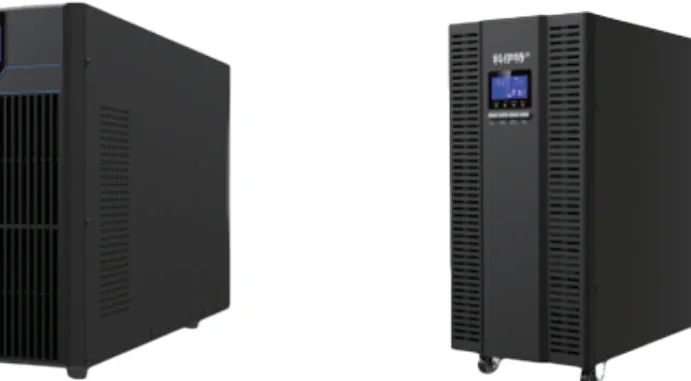
YT-R / UM / RT · 1–60 kVA
Rack-Mount UPS
Double conversion in 1U–3U, built for racks and edge rooms.
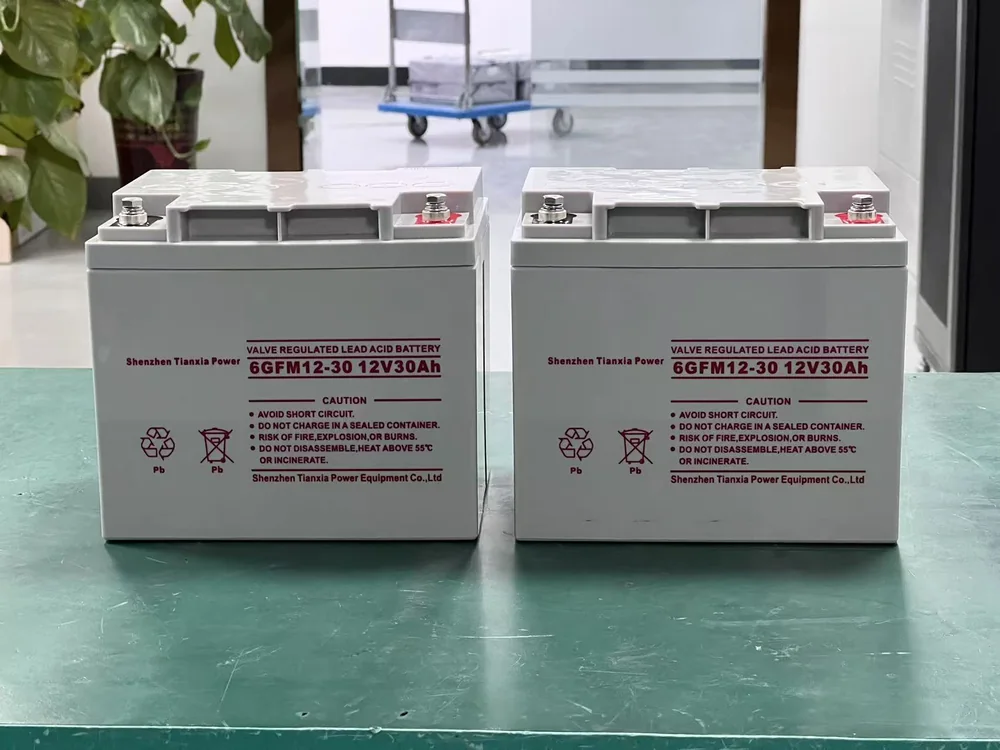
12 V blocks · 24–250 Ah
VRLA Battery
Maintenance-free sealed lead-acid blocks for UPS and telecom backup.
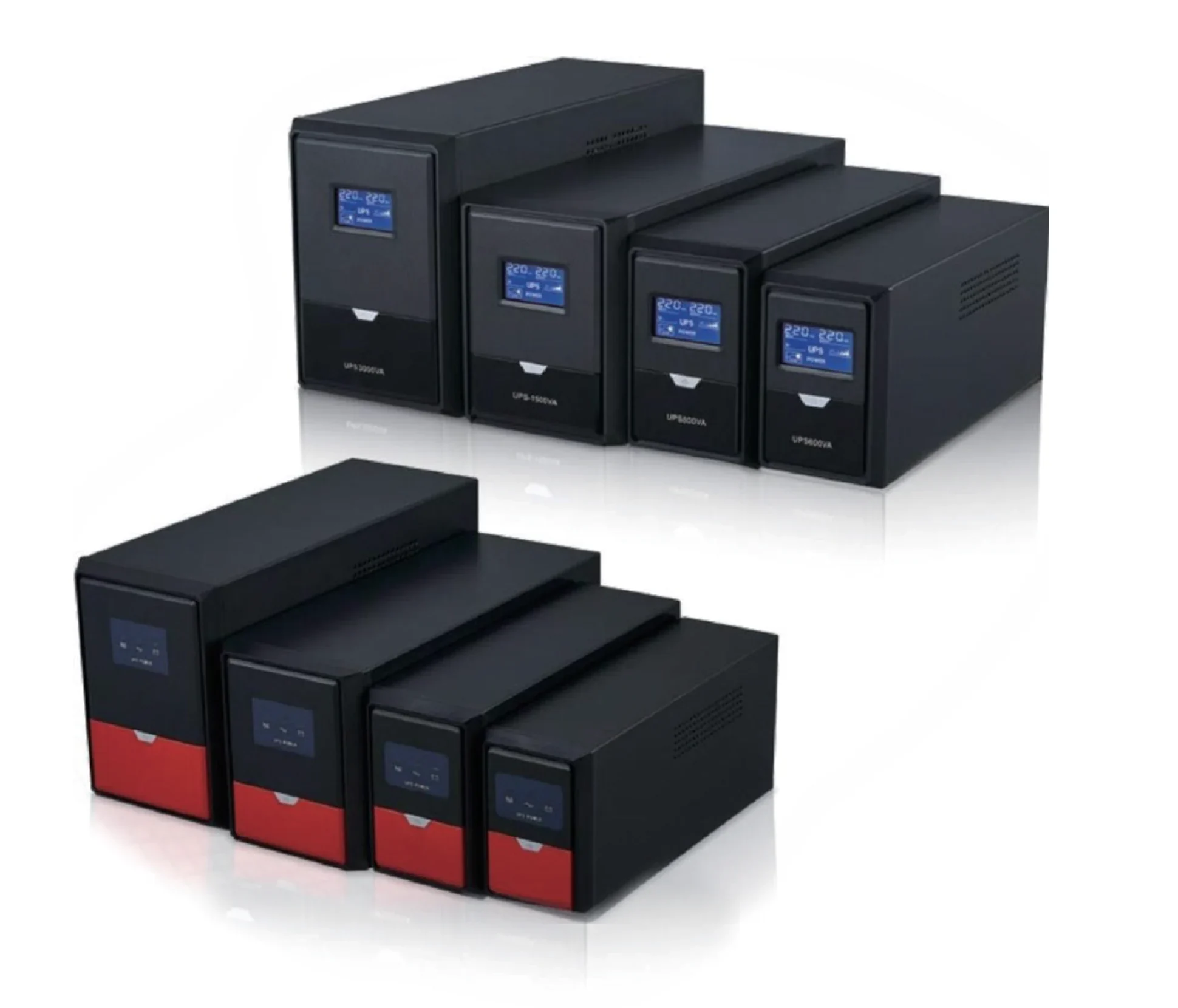
MT / HI11 / AP / AK · 500 VA – 5 kVA
Line-Interactive UPS
Compact, AVR-corrected backup for POS, security, and office loads.
Questions from project buyers.
Project-specific answers. If your question is not here, send the load list and the site conditions.
Talk to an engineer How much UPS capacity does a server room need?
Measure the actual IT load and add 20–25% growth. A 5–8 rack room typically needs 10 kVA; a 1–2 rack room needs 3 kVA. Do not size from the power-supply nameplates.
How long should the battery last?
With a generator, 5–15 minutes. Without a generator, 10–30 minutes for a clean shutdown, or longer if the site is remote.
Can I install the UPS in the same rack as the servers?
Yes, if the rack has enough depth, airflow, and load capacity. The UPS and battery heat add to the rack heat load, so plan the cooling accordingly.
Do I need a precision air conditioner?
A server room needs controlled temperature and humidity, but a precision unit is not always required for a small room. A split unit with redundant capacity and humidity control may be sufficient. The UPS heat must be included in the load.
How often should I replace the battery?
VRLA blocks typically last 3–5 years in a server room. Replace when the capacity test shows below 80% or when the blocks show swelling, heat, or voltage imbalance.
Send the load list. We will return the configuration.
Tell us the kW, the backup time, the phase, and the site country. You will get a capacity recommendation, a battery configuration, and the model sheet.
- Capacity and topology recommendation
- Battery bank and runtime estimate
- Model sheet and commercial offer
Request a configuration and quotation
Send the load list, backup time, and site conditions. We will return a capacity recommendation, battery configuration, and commercial offer.