
Single-Phase Online UPS
Double-conversion, 0 ms protection for servers, medical, and telecom loads.
- 1–10 kVA
- 0 ms transfer
- Output PF 0.9
Rated capacity
1,000 VA – 10,000 VA
Real power
900 W – 9,000 W
Input voltage range
85–300 VAC (high-voltage models)
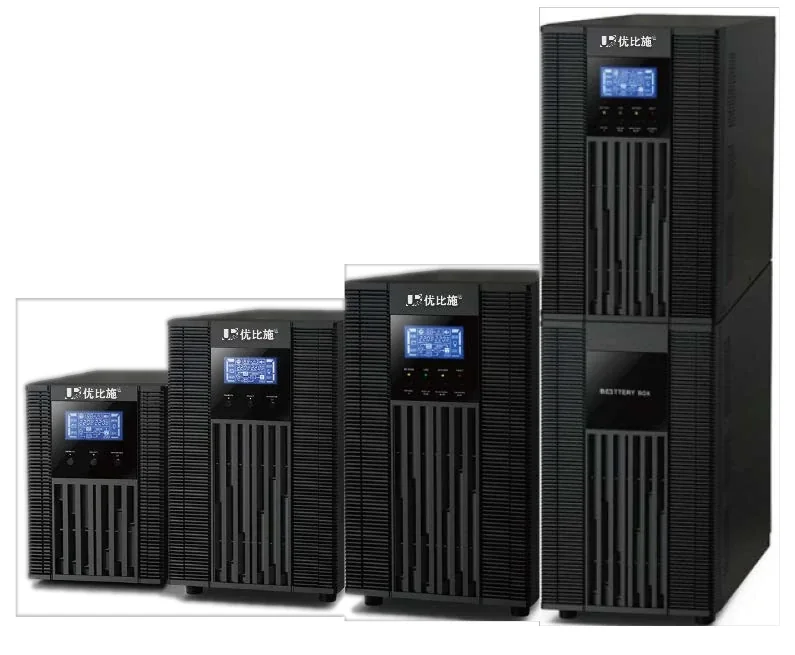
Rated range
1–60 kVA
- Rated capacity
- 1,000 VA – 10,000 VA
- Real power
- 900 W – 9,000 W
- Input voltage range
- 85–300 VAC (high-voltage models)
- Output THD
- < 3% linear / < 7% non-linear
- Transfer time
- 0 ms
- Communication
- RS-232; optional SNMP, dry contact, MODBUS
A single-phase double-conversion UPS from 1 kVA to 60 kVA with 0 ms transfer and a 0.9 output power factor, so a 10 kVA frame delivers 9 kW. The YT 1–10 kVA units carry internal batteries; larger frames use external strings sized to the runtime.
What this platform is built to do.
The YT series is a true online UPS: the load is continuously supplied through an AC–DC–AC double conversion, so voltage sags, spikes, frequency drift, and generator changeover do not reach the load. Transfer to battery is 0 ms because the inverter is already carrying the load.
The input stage accepts 85–300 VAC at high-voltage models, which covers deep brownouts and wide generator swings. Input power factor is above 0.99 and output power factor is 0.9, so a 10 kVA model delivers 9 kW. Output THD is below 3% on linear loads and below 7% on non-linear loads, making the series suitable for servers, network equipment, laboratory analyzers, and small medical devices.
Models cover 1–10 kVA in tower and rack formats. Standard models include internal batteries for short ride-through; long-runtime models use external battery banks. RS-232 is standard, with optional SNMP, dry contacts, and MODBUS monitoring. The YT6K uses a 144 VDC string, and the YT10K uses 192/240 VDC, which lowers the DC current and supports longer runtime.
True double conversion
The inverter continuously supplies the load, so there is no transfer gap.
Wide input window
85–300 VAC input keeps the battery available for outages, not every brownout.
High input power factor
>0.99 input PF reduces generator and cabling burden.
Runtime-ready
Long-runtime models accept external 24–240 VDC battery banks.
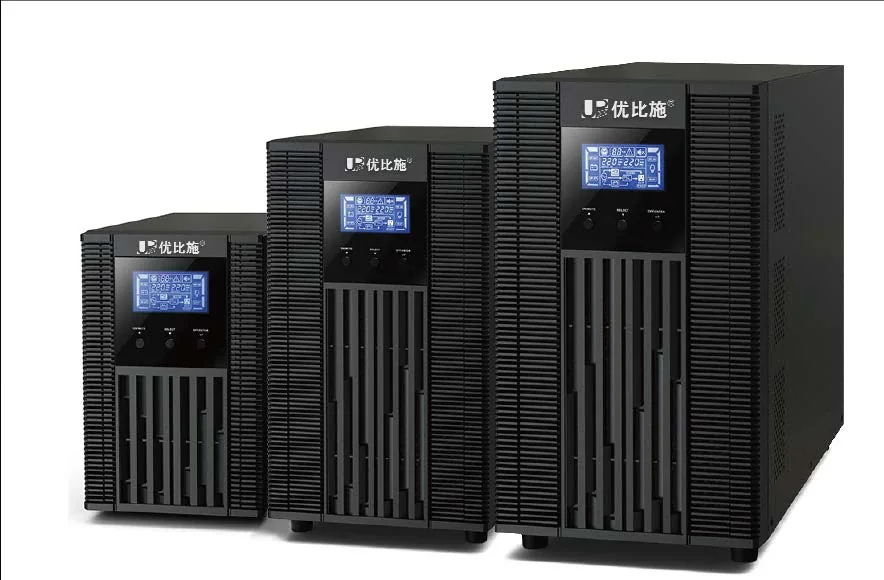
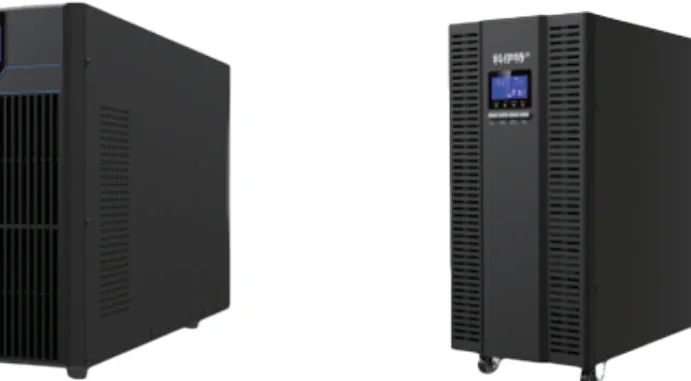
YT Series · 1–10 kVA
Selected models and nominal values. The quotation confirms the exact configuration, battery, and documentation for the project.
Request a model sheetYT series single-phase online UPS models
| Model | Capacity | Real power | DC bus | Format | Battery |
|---|---|---|---|---|---|
| YT1K | 1 kVA | 900 W | 24 V | Tower | Internal 12 V 7 Ah × 2 |
| YT2K | 2 kVA | 1,800 W | 48 V | Tower | Internal 12 V 7 Ah × 4 |
| YT3K | 3 kVA | 2,700 W | 72 V | Tower | Internal 12 V 7 Ah × 6 |
| YT6K | 6 kVA | 5,400 W | 144 V | Tower | Internal 12 V 7 Ah × 12 |
| YT10K | 10 kVA | 9,000 W | 192/240 V | Tower | Internal 12 V 7 Ah × 16–20 |
| YT1KR | 1 kVA | 800 W | 24 V | Rack | Internal 12 V 7 Ah × 2 |
| YT2KR | 2 kVA | 1,600 W | 48 V | Rack | Internal 12 V 7 Ah × 4 |
| YT3KR | 3 kVA | 2,400 W | 72 V | Rack | Internal 12 V 7 Ah × 6 |
| YT6KRS | 6 kVA | 5,400 W | 192/240 V | Rack | External |
| YT10KRS | 10 kVA | 9,000 W | 192/240 V | Rack | External |
Input
- Input configuration
- Single-phase, 2-wire + earth
- Rated voltage
- 208/220/230/240 VAC (high-voltage); 100/110/120/127 VAC (low-voltage)
- Voltage range
- 85–300 VAC ±5 VAC (high-voltage); 55–145 VAC ±3 VAC (low-voltage)
- Frequency range
- 40–70 Hz ±0.5 Hz
- Input power factor
- > 0.99
- Bypass voltage
- 180–265 VAC ±3%
Output
- Rated voltage
- 220/230/240 VAC ±2% (inverter)
- Frequency
- 50/60 Hz ±0.5% in fixed mode; ±4 Hz in sync mode
- Waveform
- Pure sine wave
- THD
- < 3% linear load; < 7% non-linear load (1–3 kVA); < 2% / < 6% (6–10 kVA)
- Output power factor
- 0.9
- Overload
- 105–125% for 1–10 min; 126–150% for 30–60 s; >150% for 100 ms
- Transfer time
- 0 ms (mains to battery)
Battery
- DC bus
- 24 V / 48 V / 72 V / 144 V / 192–240 V, by model
- Standard battery
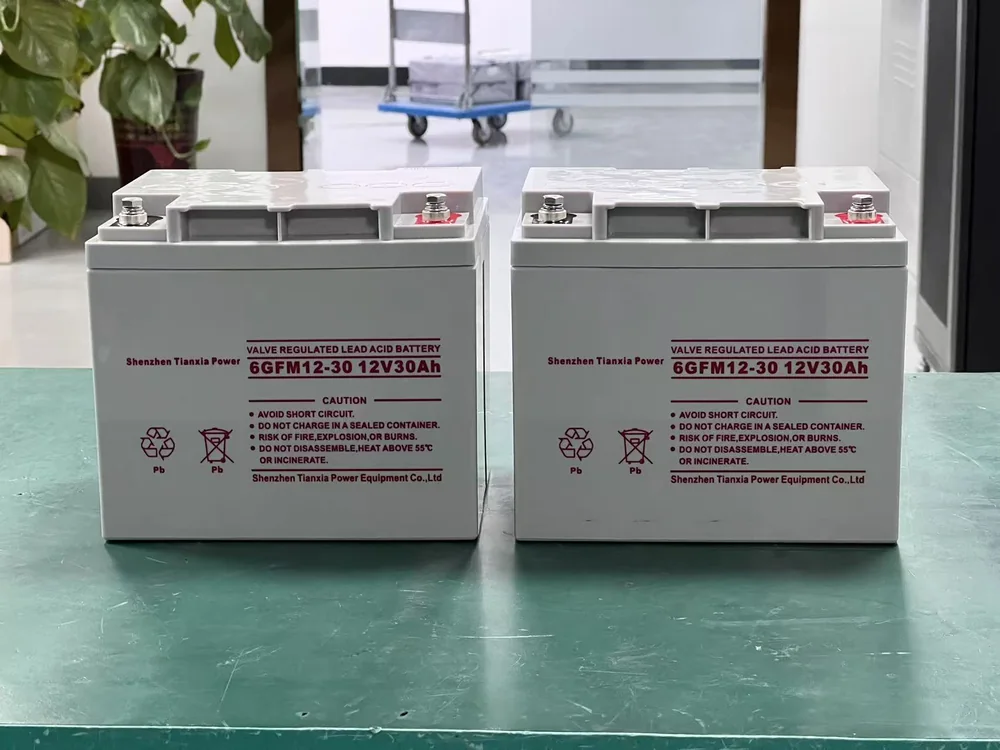
- 12 V 7 Ah blocks, internal
- Long-runtime models
- External battery bank, capacity by project
- Recharge
- 5 hours to 90% for standard models; charger current model-dependent
Monitoring and environment
- Interface
- RS-232 standard; SNMP card, dry contact, MODBUS optional
- Software support
- Windows, Linux, and macOS shutdown
- Noise
- < 50–55 dB depending on model
- Operating temperature
- 0–40 °C
- Humidity
- 0–95% non-condensing
Key specifications
| Parameter | Value |
|---|---|
| Rated capacity | 1,000 VA – 10,000 VA |
| Real power | 900 W – 9,000 W |
| Input voltage range | 85–300 VAC (high-voltage models) |
| Output THD | < 3% linear / < 7% non-linear |
| Transfer time | 0 ms |
| Communication | RS-232; optional SNMP, dry contact, MODBUS |
Selection notes for this family
| Question | What to check | Why |
|---|---|---|
| Load profile | Running kW and largest step for 1–60 kVA | Avoid overload and oversizing |
| Runtime | Battery bank and charger for the target minutes | Actual autonomy |
| Environment | Temperature, altitude, dust and ventilation | Life and derating |
| Interface | Monitoring, bypass, parallel requirement | Integration with the room |
| Documentation | Conformity route and model test report | Customs and tender |
Where this family fits.
These are the load types the platform is specified for. If your load is outside this list, send the load profile before selecting the model.
- Server rooms
- Network closets
- Laboratory equipment
- Small medical devices
- Telecom CPE and branch sites
- Security control rooms
Online UPS: project questions.
Project-specific answers. If your question is not here, send the load list and the site conditions.
Talk to an engineer Is 0 ms transfer real on an online UPS?
Yes. The inverter runs continuously and the battery is connected to the DC bus through a charger, so when the mains fails the inverter simply draws from the battery. There is no mechanical or static switch delay for the load.
Can I connect an external battery bank for 2 hours of runtime?
Use the long-runtime models (YT6KS / YT10KS or rack equivalents) and size the bank with the runtime formula. The charger current and maximum battery capacity must be checked against the model sheet.
Does the output support laser printers?
Laser printers have high inrush and cyclic loads. Keep them below the UPS rating or put them on a separate circuit; do not size the UPS only from the steady-state wattage.
What is the input current for a 10 kVA model?
At 230 V and full load, nominal input current is about 26 A before efficiency and charging allowance. Use the model datasheet for breaker and cable sizing.
Can it run on a generator?
The wide input window and >0.99 input PF make it generator-friendly, but the generator must be sized for the UPS charging load and the load step. Share the generator kVA and the UPS model for a compatibility check.
How do I monitor multiple units?
Each UPS exposes RS-232 and an intelligent slot. Use SNMP cards for network monitoring, or dry contacts for BMS and alarm panels.
Send the load list. We will return the configuration.
Tell us the kW, the backup time, the phase, and the site country. You will get a capacity recommendation, a battery configuration, and the model sheet.
- Capacity and topology recommendation
- Battery bank and runtime estimate
- Model sheet and commercial offer
Request a configuration and quotation
Send the load list, backup time, and site conditions. We will return a capacity recommendation, battery configuration, and commercial offer.