
10 kVA UPS: the server-room standard, sized properly.
A 10 kVA UPS delivers 9 kW at 0.9 PF. Load tables, 10–120 minute battery banks and a checklist for server rooms and small data centers.
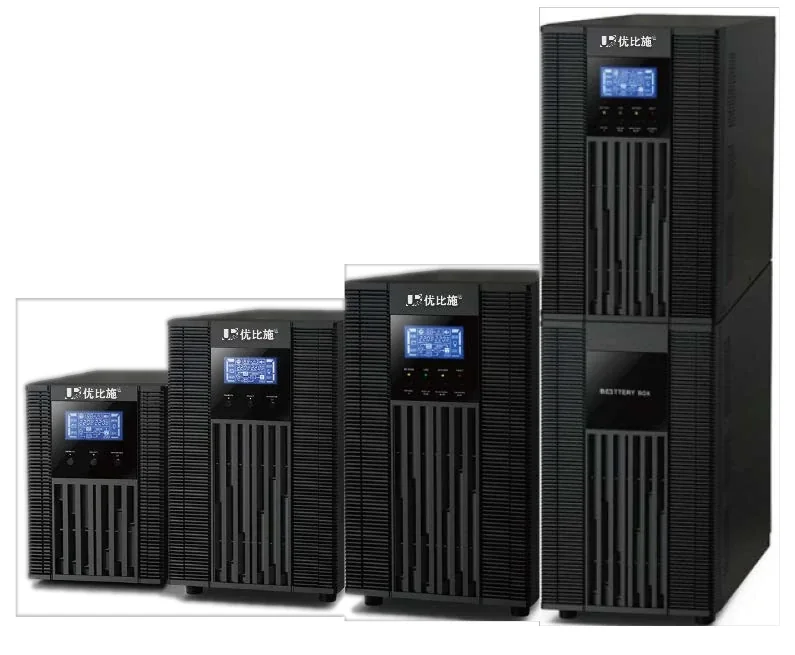
- Rated capacity
- 10,000 VA
- Real power at 0.9 PF
- 9,000 W
- Prudent continuous load
- 7,200 W
- Online transfer
- 0 ms
A 10 kVA UPS is the most common size for a dedicated server room. At 0.9 output power factor it delivers 9 kW, and at 80% loading it carries about 7.2 kW. That covers 20–40 kW of installed IT nameplate with a realistic diversity factor, or a smaller load with room to grow.
The 10 kVA size is also where the decision between single-phase and three-phase input becomes important. A 10 kVA single-phase unit draws about 45 A at 220 V, which may exceed a typical single-phase supply. A three-phase input model spreads the current and is often the better choice for a new server room.
What can a 10 kVA UPS run?
A 10 kVA online UPS can run a 30–40U server rack with 8–12 servers, a storage array, two core switches, a firewall, and a KVM; a small data center with 6–8 racks at 1–1.5 kW each; a clinic with imaging and records systems; or a production cell with PLCs, HMIs, and instrumentation.
The load must be measured or calculated from the actual equipment. A 10 kVA UPS is not a license to connect 10 kW of nameplate load; the output PF, the overload curve, and the battery runtime all limit what it can carry.
Typical 10 kVA load combinations
| Load | Typical running W | Recommended? | Runtime with 16 × 100 Ah |
|---|---|---|---|
| 8–12 servers + storage + network | 5.0–7.2 kW | Yes | 60–90 min |
| 6–8 racks at 1–1.5 kW | 6.0–9.0 kW | Yes, at 80% max | 50–75 min |
| Clinic imaging + records | 5.0–7.0 kW | Yes | 60–90 min |
| Production cell PLC + drives | 4.0–7.0 kW | Yes, check starting | 60–100 min |
| Whole building incl. HVAC | 10–30 kW | No | — |
How long can a 10 kVA UPS run?
At 7.2 kW load, a 192 VDC bank of 16 × 12 V 100 Ah blocks stores 19.2 kWh nominal. The ideal runtime is about 2.3 hours at 85% efficiency; after the 80% depth of discharge and high-rate derating, expect about 1–1.5 hours. For 30 minutes, a 16 × 50 Ah bank is closer to the right size.
If the site has a generator, 10–15 minutes is often enough to cover the generator start and transfer. If there is no generator, the battery bank becomes the outage plan; size it for the longest realistic outage plus a safety margin.
10 kVA runtime examples at 7.2 kW
| Battery configuration | Nominal energy | Estimated runtime | Use case |
|---|---|---|---|
| 16 × 12 V 26 Ah | 5.0 kWh | 25–35 min | Generator start |
| 16 × 12 V 50 Ah | 9.6 kWh | 50–70 min | Server room |
| 16 × 12 V 100 Ah | 19.2 kWh | 1–1.5 h | Small data center |
| 32 × 12 V 100 Ah | 38.4 kWh | 2–3 h | No-generator site |
| 16 × 51.2 V 100 Ah LiFePO4 | 16.4 kWh | 2–2.5 h | Long runtime, limited space |
The lithium option assumes a UPS with a compatible charger and BMS communication. Do not connect a lithium module to a lead-acid-only charger.
Single-phase or three-phase 10 kVA?
A single-phase 10 kVA UPS at 220 V draws about 45 A at full load, plus charging current. That requires a dedicated 63 A supply and heavy cable. A three-phase input model draws about 15 A per phase, which is easier to supply and balances the building load.
If the site already has a three-phase supply, choose a three-phase input / single-phase output 10 kVA model for a server room, or a three-phase / three-phase model if the load is three-phase. If the site is single-phase only, confirm the supply capacity before ordering a 10 kVA single-phase unit.
What should I confirm before ordering a 10 kVA UPS?
A 10 kVA UPS cabinet can weigh 100–200 kg without batteries, and a battery bank adds several hundred kilograms. Check the floor loading and the access route before the equipment arrives. For a rooftop or upper-floor room, confirm the structural load with the building engineer.
- Measured load in kW and the largest step change or motor start
- Input supply: single-phase or three-phase, breaker size, cable size
- Required runtime and whether a generator is installed
- Battery room: floor loading, ventilation, ambient temperature, clearance
- Rack or tower format, and the available floor or rack space
- Monitoring: SNMP, dry contacts, MODBUS, or BMS integration
- Certification and test documentation for the project
- Delivery site, access route, and unloading equipment
Which standards and documents are referenced on this page?
The table lists the model-specific standards and conformity documents a project buyer should ask for. Availability depends on the frame, the battery, and the destination market; request the document that names your model.
UPS standards and documents
| Reference | What it covers |
|---|---|
| IEC 62040-1 | UPS general and safety requirements |
| IEC 62040-2 | UPS electromagnetic compatibility (EMC) |
| IEC 62040-3 | UPS performance and test requirements |
| IEC 60896-21 / -22 | VRLA stationary battery type and performance tests |
| IEC 62619 | Safety of lithium cells and batteries for industrial use |
| UN38.3 / MSDS | Lithium battery transport test and material safety data |
| CE / RoHS | EU conformity and restricted-substance declaration |
| ISO 9001 | Manufacturing quality management system |
| SNMP / MODBUS | Remote monitoring and BMS interface |
| IP20 / IP21 | Cabinet ingress protection for indoor installation |
Certificates are issued against the exact model and configuration. See the certifications page for how to confirm scope and revision, or send the model to request the current document.
Open the sizing calculator
Convert kW to kVA and estimate the battery bank.
Enter the load, the runtime, and the phase. The calculator applies a design margin and returns a standard size and a 12 V block estimate.
Match the page to a platform.
YT Series · 1–10 kVA
Single-Phase Online UPS
Double-conversion, 0 ms protection for servers, medical, and telecom loads.
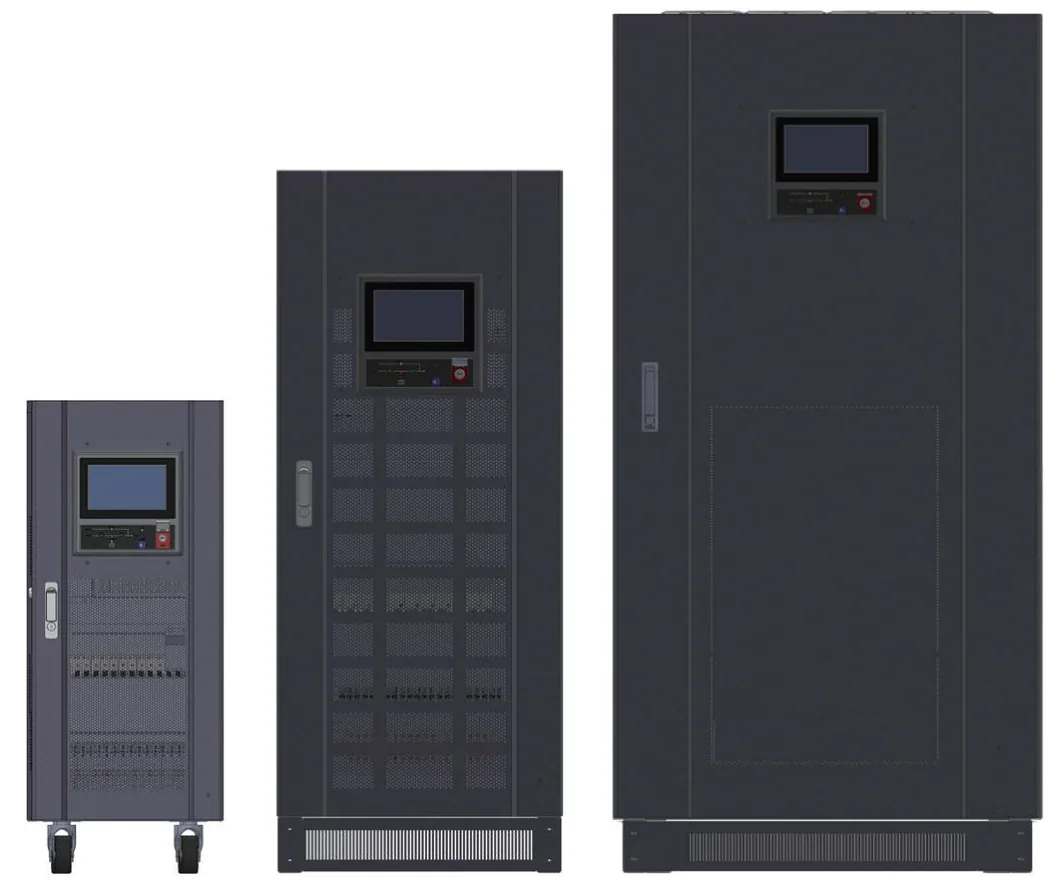
3YT / GP Series · 10–200 kVA
Three-Phase Online UPS
Three-phase double conversion for facility and industrial loads.
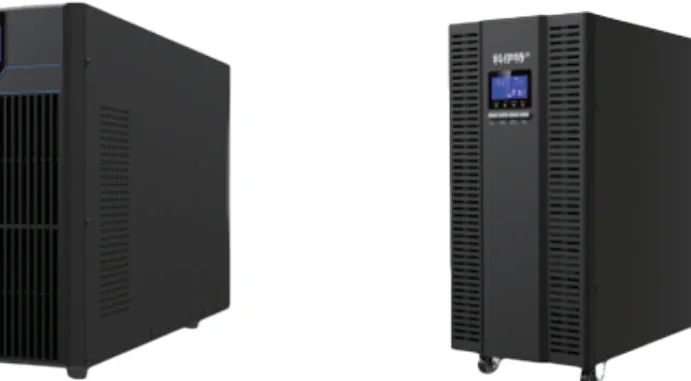
YT-R / UM / RT · 1–60 kVA
Rack-Mount UPS
Double conversion in 1U–3U, built for racks and edge rooms.
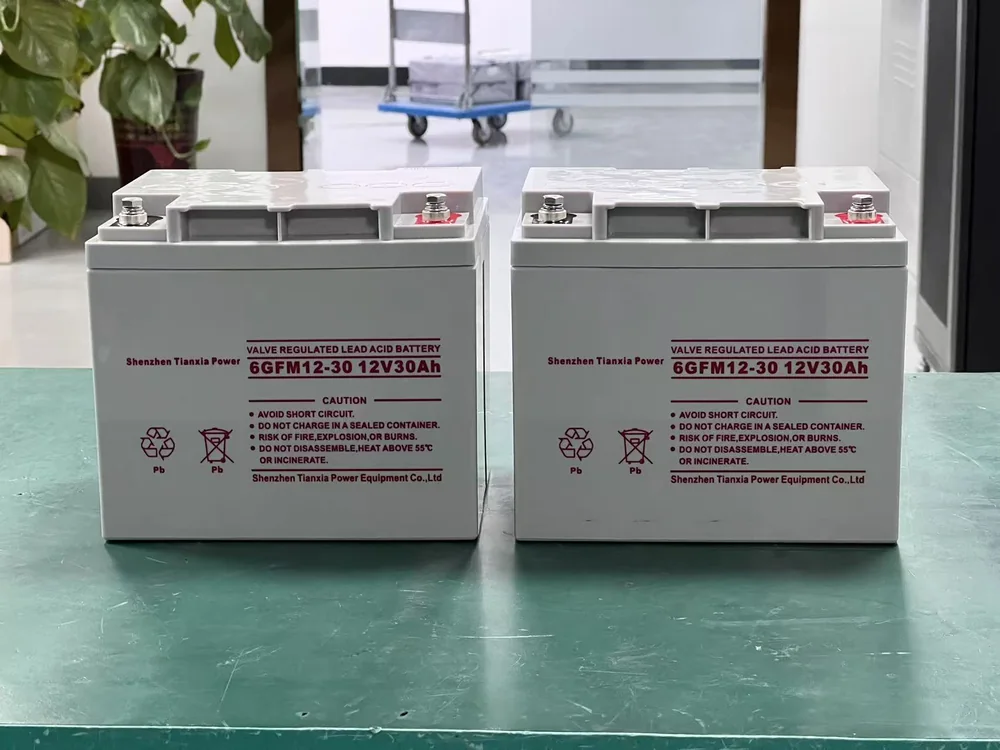
12 V blocks · 24–250 Ah
VRLA Battery
Maintenance-free sealed lead-acid blocks for UPS and telecom backup.
Questions from project buyers.
Project-specific answers. If your question is not here, send the load list and the site conditions.
Talk to an engineer How many servers can a 10 kVA UPS support?
Typically 8–12 servers plus storage and network gear, keeping the total below 7.2 kW. The exact number depends on the server configuration and the actual load, not the nameplate rating.
How long will a 10 kVA UPS run on battery?
With 16 × 100 Ah VRLA blocks at 7.2 kW, about 1–1.5 hours after derating. With 16 × 50 Ah, about 50–70 minutes. Use the battery discharge curve for the final number.
Do I need a three-phase supply for a 10 kVA UPS?
A single-phase 10 kVA unit draws about 45 A and needs a dedicated 63 A supply. Many sites choose a three-phase input model to spread the current and balance the building load.
Can a 10 kVA UPS run a small air conditioner?
Not recommended. Air conditioners are motor loads with high starting current. Keep HVAC on the building supply and use the UPS for IT and control loads.
What is the difference between 10 kVA and 10 kW?
kVA is apparent power; kW is real power. At 0.9 PF, 10 kVA delivers 9 kW. If the load is 10 kW, you need at least a 12–15 kVA UPS, plus design margin.
Can I add batteries later?
Yes, if the UPS charger and DC bus support the additional capacity. Confirm the maximum battery size and the charger current before specifying the initial bank.
Send the load list. We will return the configuration.
Tell us the kW, the backup time, the phase, and the site country. You will get a capacity recommendation, a battery configuration, and the model sheet.
- Capacity and topology recommendation
- Battery bank and runtime estimate
- Model sheet and commercial offer
Request a configuration and quotation
Send the load list, backup time, and site conditions. We will return a capacity recommendation, battery configuration, and commercial offer.