
Online UPS: continuous double conversion, zero transfer gap.
How an online UPS works, when it beats line-interactive, input and output specifications, battery sizing, and the 1–200 kVA models available.
- Transfer to battery
- 0 ms
- Output THD, linear
- <3%
- Output PF
- 0.9
- Range
- 1–200 kVA
An online UPS converts AC to DC and back to AC continuously. The load is always supplied by the inverter, so a mains failure does not cause a transfer: the inverter simply starts drawing from the battery on the DC bus. Transfer time is 0 ms, and the output is a regenerated pure sine wave.
The trade-off is efficiency and cost. A double-conversion UPS loses a few percent more than a line-interactive unit, and the rectifier, inverter, and larger battery charger cost more. For servers, medical equipment, telecom, and industrial control, the power quality and zero-gap transfer are worth it.
How does an online UPS work?
The rectifier converts incoming AC to DC and holds the DC bus at a regulated voltage. The inverter converts that DC back to a clean AC waveform. The battery is connected to the DC bus through a charger, so it is always ready. When the mains fails, the rectifier stops, the battery feeds the DC bus, and the inverter continues without interruption.
A static bypass path is available for maintenance or overload. If the inverter fails, the load transfers to bypass in a few milliseconds; if the bypass is also unavailable, the load drops. That is why a maintenance bypass and proper protection coordination matter for critical sites.
Online vs line-interactive: which one do I need?
If the load can tolerate a 4–6 ms gap and the grid is relatively stable, a line-interactive UPS is a rational choice. If the load is sensitive, the site has a generator, or the grid is unstable, an online UPS avoids the transfer event entirely.
Topology comparison
| Criterion | Line-interactive | Online double conversion |
|---|---|---|
| Transfer time | 4–6 ms | 0 ms |
| Output waveform | Simulated or pure sine | Pure sine, regenerated |
| Input voltage window | Narrow to moderate | Wide, 85–300 VAC on many models |
| Output THD | Depends on input | <3% linear, <7% non-linear |
| Efficiency | Higher at light load | Lower, but stable |
| Best for | POS, CCTV, office IT | Servers, medical, telecom, industrial |
| Cost | Lower | Higher |
How do I size the battery for an online UPS?
The battery is sized from the DC bus voltage, the load in kW, the runtime in hours, the inverter efficiency, and the usable depth of discharge. A 10 kVA UPS at 0.9 PF and 80% load draws 7.2 kW; at 192 VDC and 85% efficiency, the DC current is about 44 A. A 100 Ah block at that current will not deliver 2.2 hours; the high-rate discharge curve reduces the available capacity.
Use the battery manufacturer’s discharge table, not a simple Ah division. Then confirm the UPS charger can recharge the bank within the available time and the battery room can handle the heat and gas.
Which online UPS range fits my project?
- 1–10 kVA single-phase tower or rack: server rooms, clinics, branch IT.
- 10–20 kVA three-phase input / single-phase output: small data centers, imaging suites.
- 30–200 kVA three-phase: plants, hospitals, telecom core, large facilities.
- Modular 90–300 kW: data centers with N+1 and phased growth.
- Industrial 10–200 kVA: wide input, high overload, harsh environment.
Which standards and documents are referenced on this page?
The table lists the model-specific standards and conformity documents a project buyer should ask for. Availability depends on the frame, the battery, and the destination market; request the document that names your model.
UPS standards and documents
| Reference | What it covers |
|---|---|
| IEC 62040-1 | UPS general and safety requirements |
| IEC 62040-2 | UPS electromagnetic compatibility (EMC) |
| IEC 62040-3 | UPS performance and test requirements |
| IEC 60896-21 / -22 | VRLA stationary battery type and performance tests |
| IEC 62619 | Safety of lithium cells and batteries for industrial use |
| UN38.3 / MSDS | Lithium battery transport test and material safety data |
| CE / RoHS | EU conformity and restricted-substance declaration |
| ISO 9001 | Manufacturing quality management system |
| SNMP / MODBUS | Remote monitoring and BMS interface |
| IP20 / IP21 | Cabinet ingress protection for indoor installation |
Certificates are issued against the exact model and configuration. See the certifications page for how to confirm scope and revision, or send the model to request the current document.
Confirm the inputs and documents before quoting.
Project inputs to confirm
| Item | What to confirm | Why it matters |
|---|---|---|
| Load | Running kW, largest motor, load step | Sets kVA, overload and topology |
| Runtime | Minutes, generator availability, battery room | Sets battery bank and charger |
| Supply | Voltage, frequency, phase, input current | Sets model, breaker and cable |
| Site | Country, altitude, ambient temperature, dust | Sets derating, IP and documents |
| Battery | VRLA, LiFePO4, footprint, weight limit | Sets chemistry and room layout |
| Documentation | Conformity route, test report, language | Sets document package and lead time |
Match the page to a platform.
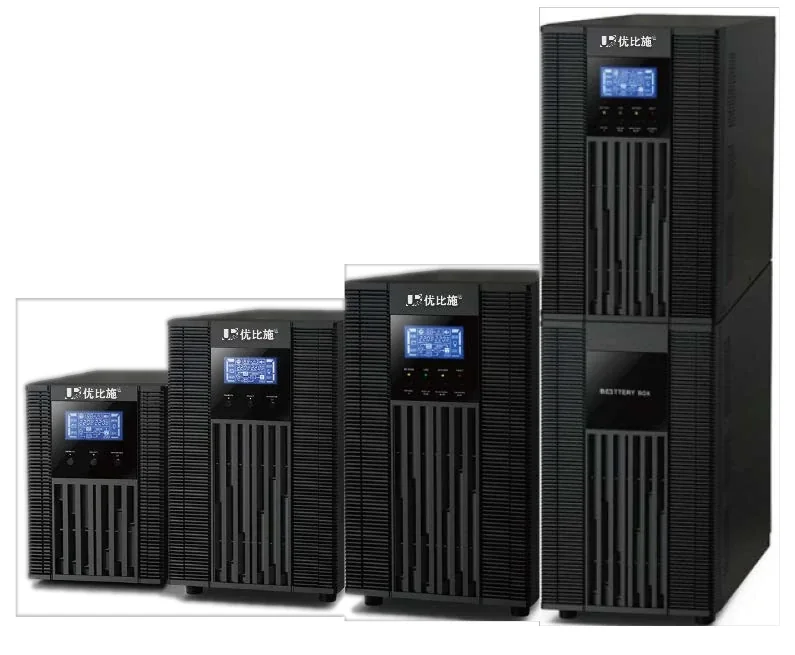
YT Series · 1–10 kVA
Single-Phase Online UPS
Double-conversion, 0 ms protection for servers, medical, and telecom loads.
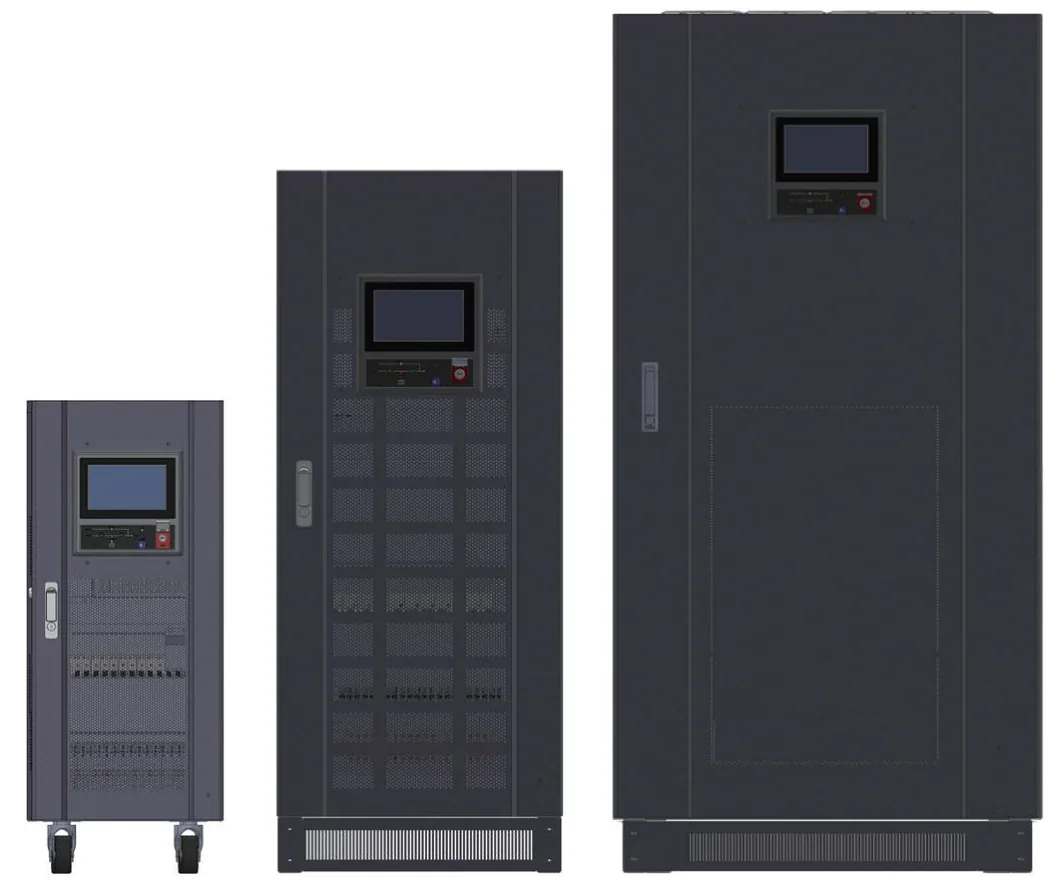
3YT / GP Series · 10–200 kVA
Three-Phase Online UPS
Three-phase double conversion for facility and industrial loads.
YT-R / UM / RT · 1–60 kVA
Rack-Mount UPS
Double conversion in 1U–3U, built for racks and edge rooms.
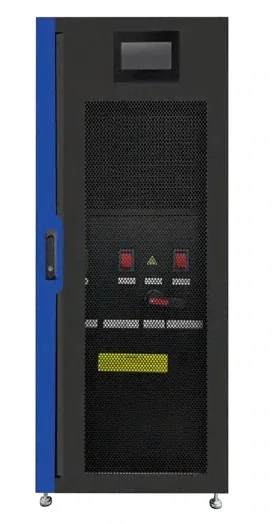
Modular frames · 10–600 kVA
Modular UPS
Scale capacity and redundancy one hot-swappable module at a time.
Questions from project buyers.
Project-specific answers. If your question is not here, send the load list and the site conditions.
Talk to an engineer Is an online UPS always better?
No. It costs more and is less efficient at light load. A line-interactive UPS is sufficient for POS, CCTV, and office equipment that can tolerate a 4–6 ms transfer.
Does an online UPS protect against generator problems?
It protects the load from voltage and frequency variation, but the generator must still be sized for the UPS input current and charging load. A generator that is too small can collapse when the UPS charger draws current.
What is the output THD of an online UPS?
Typically below 3% on a linear load and below 7% on a non-linear load for 1–10 kVA models. Larger frames can be below 2% / 5%. The exact figure depends on the model.
Can an online UPS be used with a maintenance bypass?
Yes, and it is recommended for critical sites. The bypass allows service without interrupting the load. It must be interlocked with the UPS output.
How often should the battery be replaced?
VRLA blocks are typically replaced every 3–5 years in a warm room, or when a capacity test shows below 80% of rated capacity. LiFePO4 modules last longer but cost more upfront.
Send the load list. We will return the configuration.
Tell us the kW, the backup time, the phase, and the site country. You will get a capacity recommendation, a battery configuration, and the model sheet.
- Capacity and topology recommendation
- Battery bank and runtime estimate
- Model sheet and commercial offer
Request a configuration and quotation
Send the load list, backup time, and site conditions. We will return a capacity recommendation, battery configuration, and commercial offer.