
Rack-mount UPS: online power without taking the floor.
Rack UPS from 1 to 60 kVA in 1U–6U, with external battery packs, 0 ms transfer, SNMP monitoring, and rack-depth and heat guidance.
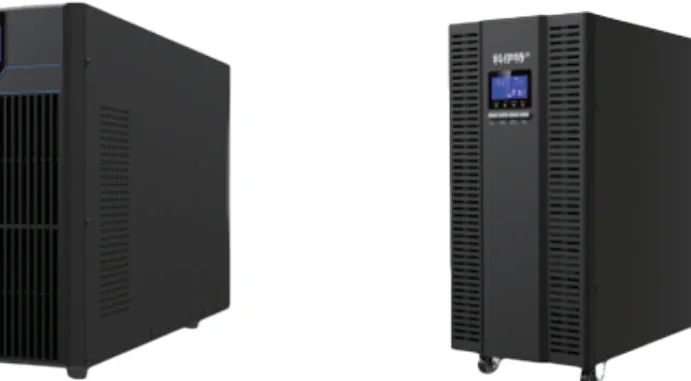
- Capacity
- 1–60 kVA
- Chassis height
- 1U–6U
- Transfer
- 0 ms
- Runtime options
- 15–120 min
A rack-mount UPS puts double conversion into a 19-inch cabinet. It is the right choice when the load is already racked, the room has no floor space, or the battery must sit in the same cabinet as the IT equipment. The family covers 1–60 kVA in 1U–6U chassis with 0 ms transfer.
The mechanical details matter as much as the electrical rating. Usable depth, rail kit, battery pack height, airflow direction, and service clearance determine whether the unit actually fits and whether it can be maintained.
How do I check whether a rack UPS will fit?
Measure the usable depth from the front rail to the rear door, then subtract the cable bend radius and the rear clearance. Compare that with the UPS depth plus the battery pack depth. A 1U UPS with a 2U battery pack needs 3U, but the depth may be greater than a shallow cabinet allows.
Check the rail kit. Some units use a two-post rack kit, some use a four-post kit, and some need a specific cabinet depth. Confirm the kit is included or order it separately.
- Usable depth and rear clearance
- Rail kit type and cabinet hole pattern
- UPS height + battery pack height + ventilation gap
- Front-to-back airflow and hot-aisle containment
- Service access for battery replacement
How much heat does a rack UPS add?
The UPS rejects its losses plus the battery recharge heat. A 3 kVA online UPS at 2.4 kW load and 90% efficiency rejects about 240 W, plus the charger load after an outage. A 6 kVA unit can reject 500–700 W. That heat stays in the rack unless the cabinet has airflow.
For a closed rack, add the UPS and battery heat to the IT load when sizing the room cooling. A sealed cabinet with a 6 kVA UPS and a full IT load will overheat even if the UPS is rated for 40 °C.
Typical rack UPS heat rejection
| UPS size | Load at 80% | Approx. losses | Battery recharge | Plan for |
|---|---|---|---|---|
| 1 kVA | 0.72 kW | 80–100 W | 50–150 W | 200–250 W |
| 3 kVA | 2.16 kW | 200–260 W | 150–300 W | 400–550 W |
| 6 kVA | 4.32 kW | 400–550 W | 300–500 W | 700–1,000 W |
| 10 kVA | 7.2 kW | 700–900 W | 500–800 W | 1.2–1.7 kW |
How do I get 30–120 minutes of runtime in a rack?
Use a long-runtime rack UPS with external battery packs. Each pack occupies 2U–3U, and the number of packs depends on the required Ah and the DC bus. A 3 kVA unit at 2.16 kW needs about 1.1 kWh usable for 30 minutes; a 72 VDC pack of 6 × 12 V 26 Ah gives about 1.87 kWh nominal, enough for roughly 40–50 minutes after derating.
Do not mix packs of different age or capacity. Replace the whole pack set when capacity falls below 80%.
Which standards and documents are referenced on this page?
The table lists the model-specific standards and conformity documents a project buyer should ask for. Availability depends on the frame, the battery, and the destination market; request the document that names your model.
UPS standards and documents
| Reference | What it covers |
|---|---|
| IEC 62040-1 | UPS general and safety requirements |
| IEC 62040-2 | UPS electromagnetic compatibility (EMC) |
| IEC 62040-3 | UPS performance and test requirements |
| IEC 60896-21 / -22 | VRLA stationary battery type and performance tests |
| IEC 62619 | Safety of lithium cells and batteries for industrial use |
| UN38.3 / MSDS | Lithium battery transport test and material safety data |
| CE / RoHS | EU conformity and restricted-substance declaration |
| ISO 9001 | Manufacturing quality management system |
| SNMP / MODBUS | Remote monitoring and BMS interface |
| IP20 / IP21 | Cabinet ingress protection for indoor installation |
Certificates are issued against the exact model and configuration. See the certifications page for how to confirm scope and revision, or send the model to request the current document.
Confirm the inputs and documents before quoting.
Project inputs to confirm
| Item | What to confirm | Why it matters |
|---|---|---|
| Load | Running kW, largest motor, load step | Sets kVA, overload and topology |
| Runtime | Minutes, generator availability, battery room | Sets battery bank and charger |
| Supply | Voltage, frequency, phase, input current | Sets model, breaker and cable |
| Site | Country, altitude, ambient temperature, dust | Sets derating, IP and documents |
| Battery | VRLA, LiFePO4, footprint, weight limit | Sets chemistry and room layout |
| Documentation | Conformity route, test report, language | Sets document package and lead time |
Match the page to a platform.
YT-R / UM / RT · 1–60 kVA
Rack-Mount UPS
Double conversion in 1U–3U, built for racks and edge rooms.
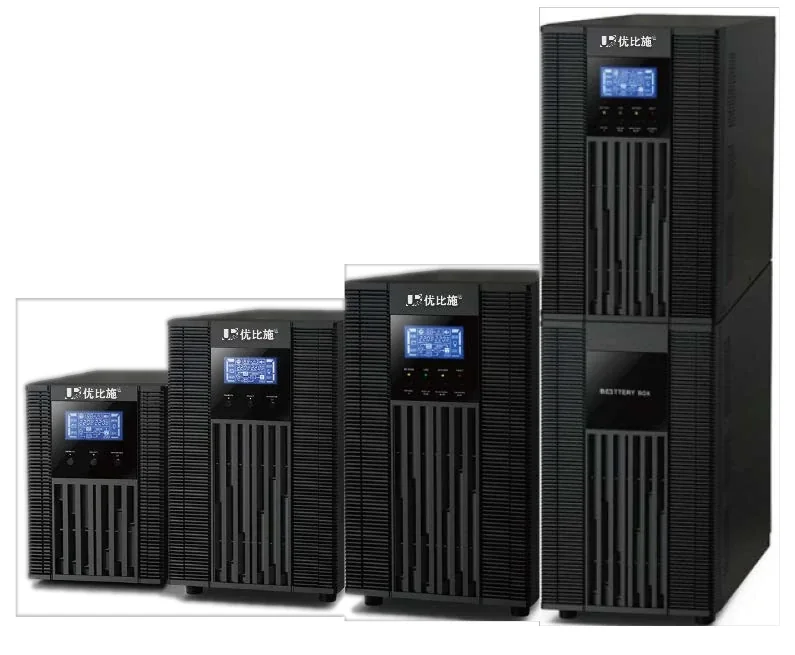
YT Series · 1–10 kVA
Single-Phase Online UPS
Double-conversion, 0 ms protection for servers, medical, and telecom loads.
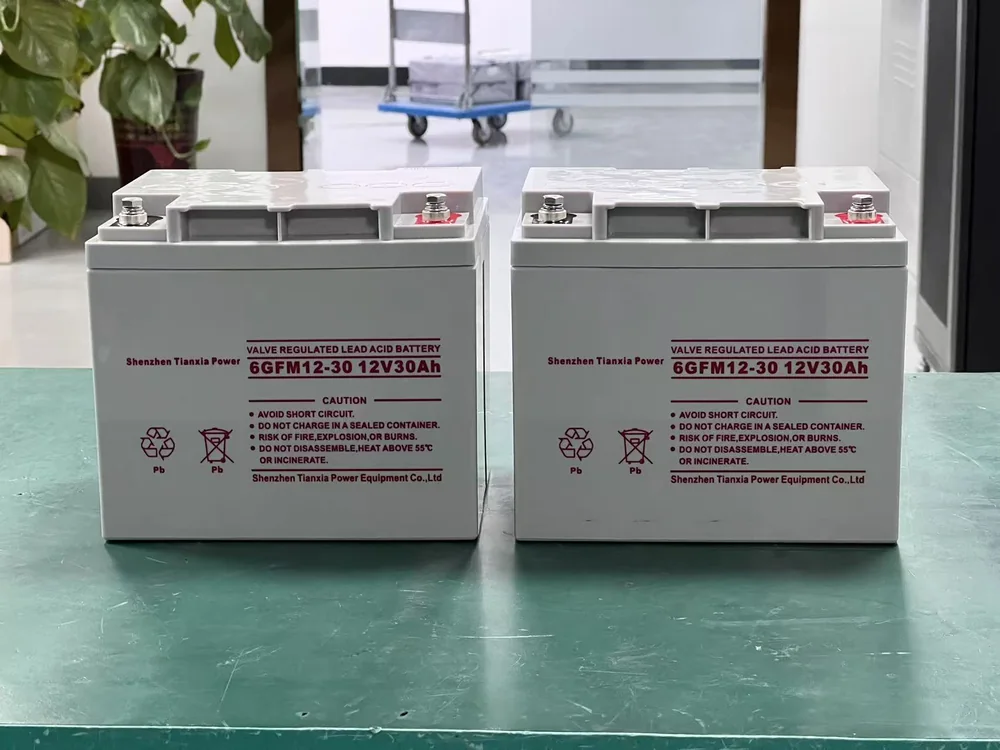
12 V blocks · 24–250 Ah
VRLA Battery
Maintenance-free sealed lead-acid blocks for UPS and telecom backup.
Questions from project buyers.
Project-specific answers. If your question is not here, send the load list and the site conditions.
Talk to an engineer What is the smallest rack UPS available?
A 1 kVA online rack UPS is typically 1U or 2U, with internal batteries. A 1U unit may have a very short runtime, so check the battery configuration.
Can I put a rack UPS in a wall-mount cabinet?
Only if the cabinet depth and ventilation are sufficient. Wall cabinets are often too shallow for a 2U–3U UPS plus battery pack and rear cables.
How many U do I need for 1 hour of runtime?
For a 3 kVA load, plan for 4U–6U of battery packs in addition to the UPS. For a 10 kVA load, external battery cabinets are usually more practical than rack packs.
Does a rack UPS include a rail kit?
It depends on the model. Confirm the rail kit is included or order it with the unit; a UPS without the correct rails cannot be safely mounted.
Can I monitor a rack UPS over the network?
Yes, with an SNMP card in the intelligent slot. Dry contacts are available for BMS and alarm panels.
Send the load list. We will return the configuration.
Tell us the kW, the backup time, the phase, and the site country. You will get a capacity recommendation, a battery configuration, and the model sheet.
- Capacity and topology recommendation
- Battery bank and runtime estimate
- Model sheet and commercial offer
Request a configuration and quotation
Send the load list, backup time, and site conditions. We will return a capacity recommendation, battery configuration, and commercial offer.