
Three-phase UPS: facility-scale power with 0 ms transfer.
Three-phase online UPS from 10 to 200 kVA for data centers, industrial plants, hospitals, commercial buildings: input/output specs, battery bus, parallel.
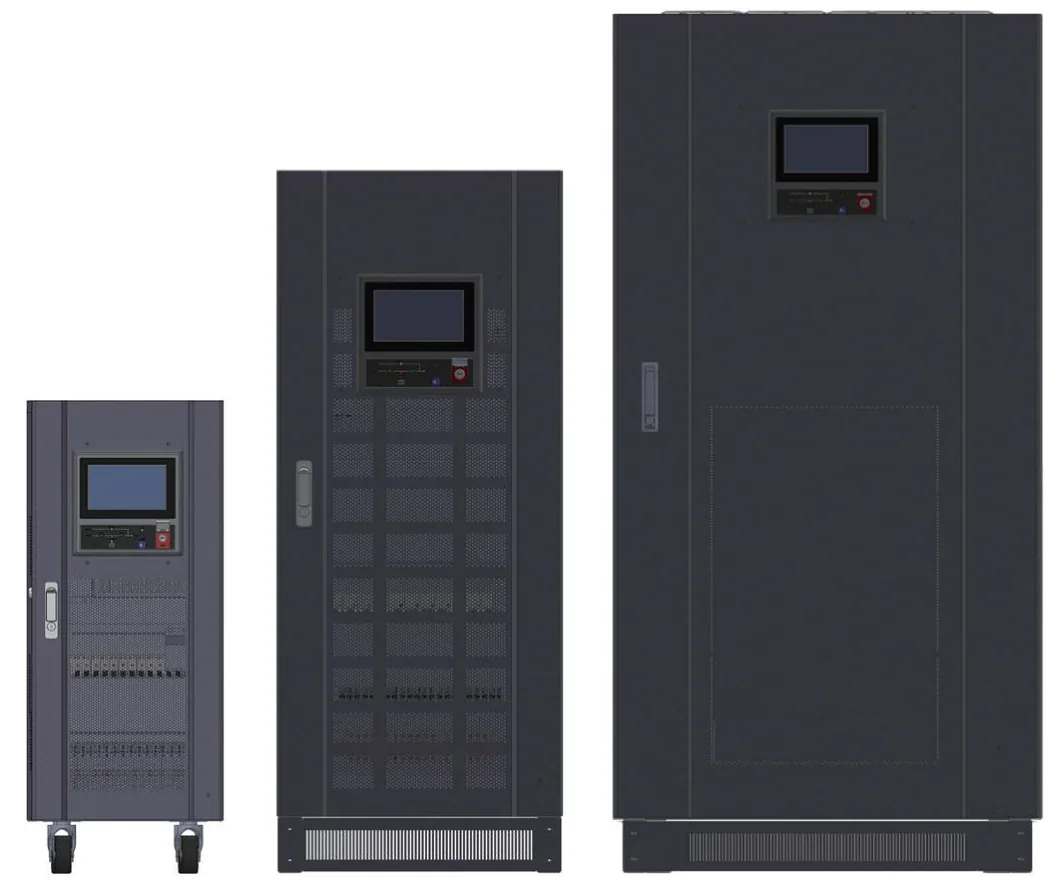
- Frame range
- 10–200 kVA
- Crest factor
- 3:1
- Transfer
- 0 ms
- Large-frame battery bus
- 384 VDC
A three-phase UPS is built for facility loads: a data center, a production line, a hospital, a hotel, or a telecom core site. It takes a three-phase input, regenerates a three-phase output, and carries the load through outages with 0 ms transfer. The frame sizes start at 10 kVA and extend to 200 kVA, with modular frames above that.
The key specification is not just the kVA. The input voltage window, the input THDi, the output PF, the overload curve, the battery bus, and the parallel capability determine whether the UPS fits the project. A 100 kVA UPS with a narrow input window may not survive a weak feeder; a 100 kVA UPS with 3% THDi may not need a harmonic filter.
When should I choose a three-phase UPS?
Choose a three-phase UPS when the load is three-phase, when the site has a three-phase supply, or when the capacity is above about 20 kVA. A three-phase UPS also makes sense when the load is a mix of single-phase and three-phase equipment and a shared battery and bypass are required.
For a small single-phase load in a building with a three-phase supply, a three-phase input / single-phase output model can be a good compromise: it balances the input current and still delivers a single-phase output for the load.
Which specifications matter most?
Input voltage window: a wide window keeps the UPS on mains during sags and generator swings. Input THDi: a low THDi avoids polluting the generator and upstream transformer. Output PF: a 0.9 PF unit delivers more real power for the same kVA. Overload curve: a higher overload supports motor starting and load steps. Battery bus: it determines the number of blocks and the DC current.
Three-phase UPS specification checklist
| Parameter | Typical value | Why it matters |
|---|---|---|
| Input voltage range | 305–478 VAC at 100% load | Ride-through on weak feeders |
| Input THDi | <3% at 100% load | Generator and transformer compatibility |
| Input PF | ≥0.99 | Lower input current and cable size |
| Output PF | 0.9 (0.8 on selected frames) | Real kW available to the load |
| Crest factor | 3:1 | Non-linear IT and SMPS loads |
| Overload | 110% 60 min; 150% 1 min | Motor starting and load steps |
| Battery bus | 192–240 VDC / 384 VDC | Block count and DC current |
| Parallel | Up to 4–6 units on selected frames | N+1 or capacity expansion |
How do I size the battery for a three-phase UPS?
The battery is sized from the DC bus, the load in kW, the runtime, and the inverter efficiency. A 100 kVA UPS at 0.9 PF and 80% load draws 72 kW; at 384 VDC and 94% efficiency, the DC current is about 200 A. A 100 Ah block at 200 A will not deliver 1 hour; the high-rate discharge curve reduces the available capacity.
Use the battery discharge table at the expected end voltage and confirm the charger current. For large frames, the charger can be 10–40 A, which limits how quickly a deeply discharged bank can be recharged.
When should the UPS be parallel?
Parallel operation is used for capacity expansion or redundancy. Two 100 kVA units can supply 200 kVA, or one can carry the load while the other is serviced. The parallel control must share the load and manage the bypass. A shared battery bank is possible on selected frames but requires careful protection coordination.
Do not parallel units from different vendors or different firmware versions. The load sharing and bypass logic are not interchangeable.
Which standards and documents are referenced on this page?
The table lists the model-specific standards and conformity documents a project buyer should ask for. Availability depends on the frame, the battery, and the destination market; request the document that names your model.
UPS standards and documents
| Reference | What it covers |
|---|---|
| IEC 62040-1 | UPS general and safety requirements |
| IEC 62040-2 | UPS electromagnetic compatibility (EMC) |
| IEC 62040-3 | UPS performance and test requirements |
| IEC 60896-21 / -22 | VRLA stationary battery type and performance tests |
| IEC 62619 | Safety of lithium cells and batteries for industrial use |
| UN38.3 / MSDS | Lithium battery transport test and material safety data |
| CE / RoHS | EU conformity and restricted-substance declaration |
| ISO 9001 | Manufacturing quality management system |
| SNMP / MODBUS | Remote monitoring and BMS interface |
| IP20 / IP21 | Cabinet ingress protection for indoor installation |
Certificates are issued against the exact model and configuration. See the certifications page for how to confirm scope and revision, or send the model to request the current document.
Confirm the inputs and documents before quoting.
Project inputs to confirm
| Item | What to confirm | Why it matters |
|---|---|---|
| Load | Running kW, largest motor, load step | Sets kVA, overload and topology |
| Runtime | Minutes, generator availability, battery room | Sets battery bank and charger |
| Supply | Voltage, frequency, phase, input current | Sets model, breaker and cable |
| Site | Country, altitude, ambient temperature, dust | Sets derating, IP and documents |
| Battery | VRLA, LiFePO4, footprint, weight limit | Sets chemistry and room layout |
| Documentation | Conformity route, test report, language | Sets document package and lead time |
Match the page to a platform.
3YT / GP Series · 10–200 kVA
Three-Phase Online UPS
Three-phase double conversion for facility and industrial loads.
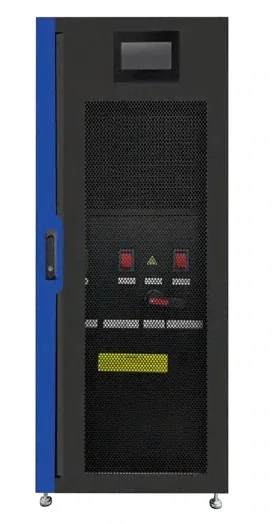
Modular frames · 10–600 kVA
Modular UPS
Scale capacity and redundancy one hot-swappable module at a time.
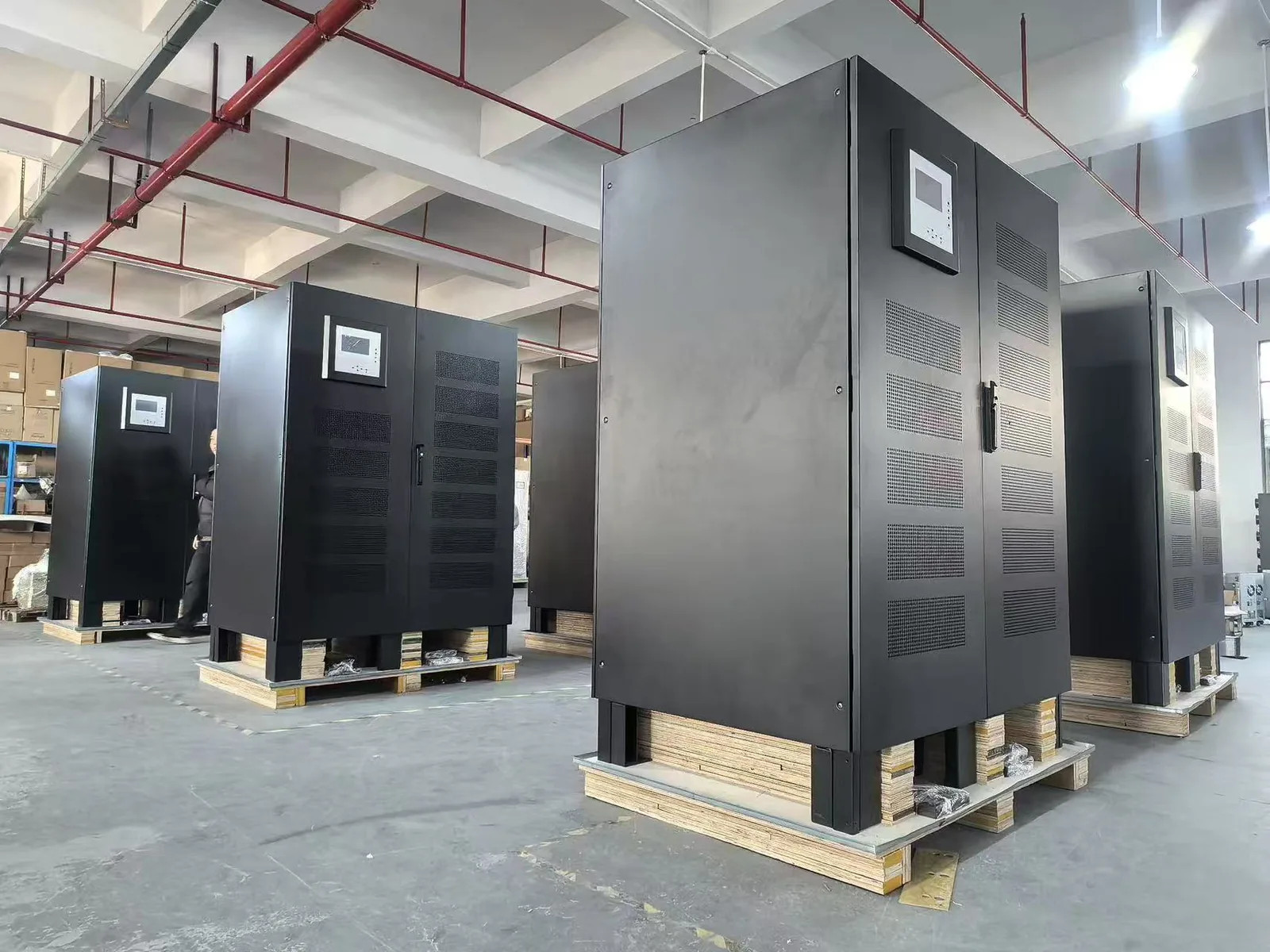
Industrial frame · 10–200 kVA
Industrial UPS
Wide input, high overload, and harsh-environment protection.
Questions from project buyers.
Project-specific answers. If your question is not here, send the load list and the site conditions.
Talk to an engineer What is the difference between three-phase and single-phase UPS?
A three-phase UPS takes a three-phase input and delivers a three-phase output, with higher capacity and a shared battery. A single-phase UPS is limited to 1–10 kVA and a single-phase input.
Can a three-phase UPS supply single-phase loads?
Yes, through the neutral, but the load should be balanced across phases. A large unbalanced single-phase load can overload one phase even when the total kVA looks acceptable.
What battery voltage is used?
Smaller frames use 192/240 VDC; larger frames use 384 VDC. The voltage determines the number of 12 V blocks in series and the DC current for a given runtime.
Can I parallel two different UPS models?
No. Parallel operation requires matched models, firmware, and bypass logic from the same vendor. Mixing models can cause circulating currents and load-sharing failure.
How much space does a 200 kVA UPS need?
The 200 kVA frame is about 705 mm wide, 1,051 mm deep, and 1,646 mm high before battery cabinets and maintenance clearance. Plan the room for the UPS, battery, bypass, and service access.
Send the load list. We will return the configuration.
Tell us the kW, the backup time, the phase, and the site country. You will get a capacity recommendation, a battery configuration, and the model sheet.
- Capacity and topology recommendation
- Battery bank and runtime estimate
- Model sheet and commercial offer
Request a configuration and quotation
Send the load list, backup time, and site conditions. We will return a capacity recommendation, battery configuration, and commercial offer.