
Three-phase stabilizer: correct each phase, not the average.
Three-phase servo stabilizer from 10 to 100 kVA with 304–456 VAC input, independent phase regulation, ±2% output, >98% efficiency, and 28 protections.
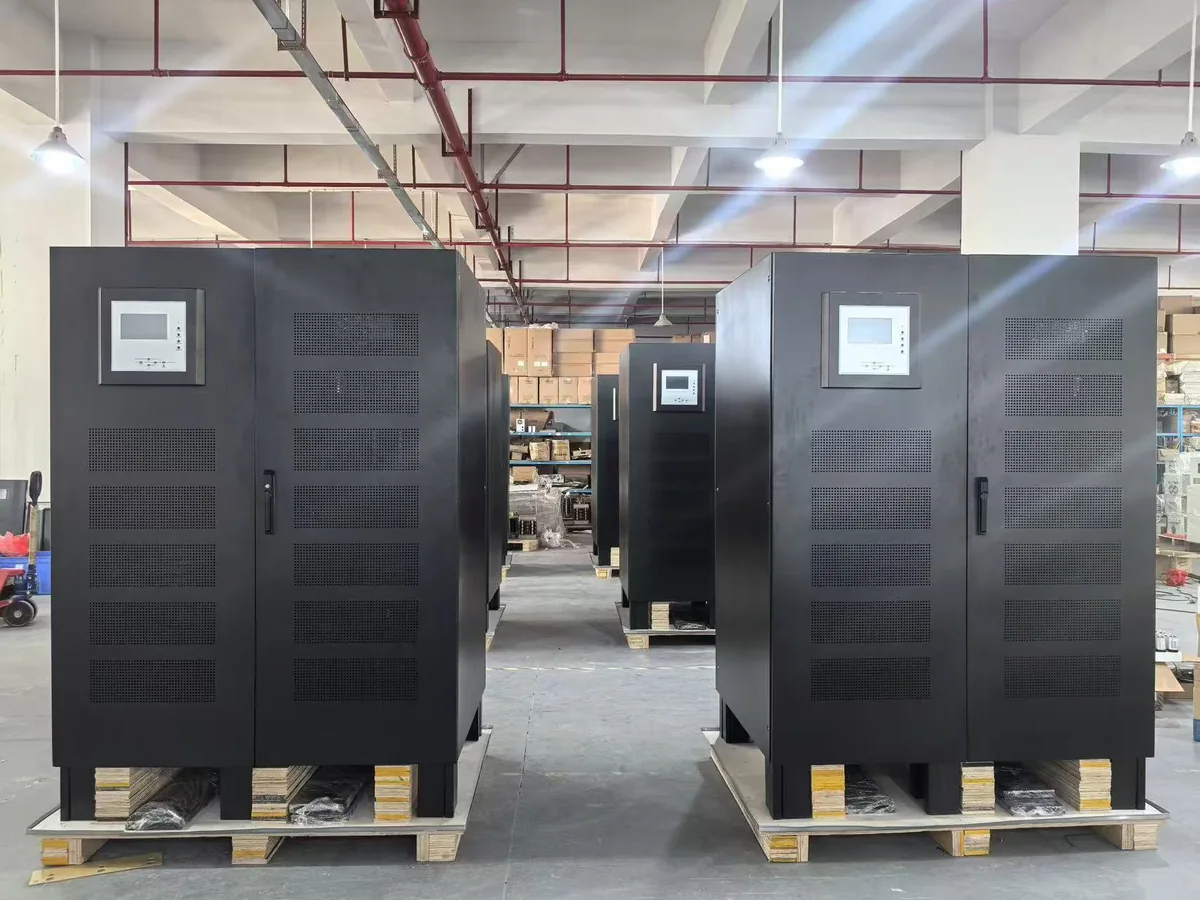
- Input window
- 304–456 VAC
- Per-phase output
- ±2%
- Range
- 10–100 kVA
- Efficiency
- >98%
A three-phase stabilizer corrects each phase independently. That is the difference between a unit that holds the average voltage and a unit that holds each phase within tolerance. In a building with uneven single-phase loads, the average can look fine while one phase is 20 V low and another is 20 V high.
The SVC-T range covers 10–100 kVA with a 304–456 VAC input, 380/400/415 VAC ±2% output, and >98% efficiency. It is installed at the incoming supply of a factory, a hotel, a hospital, or a commercial building.
Why does independent phase regulation matter?
Single-phase loads are rarely balanced. Lighting, sockets, office equipment, and small motors are distributed across phases without exact calculation. The result is phase voltage divergence: one phase carries more load and sits lower, another carries less and sits higher.
A three-phase stabilizer with independent regulation corrects each phase to its own setpoint. A unit that regulates only the average will leave the low phase low and the high phase high, which is exactly the condition that damages equipment.
What input range does the SVC-T accept?
The three-phase SVC accepts 304–456 VAC line-to-line, which corresponds to about 176–263 VAC phase-neutral. That covers most weak-grid conditions. If the input falls below 304 VAC, the unit cannot hold the output and will alarm or bypass.
For sites with deeper sags, a wide-input UPS or an upstream transformer may be required. The stabilizer is not a substitute for a failed supply.
What loads can a three-phase stabilizer protect?
For motor loads, check the starting current. A stabilizer can supply a motor within its rating, but a direct-on-line start can draw 5–7 times rated current. Use a soft starter or a VFD, or oversize the stabilizer after a load study.
- HVAC chillers, AHUs, and pumps
- Elevators and escalators
- Production machinery and packaging lines
- Lighting and building services
- Medical imaging and laboratory equipment
- Water treatment and pumping stations
How is it installed?
The stabilizer is installed between the incoming supply and the protected distribution board. It needs a dedicated breaker, copper busbar or cable terminals, a ventilated indoor location, and a maintenance bypass for critical loads. The neutral must be sized for the harmonic content of the load.
Commissioning includes input/output voltage calibration, phase-sequence check, protection test, and a load test. Keep the commissioning record for the warranty and future maintenance.
Which standards and documents are referenced on this page?
The table lists the model-specific standards and conformity documents a project buyer should ask for. Availability depends on the frame, the battery, and the destination market; request the document that names your model.
Voltage stabilizer and AVR standards
| Reference | What it covers |
|---|---|
| IEC 61558-1 | Safety of power transformers and supply units |
| IEC 61000-3-2 | Harmonic current emission limits |
| IEC 61000-3-3 | Voltage fluctuation and flicker limits |
| IEC 62040-3 | Interface performance when feeding a UPS input |
| JB/T 10089 | Contact-type AC voltage stabilizer standard |
| GB/T 12325 | Voltage deviation limits for supply systems |
| CE / RoHS | EU conformity and restricted-substance declaration |
| ISO 9001 | Manufacturing quality management system |
| RS485 / MODBUS-RTU | Remote monitoring interface |
| IP20 / IP21 | Enclosure protection for indoor installation |
Certificates are issued against the exact model and configuration. See the certifications page for how to confirm scope and revision, or send the model to request the current document.
Confirm the inputs and documents before quoting.
Project inputs to confirm
| Item | What to confirm | Why it matters |
|---|---|---|
| Load | Running kW, largest motor, load step | Sets kVA, overload and topology |
| Runtime | Minutes, generator availability, battery room | Sets battery bank and charger |
| Supply | Voltage, frequency, phase, input current | Sets model, breaker and cable |
| Site | Country, altitude, ambient temperature, dust | Sets derating, IP and documents |
| Battery | VRLA, LiFePO4, footprint, weight limit | Sets chemistry and room layout |
| Documentation | Conformity route, test report, language | Sets document package and lead time |
Documentation package
| Document | Contents | Typical use |
|---|---|---|
| Model datasheet | Ratings, input/output, battery, dimensions | Design and tender |
| Dimension drawing | Cabinet size, terminals, clearance | Room layout |
| Single-line diagram | UPS, bypass, battery and breakers | Electrical design |
| Battery configuration | String voltage, blocks, runtime basis | Battery procurement |
| Test report | Model-specific IEC 62040 or CE report | Compliance and customs |
| Packing list | Dimensions, weight, HS code, marks | Shipping and clearing |
Match the page to a platform.
SVC-T Series · 10–100 kVA
Three-Phase Voltage Stabilizer
Independent phase regulation for unbalanced three-phase loads.
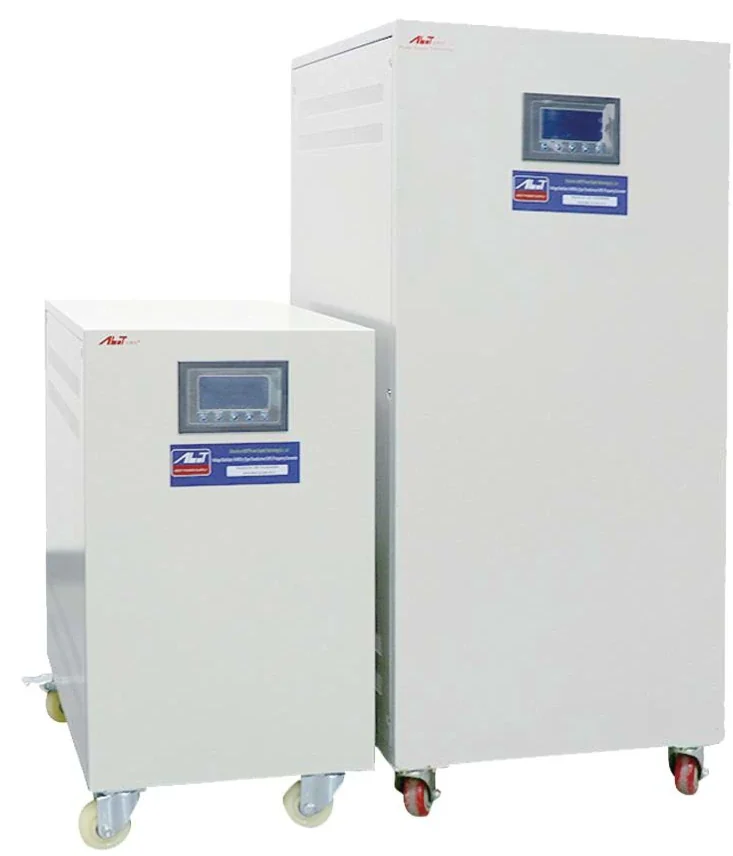
SVC Series · 0.5–100 kVA
Servo Voltage Stabilizer
±2% output from a 160–456 V input swing.
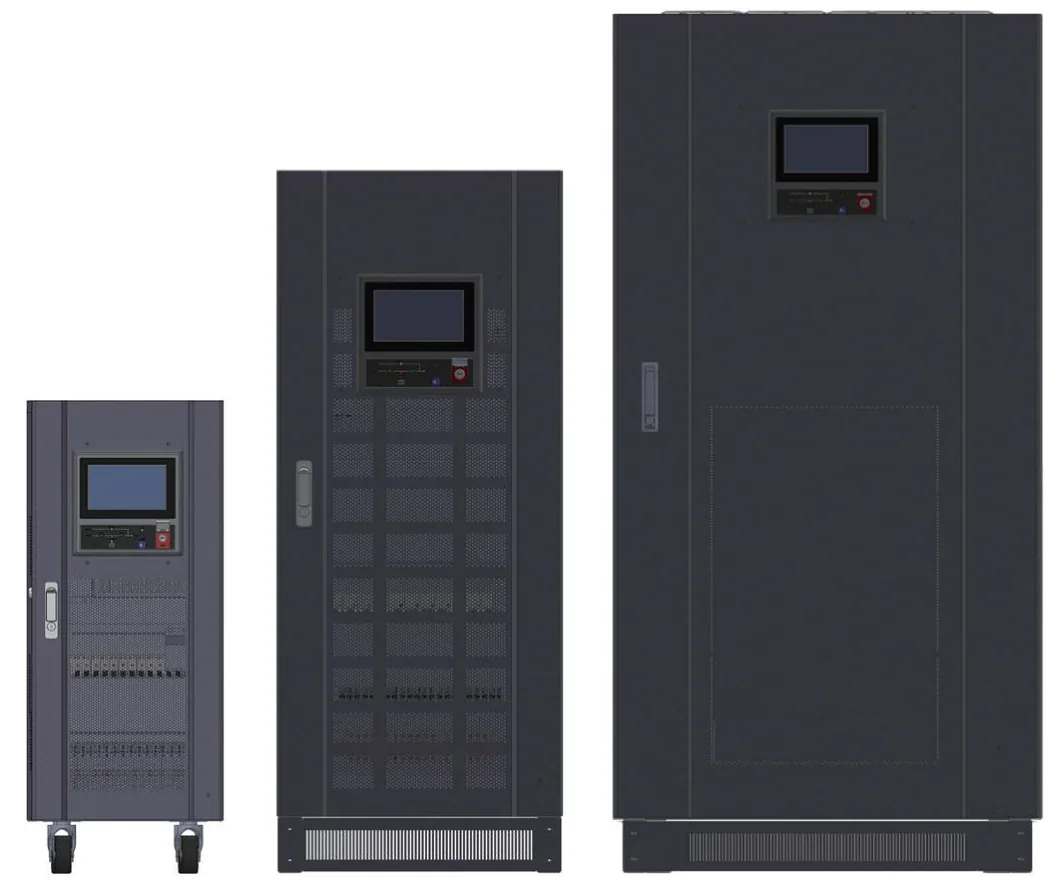
3YT / GP Series · 10–200 kVA
Three-Phase Online UPS
Three-phase double conversion for facility and industrial loads.
Questions from project buyers.
Project-specific answers. If your question is not here, send the load list and the site conditions.
Talk to an engineer Can a three-phase stabilizer fix an unbalanced supply?
It can correct each phase to its setpoint, provided the input is within range and the load is within rating. It cannot fix a phase loss or a failed transformer.
What happens if one phase is lost?
The stabilizer detects phase loss and trips to protect the load. It cannot generate the missing phase.
Does the neutral need to be oversized?
Yes, for non-linear single-phase loads. Harmonic currents can make the neutral current higher than the phase current. Size the neutral and the protection for the harmonic content.
Can it be paralleled?
Standard SVC-T units are not designed for parallel operation. For capacities above 100 kVA, use a larger frame or a different product family.
Is a maintenance bypass required?
It is strongly recommended for critical loads. The bypass allows service without interrupting the load and must be interlocked with the stabilizer output.
Send the load list. We will return the configuration.
Tell us the kW, the backup time, the phase, and the site country. You will get a capacity recommendation, a battery configuration, and the model sheet.
- Capacity and topology recommendation
- Battery bank and runtime estimate
- Model sheet and commercial offer
Request a configuration and quotation
Send the load list, backup time, and site conditions. We will return a capacity recommendation, battery configuration, and commercial offer.