
Modular UPS: add capacity and redundancy in 10–50 kVA steps.
Modular UPS frames from 10 to 600 kVA with hot-swappable modules, N+1 redundancy, <3% input THDi, and battery options for data centers.
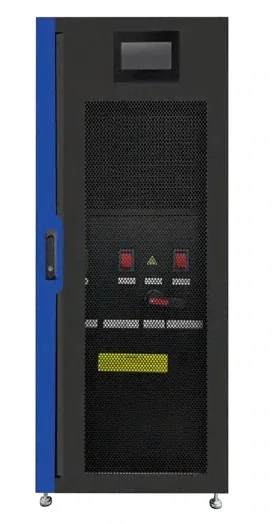
- Frame range
- 10–600 kVA
- Module size
- 10–50 kVA
- Redundancy
- N+1
- Efficiency
- 94.5%
A modular UPS separates the frame, the power modules, and the battery. Capacity grows in 10–50 kVA steps, and a failed module can be replaced while the rest of the system continues to supply the load. For a data center that expects to add IT load in phases, this avoids replacing the whole UPS at each expansion.
The frame is sized for the final load, but only the modules needed today are installed. N+1 redundancy is achieved by installing one more module than the load requires. The control system shares the load across the modules and isolates a failed unit.
How does N+1 work in a modular UPS?
If the load is 90 kW and each module is 30 kW, three modules carry the load. A fourth module provides N+1, so the frame has 120 kW installed and can lose one module without dropping the load. If the load grows to 120 kW, the fourth module becomes part of the N capacity and a fifth module is needed for N+1.
The frame must have enough slots for the final redundancy target. A 10-slot frame can support 300 kW with 30 kW modules, but the N+1 configuration at 300 kW would need 11 modules, which exceeds the frame. Plan the slot count, not just the kW.
Module count examples
| Load | Modules for N | Modules for N+1 | Installed capacity | Frame slots needed |
|---|---|---|---|---|
| 30 kW | 1 | 2 | 60 kW | 2 |
| 60 kW | 2 | 3 | 90 kW | 3 |
| 90 kW | 3 | 4 | 120 kW | 4 |
| 120 kW | 4 | 5 | 150 kW | 5 |
| 180 kW | 6 | 7 | 210 kW | 7 |
| 270 kW | 9 | 10 | 300 kW | 10 |
How is the battery configured for a modular UPS?
The battery is external, typically a ±192 to ±240 VDC string of 12 V blocks. The number of strings and the Ah determine the runtime. The charger is distributed across the power modules, so the maximum charge current depends on the number of modules installed.
For a phased build, size the battery room and the DC cabling for the final frame, even if only part of the battery is installed today. Adding strings later is easier than rebuilding the room.
Is a modular UPS efficient at partial load?
Yes. At low IT utilization, the control system can put idle modules to sleep, so the active modules run closer to their efficient load point. At full load, a modern monolithic UPS may be similar. Compare the annual load profile, not just the peak efficiency.
ECO mode can raise efficiency further, but it introduces a transfer to bypass on a power event. Confirm whether the load can tolerate that transfer before enabling ECO.
Which standards and documents are referenced on this page?
The table lists the model-specific standards and conformity documents a project buyer should ask for. Availability depends on the frame, the battery, and the destination market; request the document that names your model.
UPS standards and documents
| Reference | What it covers |
|---|---|
| IEC 62040-1 | UPS general and safety requirements |
| IEC 62040-2 | UPS electromagnetic compatibility (EMC) |
| IEC 62040-3 | UPS performance and test requirements |
| IEC 60896-21 / -22 | VRLA stationary battery type and performance tests |
| IEC 62619 | Safety of lithium cells and batteries for industrial use |
| UN38.3 / MSDS | Lithium battery transport test and material safety data |
| CE / RoHS | EU conformity and restricted-substance declaration |
| ISO 9001 | Manufacturing quality management system |
| SNMP / MODBUS | Remote monitoring and BMS interface |
| IP20 / IP21 | Cabinet ingress protection for indoor installation |
Certificates are issued against the exact model and configuration. See the certifications page for how to confirm scope and revision, or send the model to request the current document.
Confirm the inputs and documents before quoting.
Project inputs to confirm
| Item | What to confirm | Why it matters |
|---|---|---|
| Load | Running kW, largest motor, load step | Sets kVA, overload and topology |
| Runtime | Minutes, generator availability, battery room | Sets battery bank and charger |
| Supply | Voltage, frequency, phase, input current | Sets model, breaker and cable |
| Site | Country, altitude, ambient temperature, dust | Sets derating, IP and documents |
| Battery | VRLA, LiFePO4, footprint, weight limit | Sets chemistry and room layout |
| Documentation | Conformity route, test report, language | Sets document package and lead time |
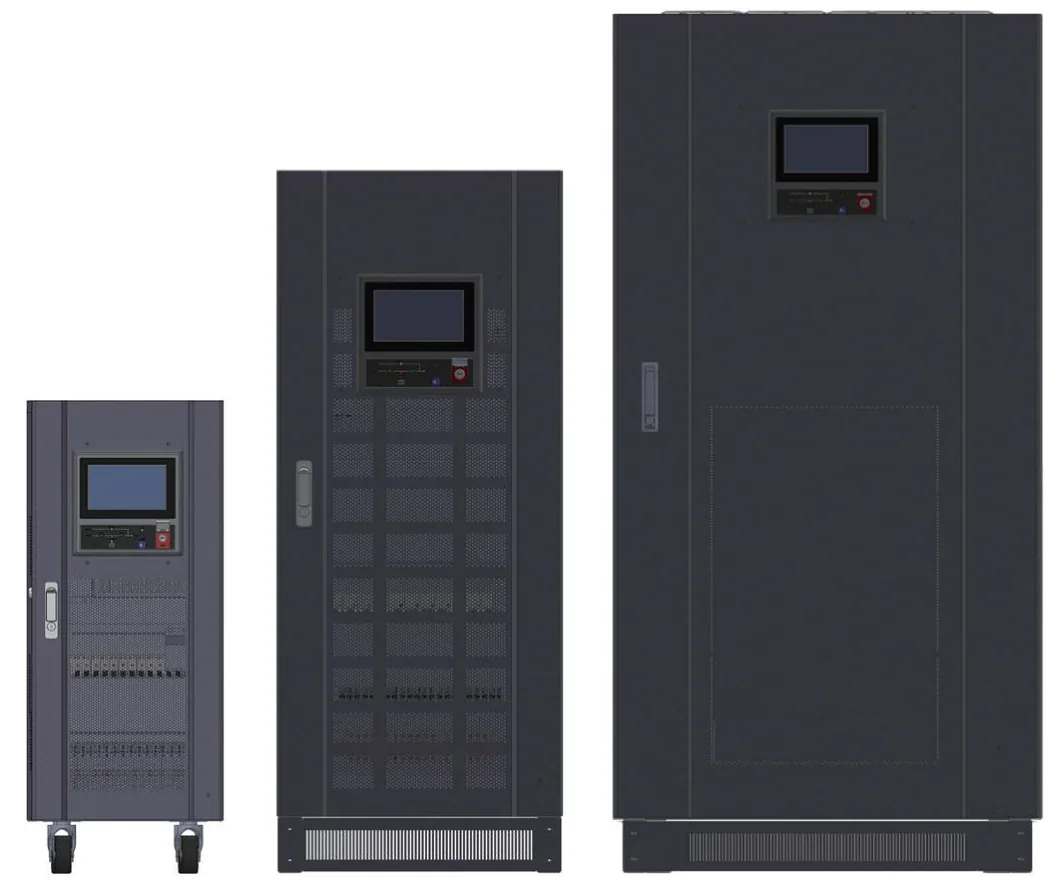
Match the page to a platform.
Questions from project buyers.
Project-specific answers. If your question is not here, send the load list and the site conditions.
Talk to an engineer Can I add modules later?
Yes, if the frame has empty slots and the upstream breaker, cable, and cooling are sized for the final capacity. The frame is the long-lead item; modules can be added as load grows.
What happens if a module fails?
The remaining modules share the load if capacity allows. The failed module can be replaced hot-swap. If the load exceeds the remaining N capacity, the system may transfer to bypass or drop the load.
Is a modular UPS suitable for a small data center?
It can be, but the frame may be oversized for a small load. For 10–60 kVA, a monolithic three-phase UPS or a small modular frame is often more cost-effective.
How many battery strings can the frame charge?
The charger current is distributed across the modules. Confirm the maximum charge current and the battery manufacturer’s recommended recharge time before specifying the bank.
Can the modules be mixed from different vendors?
No. Modules, frames, and firmware are vendor-specific. Do not assume interoperability.
Send the load list. We will return the configuration.
Tell us the kW, the backup time, the phase, and the site country. You will get a capacity recommendation, a battery configuration, and the model sheet.
- Capacity and topology recommendation
- Battery bank and runtime estimate
- Model sheet and commercial offer
Request a configuration and quotation
Send the load list, backup time, and site conditions. We will return a capacity recommendation, battery configuration, and commercial offer.