
Uninterruptible power supply systems, sized for the real load.
Uninterruptible power supply from 400 VA to 800 kVA: offline, line-interactive, online, rack, modular, three-phase and industrial. 0.9 output PF.
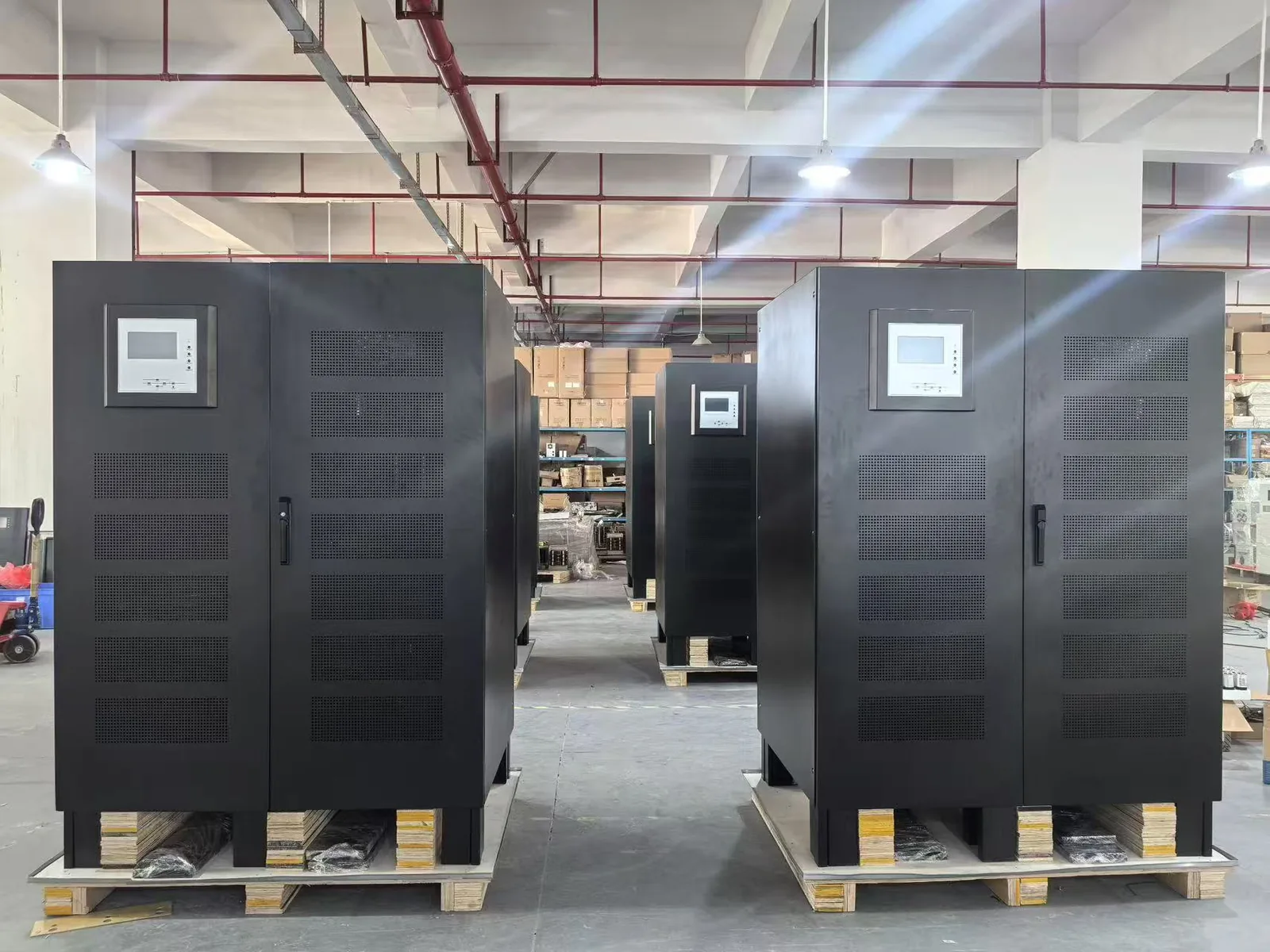
- UPS range
- 400 VA–800 kVA
- Online transfer
- 0 ms
- Output power factor
- 0.9
- Battery runtime
- 5 min–8 h
An uninterruptible power supply (UPS) keeps a critical load energized when the mains fails, sags, or drifts. It stores energy in a battery and converts it to AC. The right topology depends on how much transfer gap the load can tolerate and how dirty the grid is.
This page covers the full range: 400 VA offline units for a POS terminal, 1–10 kVA online towers for a server room, 10–800 kVA three-phase, modular, and industrial frames for a data center or plant, and battery configurations from 5 minutes to 8 hours. Every recommendation starts with the load list, not with a catalogue number.
What does an uninterruptible power supply actually do?
A UPS does three jobs: it conditions the incoming power, it carries the load through a short interruption, and it provides a controlled shutdown or a generator changeover window. It is not a generator. The runtime is limited by the battery bank, and the battery is the part that determines the real autonomy.
The UPS also protects against problems that are not full outages: deep brownouts, voltage swells, frequency instability from a generator, and harmonics from non-linear loads. A line-interactive unit corrects voltage with an AVR stage; an online unit regenerates the waveform continuously. Both are UPSs, but they solve different problems.
UPS topologies and where they fit
| Topology | Transfer to battery | Output waveform | Best for |
|---|---|---|---|
| Offline / standby | 4–10 ms | Simulated sine wave | Desktop PC, router, small POS |
| Line-interactive | 4–6 ms | Simulated or pure sine | POS, CCTV, branch IT, network switch |
| Online double conversion | 0 ms | Pure sine wave, THD <3% | Servers, medical, telecom, industrial control |
| Modular online | 0 ms | Pure sine wave | Data centers that need N+1 and pay-as-you-grow |
| Industrial online | 0 ms | Pure sine wave, high overload | PLC, DCS, motor and process loads |
Which UPS capacity fits your load?
Start with the real power in kW, not the nameplate VA. Divide by the output power factor (typically 0.9 for online UPS) and add a design margin of 20–25%. Then check the largest motor or compressor starting current, because a 5 kW motor can draw 25–35 kW for a few seconds.
The table below is a starting point for common loads. A 10 kVA UPS does not mean 10 kW; at 0.9 PF it delivers 9 kW, and at 80% loading a prudent design uses about 7.2 kW continuously.
Typical UPS size by load
| UPS size | Real power at 0.9 PF | Typical load | Recommended page |
|---|---|---|---|
| 1 kVA | 0.9 kW | 1–2 servers, router, switch, POS cluster | /ups-systems/1kva-ups/ |
| 3 kVA | 2.7 kW | Small server rack, CCTV head-end, clinic desk | /ups-systems/3kva-ups/ |
| 5 kVA | 4.5 kW | Branch server room, 6–10 cameras, lab bench | /ups-systems/5kva-ups/ |
| 10 kVA | 9 kW | Server room, 20–30 kW IT load with growth | /ups-systems/10kva-ups/ |
| 20 kVA | 18 kW | Small data center, imaging suite, production cell | /products/online-ups-three-phase/ |
| 60 kVA | 54 kW | Plant control room, telecom core, mid-size DC | /products/online-ups-three-phase/ |
| 100–200 kVA | 90–180 kW | Data center, hospital, large process plant | /ups-systems/large-capacity-20-200kva/ |
The capacity table is a first-pass guide. Motor starting, harmonics, altitude, and ambient temperature can change the required size.
How long should the UPS battery last?
Runtime is a project decision, not a UPS feature. Five minutes is enough to ride through a generator start or shut down a server. Thirty minutes covers a typical utility switching event. Two to eight hours is for sites without a generator or for telecom and security loads that must continue through the night.
The battery bank is sized with the DC bus voltage, the inverter efficiency, the usable depth of discharge, and the discharge-rate curve. A simple Ah calculation underestimates the bank at short runtimes because the battery delivers less than its 20-hour rating at high current.
Indicative 10 kVA battery configuration (VRLA, 0.9 PF, 80% load)
| Runtime | DC bus | Usable energy | 12 V blocks (100 Ah) | Approx. bank |
|---|---|---|---|---|
| 5 min | 192 VDC | 0.6 kWh | 16 blocks, 1 string | 1.9 kWh nominal |
| 15 min | 192 VDC | 1.8 kWh | 16 blocks, 2 strings | 3.8 kWh nominal |
| 30 min | 192 VDC | 3.6 kWh | 16 blocks, 4 strings | 7.7 kWh nominal |
| 60 min | 192 VDC | 7.2 kWh | 16 blocks, 8 strings | 15.4 kWh nominal |
| 120 min | 192 VDC | 14.4 kWh | 16 blocks, 16 strings | 30.7 kWh nominal |
These figures are indicative and must be recalculated against the selected battery’s discharge curve and the UPS charger limit. Use the sizing calculator for a first estimate.
Single-phase or three-phase UPS?
Single-phase UPS systems are used where the load is single-phase or where the site supply is single-phase: a branch office, a clinic, a small server rack, a security room. Three-phase UPS systems are used when the load is three-phase, when the supply is three-phase, or when the capacity is above about 20 kVA.
A three-phase UPS can also supply single-phase loads through its neutral, but the load must be balanced across phases. If most of the load is single-phase and distributed, a three-phase UPS with a large neutral and independent phase monitoring is the better choice.
- Single-phase online: 1–10 kVA, tower or rack.
- Three-phase input / single-phase output: 10–20 kVA, for server rooms and clinics.
- Three-phase input / three-phase output: 10–200 kVA, for facilities and industrial plants.
- Modular three-phase: 90–300 kW, for data centers with N+1.
What should be in a UPS quotation?
A useful quotation is more than a model and a price. It should state the rated kVA and kW, the output power factor, the input voltage window, the battery configuration and runtime basis, the dimensions and weight, the communication options, the protection rating, and the documentation package.
For a project, also ask for the single-line diagram, the breaker and cable sizing, the battery cabinet layout, the commissioning checklist, and the lead time for the exact configuration. If the site is in a hot or high-altitude location, ask for the derating table.
- Load list and diversity factor used for the calculation
- UPS model, kVA, kW, output PF, and overload curve
- Battery model, string configuration, and runtime basis
- Input/output terminals, breaker size, and cable size
- Dimensions, weight, heat rejection, and clearance
- Monitoring, SNMP, dry contacts, and MODBUS options
- Certification and test documentation available by model
- Packing, shipping terms, and lead time
Which standards and documentation apply?
Online UPS systems are commonly specified against IEC 62040-1 (safety), IEC 62040-2 (EMC), and IEC 62040-3 (performance and test methods). The modular and large-frame units also reference IEC 60950-1 where applicable. Battery blocks are specified with their own cycle-life and transport documentation.
For lithium modules, ask for UN38.3, MSDS, CE, RoHS, and the BMS communication protocol. For a tender, confirm whether the certificate is issued to the manufacturer, the model, or the factory, and whether a model-specific test report is available.
Which standards and documents are referenced on this page?
The table lists the model-specific standards and conformity documents a project buyer should ask for. Availability depends on the frame, the battery, and the destination market; request the document that names your model.
UPS standards and documents
| Reference | What it covers |
|---|---|
| IEC 62040-1 | UPS general and safety requirements |
| IEC 62040-2 | UPS electromagnetic compatibility (EMC) |
| IEC 62040-3 | UPS performance and test requirements |
| IEC 60896-21 / -22 | VRLA stationary battery type and performance tests |
| IEC 62619 | Safety of lithium cells and batteries for industrial use |
| UN38.3 / MSDS | Lithium battery transport test and material safety data |
| CE / RoHS | EU conformity and restricted-substance declaration |
| ISO 9001 | Manufacturing quality management system |
| SNMP / MODBUS | Remote monitoring and BMS interface |
| IP20 / IP21 | Cabinet ingress protection for indoor installation |
Certificates are issued against the exact model and configuration. See the certifications page for how to confirm scope and revision, or send the model to request the current document.
Open the sizing calculator
Convert kW to kVA and estimate the battery bank.
Enter the load, the runtime, and the phase. The calculator applies a design margin and returns a standard size and a 12 V block estimate.
Match the page to a platform.
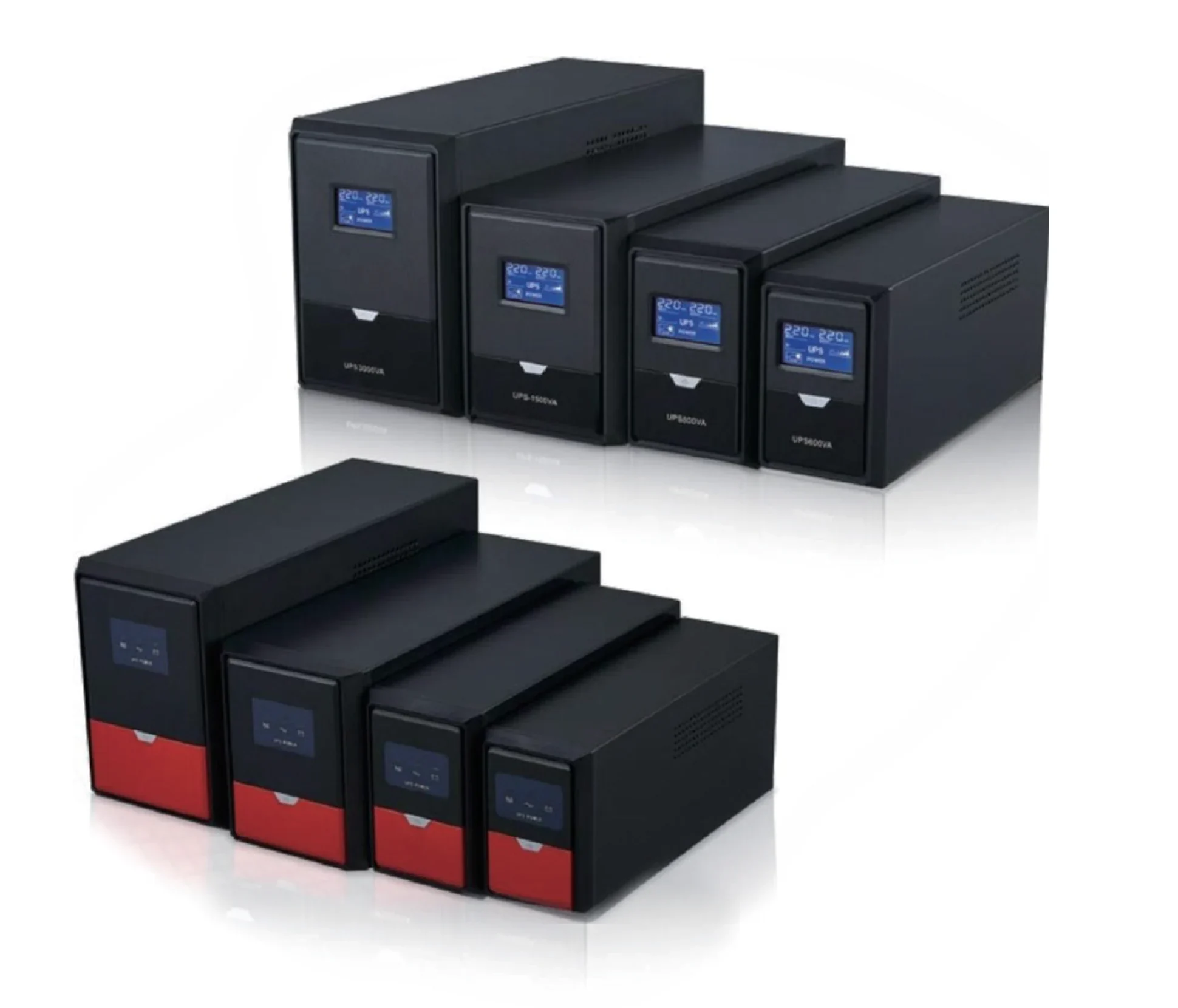
MT / HI11 / AP / AK · 500 VA – 5 kVA
Line-Interactive UPS
Compact, AVR-corrected backup for POS, security, and office loads.
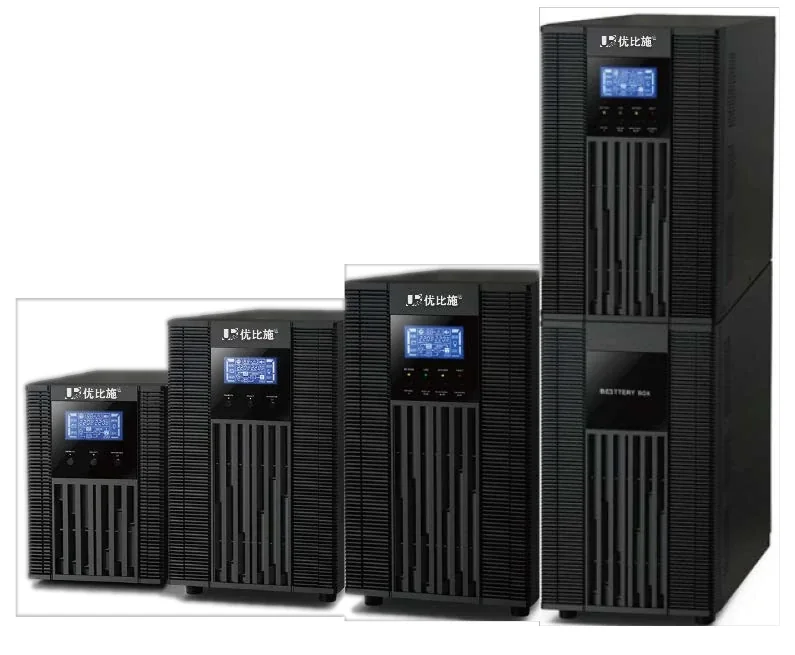
YT Series · 1–10 kVA
Single-Phase Online UPS
Double-conversion, 0 ms protection for servers, medical, and telecom loads.
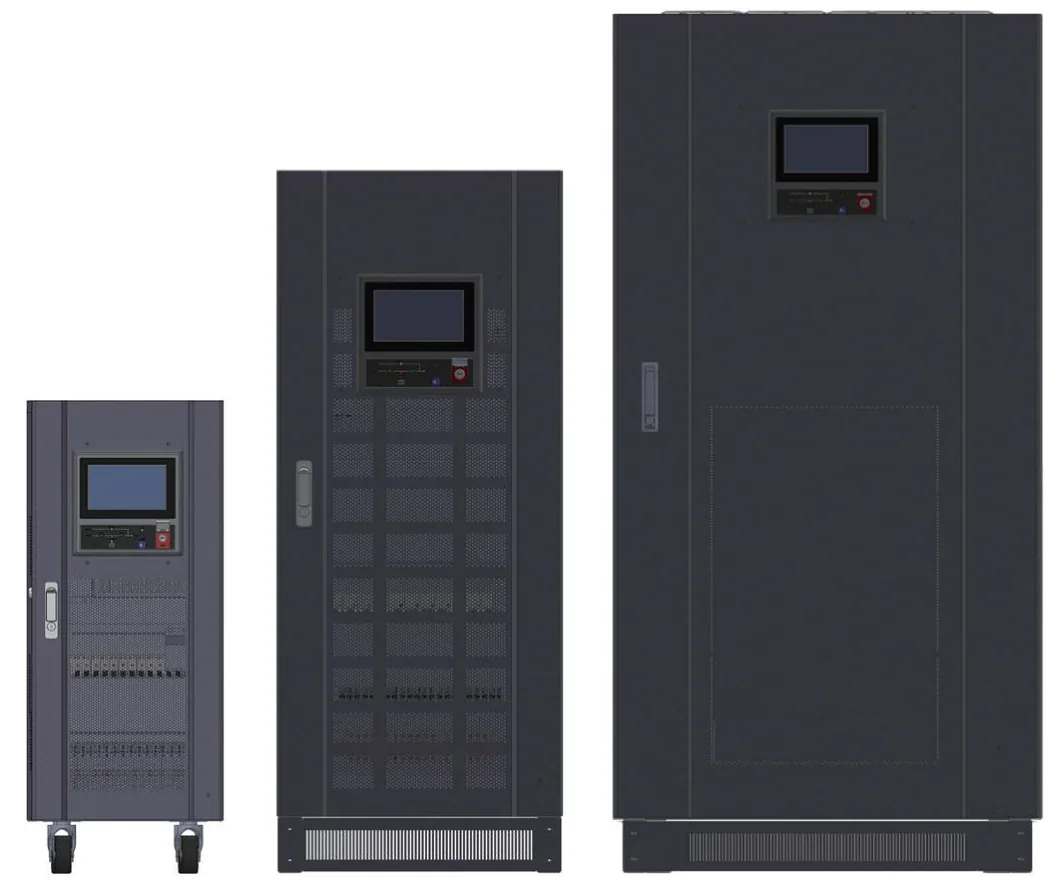
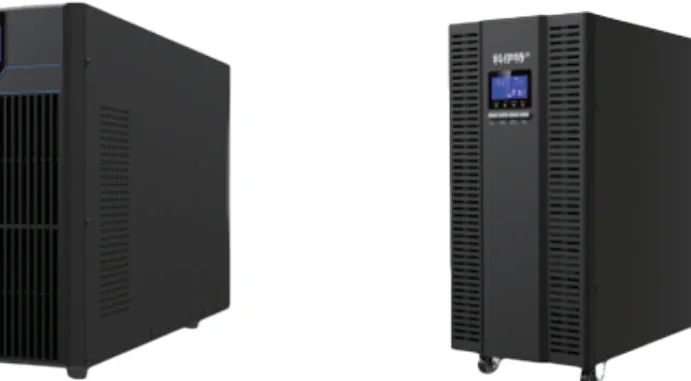
3YT / GP Series · 10–200 kVA
Three-Phase Online UPS
Three-phase double conversion for facility and industrial loads.
YT-R / UM / RT · 1–60 kVA
Rack-Mount UPS
Double conversion in 1U–3U, built for racks and edge rooms.
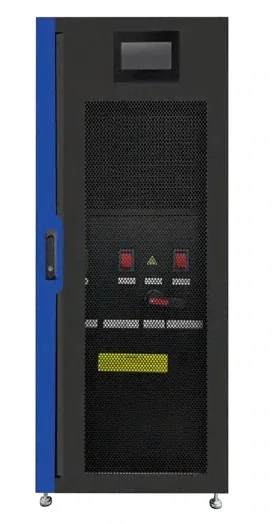
Modular frames · 10–600 kVA
Modular UPS
Scale capacity and redundancy one hot-swappable module at a time.
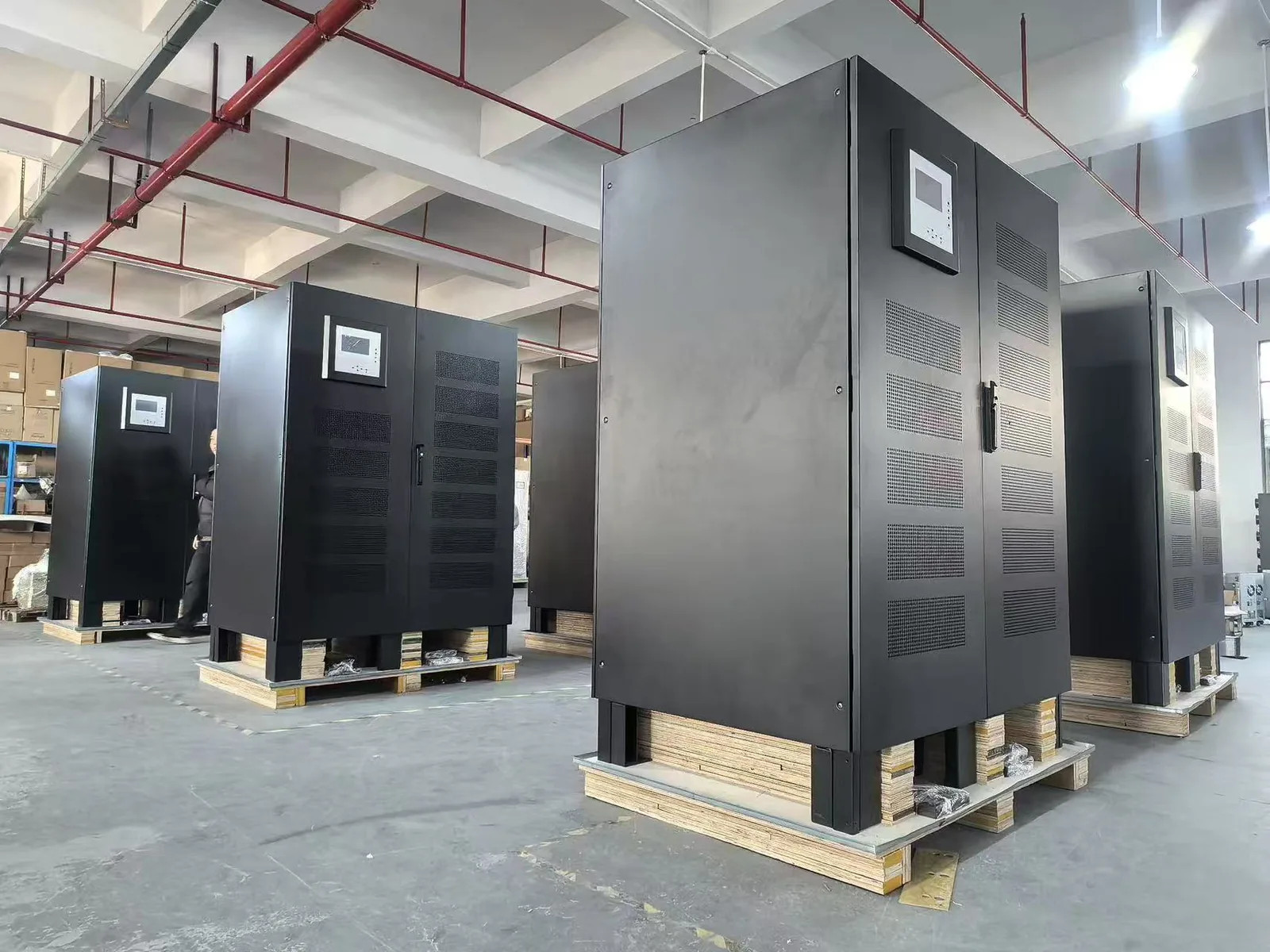
Industrial frame · 10–200 kVA
Industrial UPS
Wide input, high overload, and harsh-environment protection.
Questions from project buyers.
Project-specific answers. If your question is not here, send the load list and the site conditions.
Talk to an engineer How do I calculate the UPS size for my load?
Add the running kW of all loads, divide by the output power factor (0.9 for most online UPS), and add 20–25% design margin. Then check the largest motor or compressor starting current. Use the sizing calculator for a first estimate and confirm with the model datasheet.
How much backup time do I need?
Five minutes is enough for a generator start or a controlled shutdown. Thirty minutes covers most utility switching. Two to eight hours is for sites without a generator or for telecom and security loads. The battery bank, not the UPS, sets the runtime.
What is the difference between online and line-interactive?
An online UPS continuously regenerates the output through a double conversion and transfers in 0 ms. A line-interactive UPS conditions the mains with an AVR and transfers in 4–6 ms. Online is for sensitive or continuous loads; line-interactive is for small commercial and office loads.
Can a UPS run on a generator?
Yes, if the generator is sized for the UPS input current plus the charging load and the load step. Online UPS with a wide input range and >0.99 input PF is generally more generator-friendly. Share the generator kVA and the UPS model for a compatibility check.
Do you provide installation and commissioning?
We provide the configuration, drawings, commissioning checklist, and remote guidance. Physical installation is normally carried out by the local electrical contractor or project partner. For complex projects, we can coordinate with the site team.
Which UPS is best for a data center?
A modular online UPS or a parallel three-phase frame with N+1, external battery, and SNMP monitoring. The choice depends on the IT load, the redundancy target, the battery runtime, and the room layout.
Send the load list. We will return the configuration.
Tell us the kW, the backup time, the phase, and the site country. You will get a capacity recommendation, a battery configuration, and the model sheet.
- Capacity and topology recommendation
- Battery bank and runtime estimate
- Model sheet and commercial offer
Request a configuration and quotation
Send the load list, backup time, and site conditions. We will return a capacity recommendation, battery configuration, and commercial offer.