
Voltage stabilizer for Nigeria: size for the real grid, not the nominal one.
Nigeria voltage stabilizer guide: typical 160–260 V swings, single and three-phase sizing, generator interaction, surge protection, Lagos and Abuja.
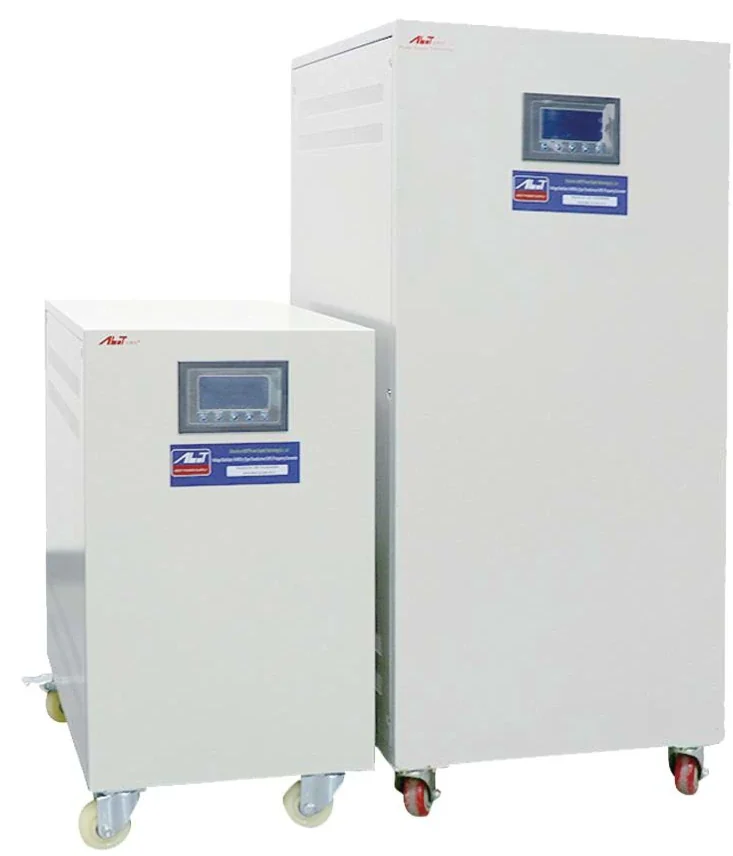
- Typical 1-phase swing
- 160–260 V
- Typical 3-phase swing
- 304–456 V
- Range
- 0.5–2000 kVA
- Delivery hubs
- Lagos / Abuja
Nigeria’s grid is characterized by wide voltage swings, frequent outages, and generator changeover. A stabilizer that is sized for 220 V nominal but not for the real 160–260 V window will trip exactly when it is needed. The specification must start from the measured voltage, not the nameplate.
This page covers the typical Nigerian site conditions, the stabilizer sizes for homes, shops, offices, and factories, and the interaction with generators and surge protection. It is a guide, not a substitute for a site survey.
What does a Nigerian voltage stabilizer need to handle?
The common problems are sustained low voltage (160–190 V), overvoltage after a supply restoration (250–270 V), phase imbalance, and frequent outages. The stabilizer must hold the output through the low and high extremes, and it must survive the surge that follows a restoration.
A servo stabilizer with a 160–260 VAC single-phase window and a 304–456 VAC three-phase window is the usual choice. A contact-type AVR with a ±20% window is not enough for the deepest sags, even though it offers ±1% precision.
What size stabilizer do I need for a Nigerian home, shop, or factory?
For a home or small shop, add the running kVA of the fridge, freezer, air conditioners, lights, and electronics. A 5–10 kVA single-phase stabilizer covers many homes; a 10–15 kVA unit covers a shop with two or three air conditioners. For an office or a small factory, a three-phase 30–100 kVA unit is common.
Do not size from the generator rating. The stabilizer protects the load, not the generator. If the generator is the main source, the stabilizer must be sized for the load and the generator’s voltage stability.
Typical Nigerian site sizes
| Site | Typical load | Stabilizer | Phase |
|---|---|---|---|
| Home | 3–8 kVA | 5–10 kVA | Single-phase |
| Shop / small office | 8–15 kVA | 10–15 kVA | Single-phase |
| Office floor | 15–30 kVA | 20–30 kVA | Three-phase |
| Small factory | 30–60 kVA | 40–60 kVA | Three-phase |
| Plant / hotel | 60–100 kVA | 80–100 kVA | Three-phase |
How does a stabilizer interact with a generator?
A generator’s voltage can be stable or unstable depending on its AVR and load. A stabilizer can correct the voltage downstream, but it cannot fix a generator that is overloaded or hunting. If the generator frequency moves, the stabilizer will follow the voltage but the load may still see frequency variation.
For a generator-backed site, install the stabilizer after the changeover switch so it protects the load on both utility and generator supply. Confirm the generator kVA, the load step, and the stabilizer input window. A generator that is too small for the load will collapse regardless of the stabilizer.
Do I need surge protection as well?
Yes. A stabilizer is not a surge arrester. A lightning strike or a switching transient can damage the stabilizer and the load. Install a surge protective device (SPD) at the incoming supply and, where required, at the distribution board.
For a site with frequent restoration surges, use a Class I/II SPD coordinated with the stabilizer and the upstream breaker. The SPD should be inspected after a large event and replaced if the indicator shows end-of-life.
How is the stabilizer delivered to Nigeria?
Units are packed in export-grade cartons or wooden cases, depending on the size. Delivery is by sea to Lagos or by air for urgent smaller units. The quotation states the Incoterm, the packing, and the documents provided. Import duty and clearing are handled by the buyer’s clearing agent unless a delivered term is agreed.
Confirm the site voltage, the phase configuration, and the generator size before ordering. A unit built for 220 V single-phase will not work on a 415 V three-phase supply without a transformer.
Which standards and documents are referenced on this page?
The table lists the model-specific standards and conformity documents a project buyer should ask for. Availability depends on the frame, the battery, and the destination market; request the document that names your model.
Voltage stabilizer and AVR standards
| Reference | What it covers |
|---|---|
| IEC 61558-1 | Safety of power transformers and supply units |
| IEC 61000-3-2 | Harmonic current emission limits |
| IEC 61000-3-3 | Voltage fluctuation and flicker limits |
| IEC 62040-3 | Interface performance when feeding a UPS input |
| JB/T 10089 | Contact-type AC voltage stabilizer standard |
| GB/T 12325 | Voltage deviation limits for supply systems |
| CE / RoHS | EU conformity and restricted-substance declaration |
| ISO 9001 | Manufacturing quality management system |
| RS485 / MODBUS-RTU | Remote monitoring interface |
| IP20 / IP21 | Enclosure protection for indoor installation |
Certificates are issued against the exact model and configuration. See the certifications page for how to confirm scope and revision, or send the model to request the current document.
Confirm the inputs and documents before quoting.
Project inputs to confirm
| Item | What to confirm | Why it matters |
|---|---|---|
| Load | Running kW, largest motor, load step | Sets kVA, overload and topology |
| Runtime | Minutes, generator availability, battery room | Sets battery bank and charger |
| Supply | Voltage, frequency, phase, input current | Sets model, breaker and cable |
| Site | Country, altitude, ambient temperature, dust | Sets derating, IP and documents |
| Battery | VRLA, LiFePO4, footprint, weight limit | Sets chemistry and room layout |
| Documentation | Conformity route, test report, language | Sets document package and lead time |
Match the page to a platform.
SVC Series · 0.5–100 kVA
Servo Voltage Stabilizer
±2% output from a 160–456 V input swing.
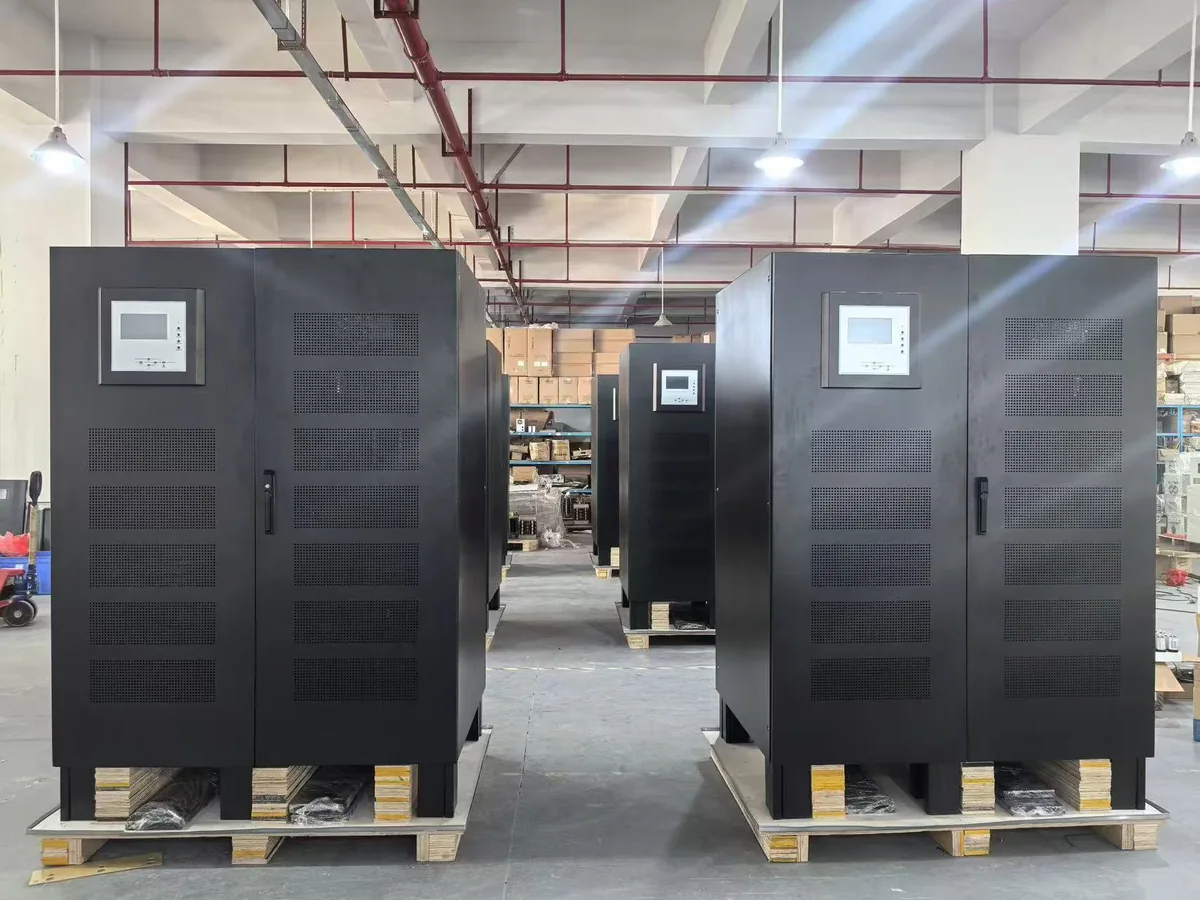
SVC-T Series · 10–100 kVA
Three-Phase Voltage Stabilizer
Independent phase regulation for unbalanced three-phase loads.
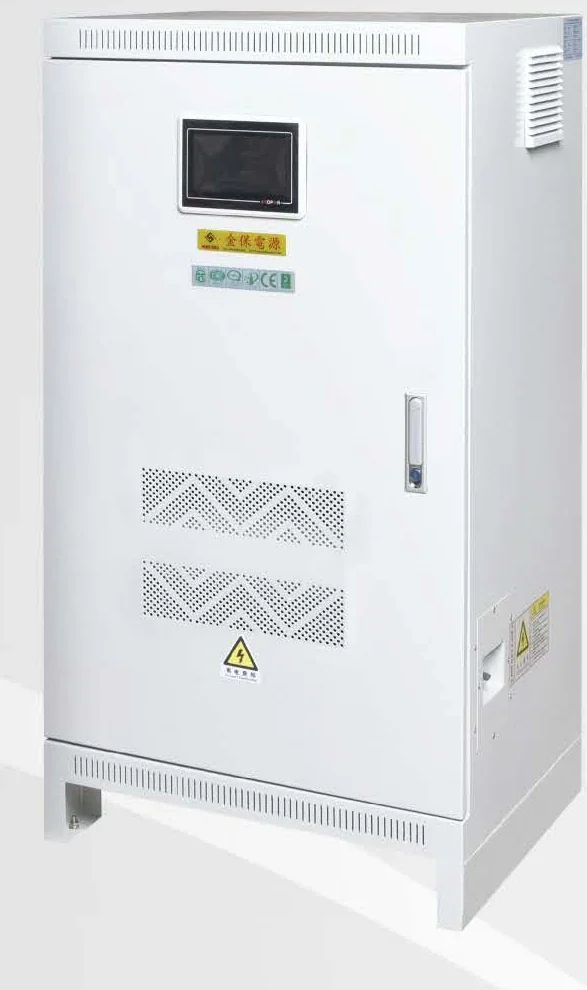
KPD Series · 10–30 kVA
Contact-Type Voltage Stabilizer
±1% precision from a carbon-brush autotransformer.
Questions from project buyers.
Project-specific answers. If your question is not here, send the load list and the site conditions.
Talk to an engineer What size stabilizer is best for a Nigerian home?
A 5–10 kVA single-phase servo stabilizer covers most homes with a fridge, freezer, lights, and one or two air conditioners. Measure the actual load and add 20–30% margin.
Can a stabilizer work with a generator?
Yes, if it is installed after the changeover and the generator is sized for the load. The stabilizer corrects voltage, not frequency or generator capacity.
Why does my stabilizer trip during low voltage?
The input may be below the stabilizer’s correction range (160 V single-phase), or the load may exceed the unit’s current rating. Measure the input at the worst time and check the load current.
Do I need a three-phase stabilizer for a small factory?
If the factory has three-phase equipment or a three-phase supply, yes. A three-phase unit with independent phase regulation handles unbalanced single-phase loads better than three single-phase units.
How long is delivery to Lagos?
Sea freight is typically several weeks plus clearing; air freight is faster for smaller units. The exact lead time is confirmed in the quotation based on the model and the shipping method.
Send the load list. We will return the configuration.
Tell us the kW, the backup time, the phase, and the site country. You will get a capacity recommendation, a battery configuration, and the model sheet.
- Capacity and topology recommendation
- Battery bank and runtime estimate
- Model sheet and commercial offer
Request a configuration and quotation
Send the load list, backup time, and site conditions. We will return a capacity recommendation, battery configuration, and commercial offer.