A fuel station has a split personality. The forecourt is a hazardous area with strict rules on equipment placement. The shop and the office are ordinary commercial loads. The backup design has to respect both.
This guide covers the load list, the AVR versus UPS decision, the hazardous-area boundary, and a practical configuration for a station with or without a generator.
What are the critical loads at a fuel station?
Start with the systems that must stay alive or shut down safely.
| Load | Priority | Typical draw | Backup |
|---|---|---|---|
| POS and payment terminal | Critical | 0.3–1 kW | UPS |
| Tank gauge and leak detection | Critical | 0.1–0.5 kW | UPS |
| Dispenser controllers | Critical | 0.3–1 kW | UPS |
| CCTV and access control | Critical | 0.3–1 kW | UPS |
| Forecourt lighting controls | Important | 0.2–1 kW | UPS or generator |
| Communications / router | Critical | 0.05–0.2 kW | UPS |
| Dispenser pumps | Process | 5–30 kW | Mains or generator |
| Air compressor | Process | 2–10 kW | Mains or generator |
| Shop air conditioning | Non-critical | 3–15 kW | Mains or generator |
The UPS should carry the control and payment layer. The pumps and the compressor are motor loads and should not be on a small UPS.
AVR or UPS?
The two devices solve different problems.
| Problem | Device | What it does |
|---|---|---|
| Sustained undervoltage or overvoltage | AVR | Corrects the voltage before it reaches the loads |
| Short outage or transfer | UPS | Carries the critical load on battery |
| Generator changeover | UPS + AVR | AVR stabilises the generator output; UPS covers the transfer |
| Lightning and switching surge | SPD | Diverts the transient; neither AVR nor UPS replaces it |
A station with a weak feeder usually needs an AVR at the incoming supply and a UPS on the control loads. A station with a stable feeder may need only the UPS and an SPD.
Where can the equipment be installed?
Standard UPS and AVR cabinets are not explosion-proof. They must be installed in a safe area, outside the hazardous zone defined around the dispensers, vents and tank fill points. The hazardous-area classification is a site-specific decision made by the electrical designer under IEC 60079 or the local code.
The practical consequences:
- Put the UPS and AVR in the control room or the office, not in the forecourt.
- Keep the cable routes out of the hazardous zone or use the approved glands and barriers.
- Do not rely on a standard IP54 cabinet as explosion protection; IP rating and explosion protection are different requirements.
- The dispenser manufacturer’s installation manual defines the zone around the equipment.
If the site requires equipment inside the hazardous zone, use certified explosion-proof equipment and a designer who is qualified for the classification.
How do you size the UPS and the AVR?
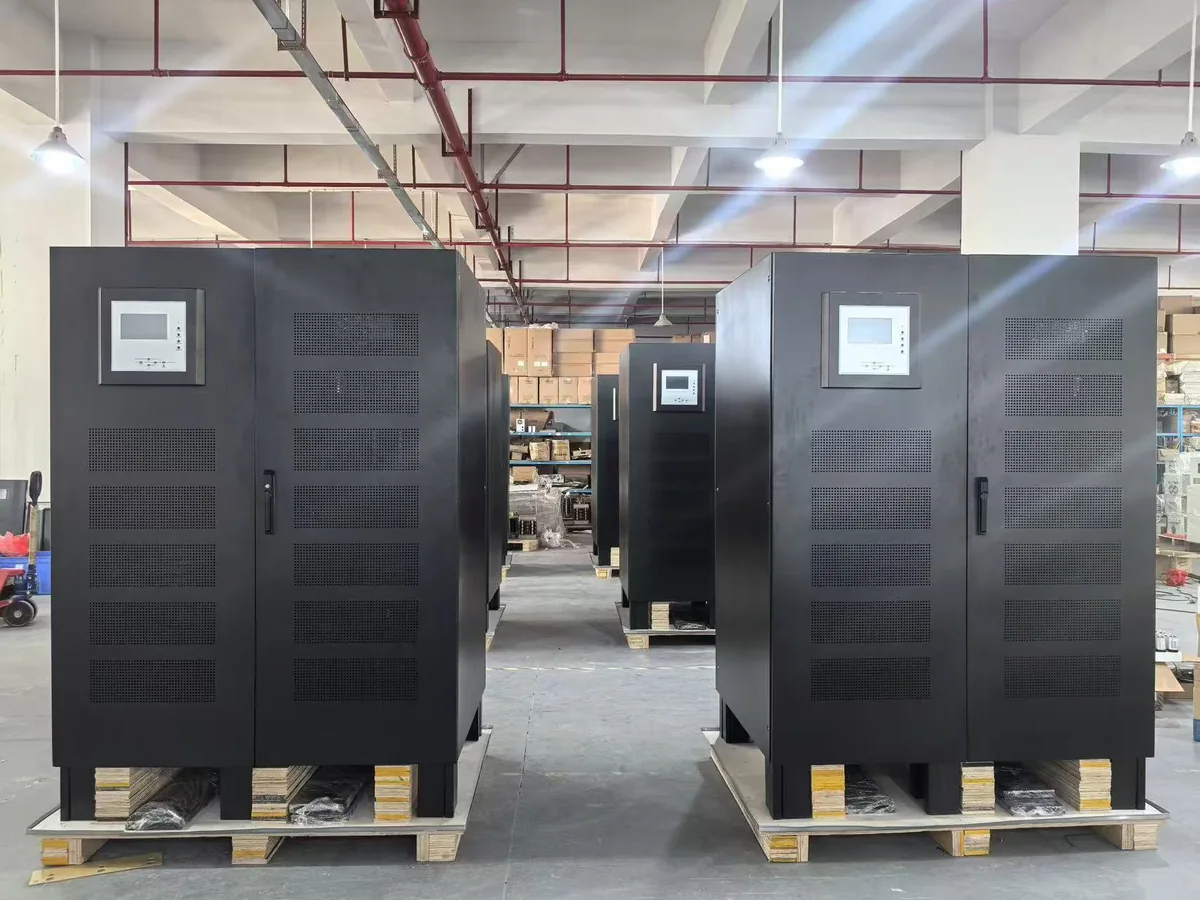
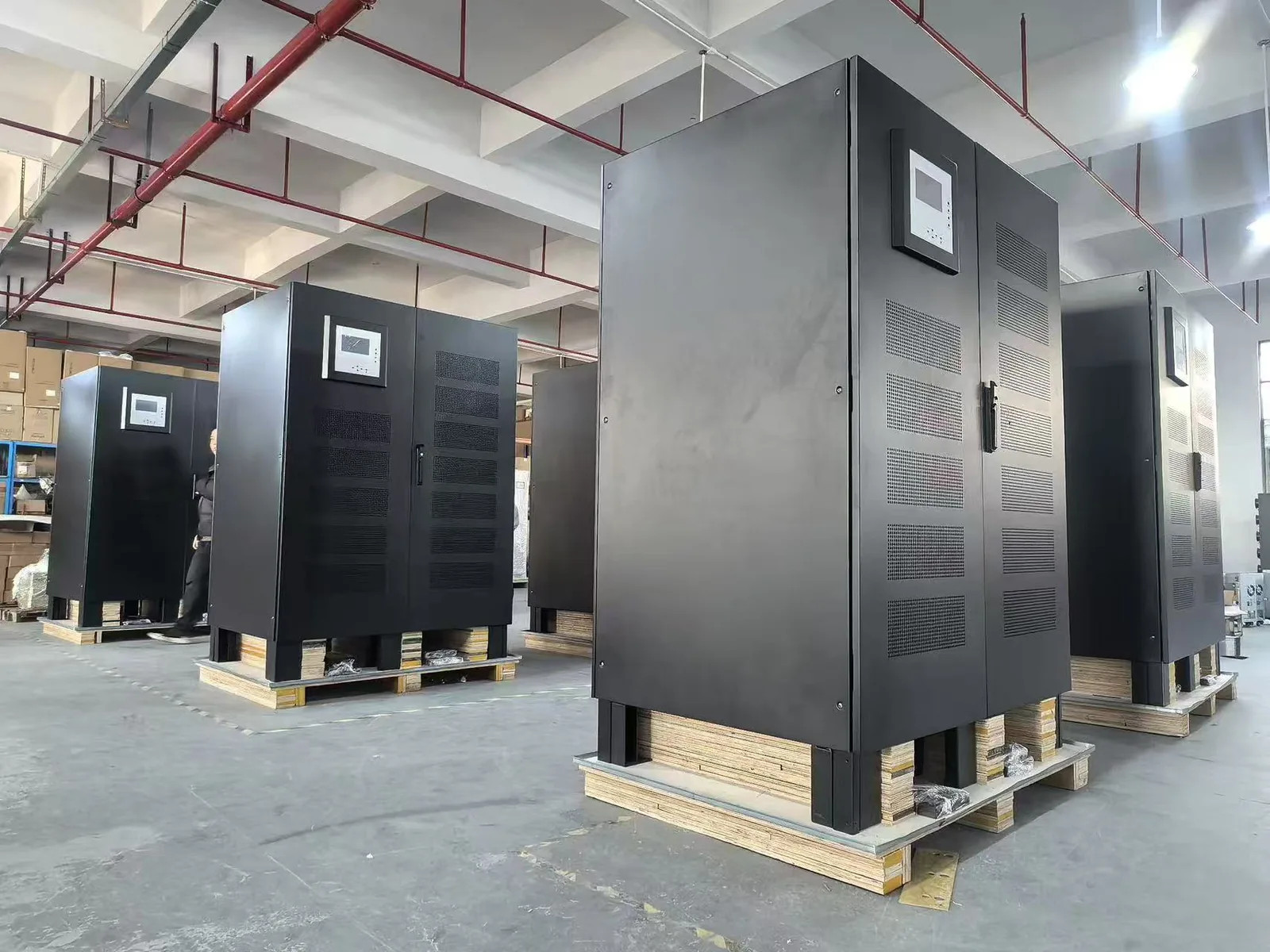
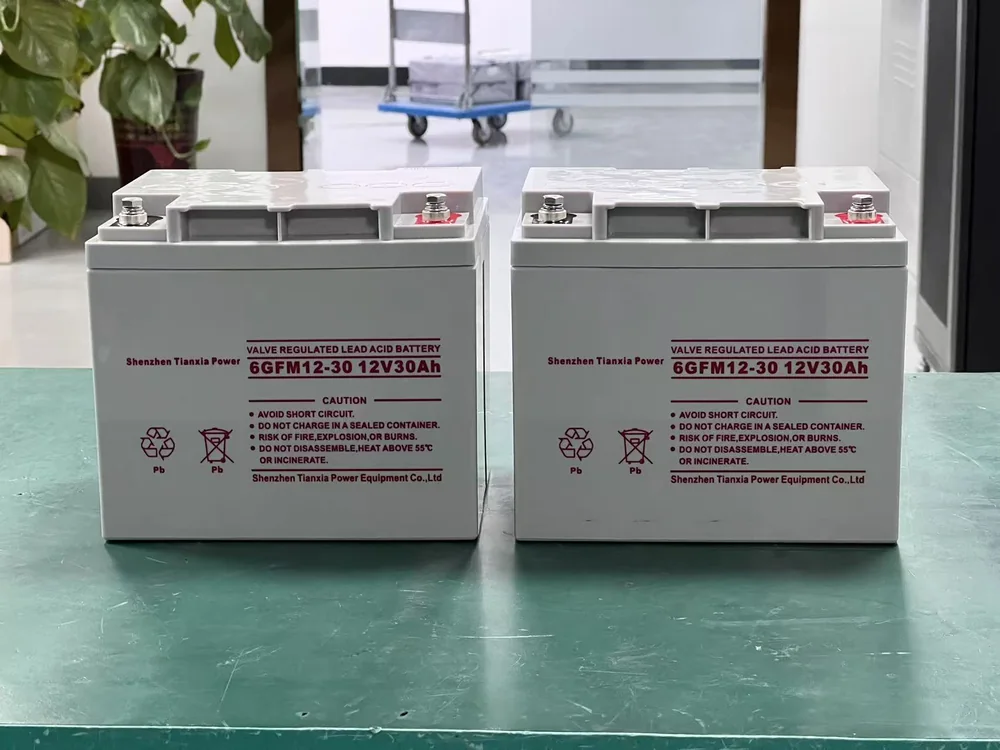
For the UPS, add the control, payment, tank gauge, CCTV and communications load. A typical station control load is 1.5–4 kW. With a 25% margin and a 0.9 power factor, a 3–6 kVA online UPS covers it. For 30 minutes at a 96 VDC bus, 0.85 inverter efficiency and 0.6 depth of discharge, the estimate is about 18 Ah; a 24–40 Ah bank covers it with margin.
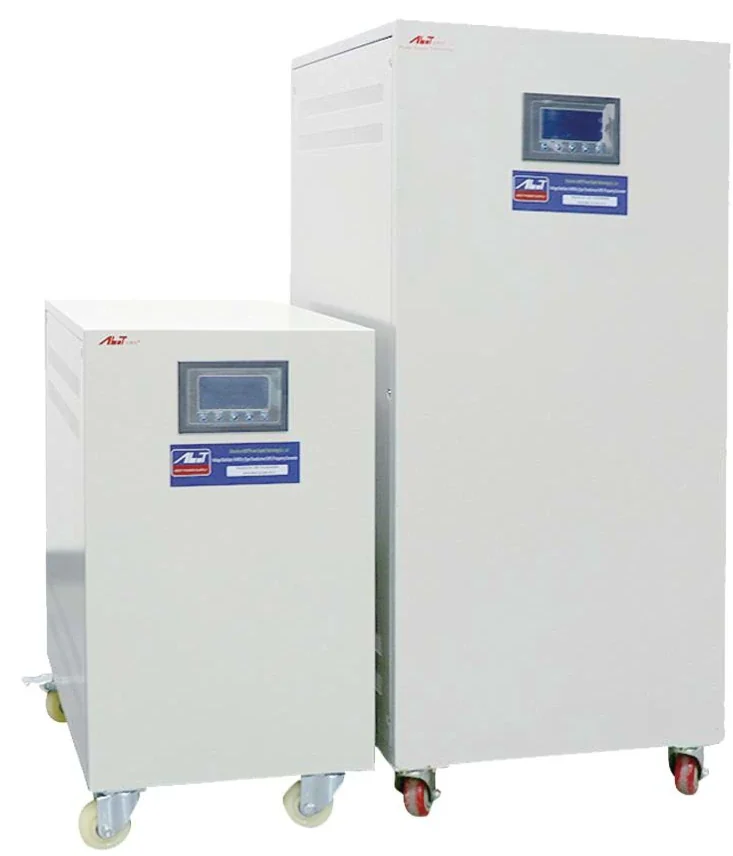
For the AVR, measure the incoming voltage and the total station load. A 30–100 kVA three-phase servo stabilizer is common for a station with a 20–80 kVA load. Confirm the input window (for example 304–456 V) and the output accuracy (±2%). If the load is single-phase, use a single-phase unit.
| Station size | Control load | UPS | AVR |
|---|---|---|---|
| Small, 2 dispensers | 1–2 kW | 2–3 kVA online | 15–30 kVA three-phase |
| Medium, 4–6 dispensers | 2–4 kW | 3–6 kVA online | 30–60 kVA three-phase |
| Large, 8+ dispensers | 4–8 kW | 6–10 kVA online | 60–100 kVA three-phase |
| With generator | 2–4 kW | 3–6 kVA online | 30–60 kVA three-phase |
The table is a starting point. The final size depends on the measured load, the incoming voltage and the hazardous-area layout.
How does the generator fit?
A station with a generator uses the UPS to cover the transfer and the AVR to stabilise the generator output. The generator must be sized for the pump and compressor starting current, not only for the running load. A generator sized for the running load will stall when the compressor starts, and the UPS will see a second outage.
The UPS charger must be sized to recharge the battery between outages. A 10 A charger cannot quickly recharge a 200 Ah bank. Confirm the charger current and the recharge time.
What should be in the specification?
A fuel-station backup specification should state:
- The load list and the priority of each load.
- The hazardous-area classification and the equipment location.
- The input voltage, phase and frequency.
- The AVR input window and output accuracy.
- The UPS runtime and the battery chemistry.
- The generator start time and the transfer sequence.
- The SPD type and location.
- The communication interface to the POS, tank gauge and CCTV.
Do not accept a quote that lists only “UPS 5 kVA” or “AVR 50 kVA”. The hazardous-area boundary, the load list and the generator interface decide whether the station keeps working.
Which standards and documents apply?
The installation follows the local electrical code and the hazardous-area standard (IEC 60079 or the local equivalent). The UPS is specified to IEC 62040-1/-2/-3, the AVR to IEC 61558-1 and the relevant voltage-regulation standard, and the battery to IEC 60896-21/-22 for VRLA or IEC 62619 for lithium. The SPD follows IEC 61643-11.
Ask for the model datasheet, the AVR input/output window, the battery configuration sheet and the test report. The station designer should confirm the hazardous-area classification and the equipment placement in writing.
Next step
Send the dispenser count, the control load list, the incoming voltage window, the generator size and the hazardous-area layout. We will return the UPS and AVR configuration and the interface list.
Start with the three-phase stabilizer page, compare the industrial UPS range, or use the sizing calculator for a first estimate.