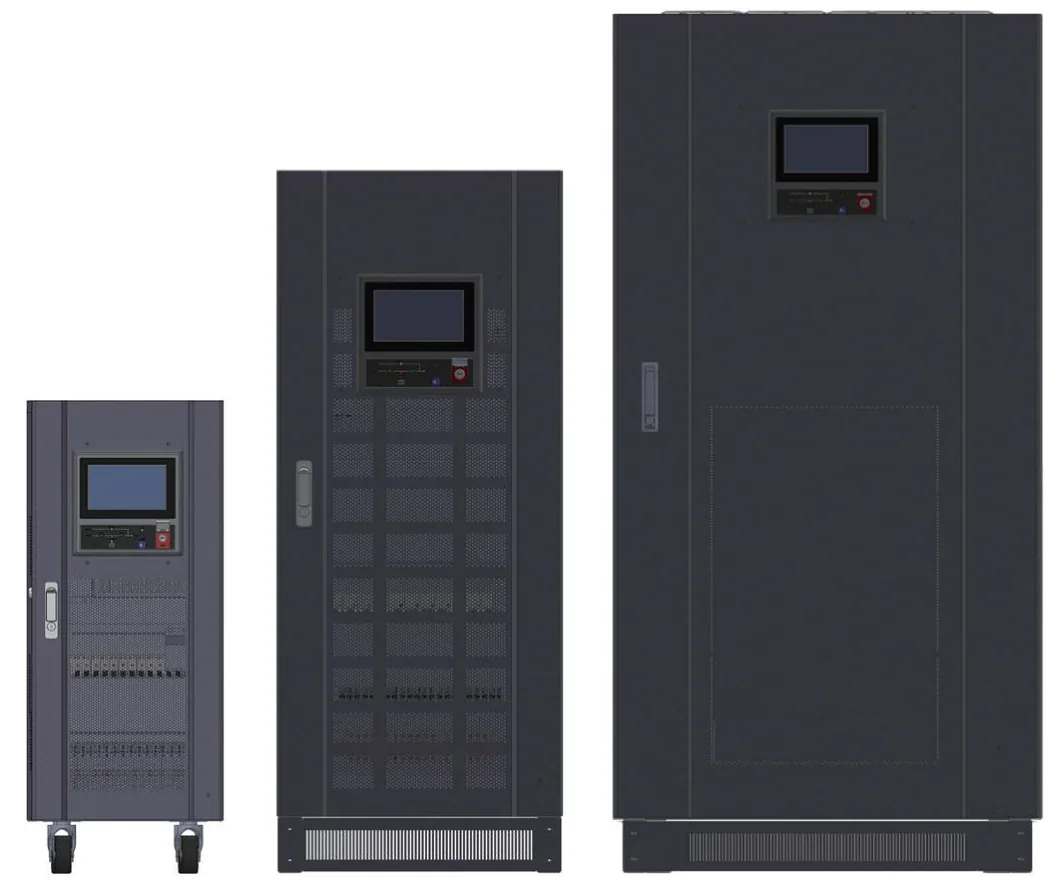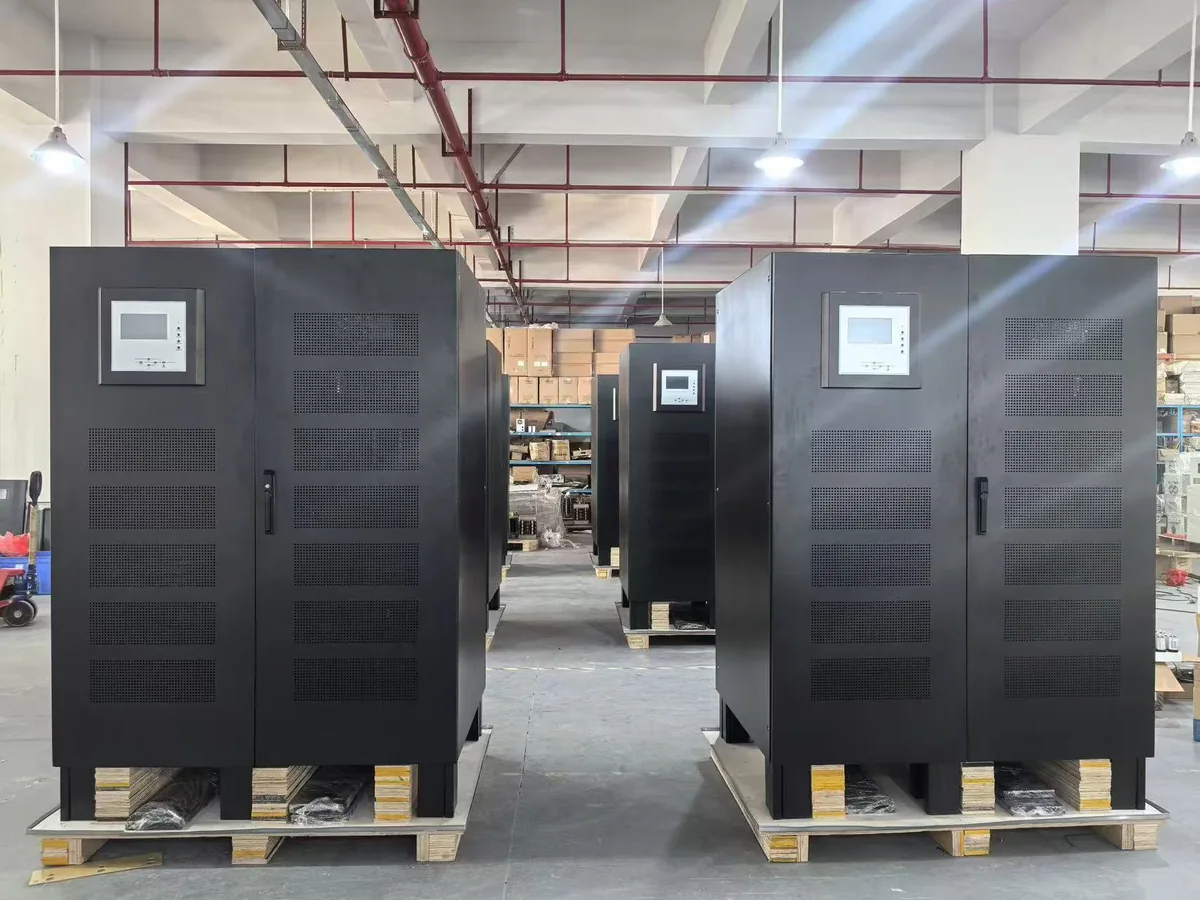
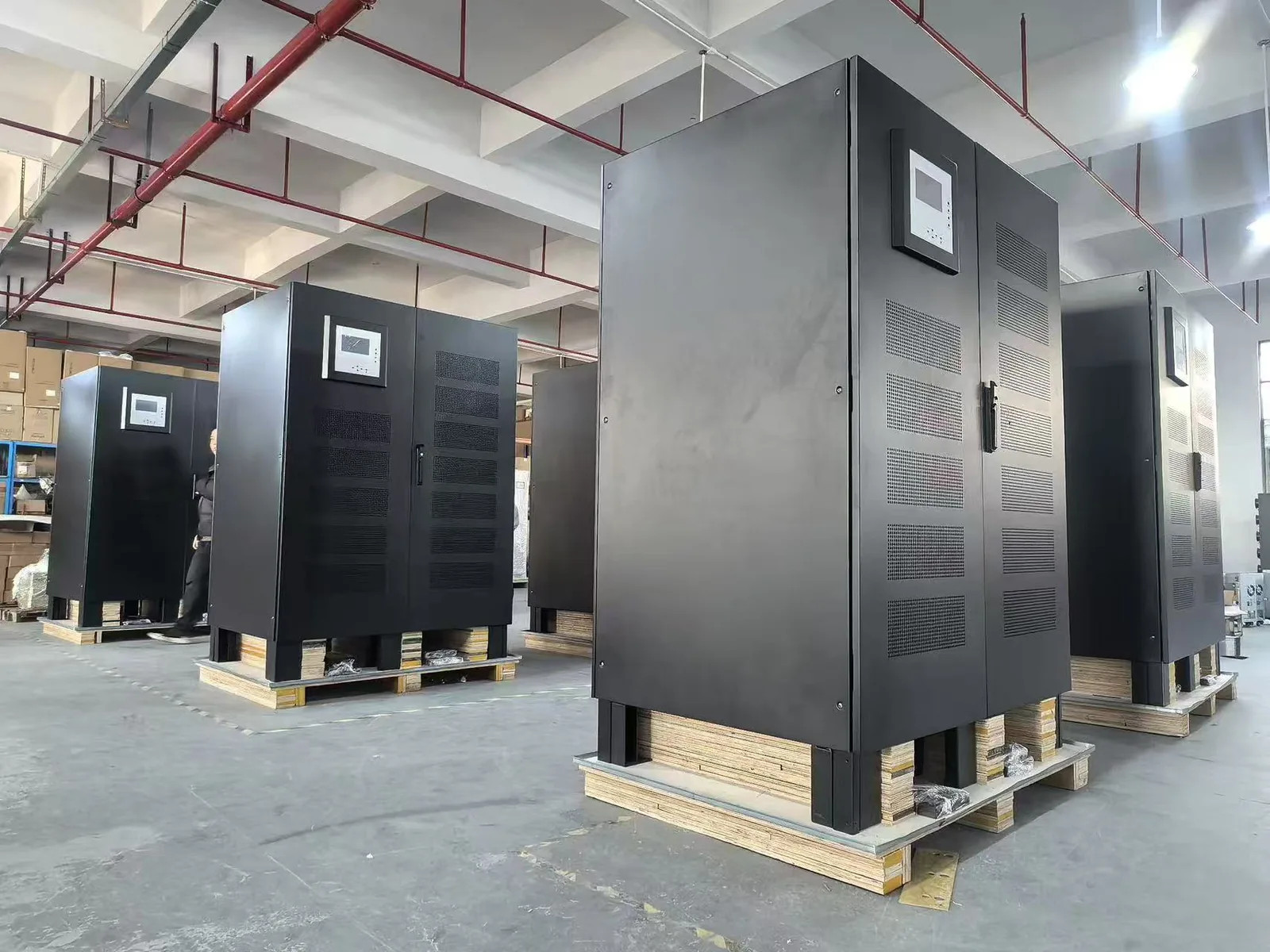
An industrial UPS is specified in the electrical room, not the IT closet. The load may be a PLC rack, a DCS, a CNC line, or a water-treatment panel. The input may come from a weak transformer, a generator, or a feeder shared with welding equipment. The UPS must survive conditions that a commercial UPS was never designed for.
This article explains the four specifications that separate an industrial UPS from a commercial one, and the commissioning checks that catch a mismatch before it stops the plant.
Why do industrial loads need a different UPS?
Industrial loads are less forgiving than IT loads. A server power supply has a hold-up time and a relatively stable impedance. A motor, a compressor, or a welding set can draw a high inrush, inject harmonics, and cause voltage distortion. The UPS must supply the load step without transferring to bypass or tripping on overload.
The environment is also different. The electrical room may be hot, dusty, and far from the air-conditioned IT space. The UPS enclosure, the cooling, and the battery room must match the site, not the catalogue’s default.
The third difference is the consequence of failure. A server room UPS failure may drop a few services; an industrial UPS failure may stop a production line, a water plant, or a safety system. The redundancy and the maintenance bypass are part of the design, not optional extras.
What is crest factor and why does it matter?
Crest factor is the ratio of peak current to RMS current. A linear sine wave has a crest factor of about 1.41. A switch-mode power supply can draw a peak current 2–3 times its RMS current. A UPS with a 3:1 crest factor can supply that peak without clipping the output.
If the UPS has a lower crest factor, the output may distort or the UPS may trip on overload even though the RMS load is within rating. For a mixed industrial load with PLCs, drives, and electronic controls, specify at least 3:1.
| Load type | Typical crest factor | UPS requirement |
|---|---|---|
| Resistive heater | 1.41 | Standard |
| Motor (steady) | 1.41–1.8 | 3:1 preferred |
| VFD input | 2.0–3.0 | 3:1 |
| Switch-mode power supply | 2.5–3.5 | 3:1 |
| Welding / arc load | Highly variable | Application study |
How much overload does a motor start need?
A direct-on-line motor can draw 5–7 times its rated current for a few seconds. A UPS with a 150% overload for 1 minute can support a small motor start, but a large motor may need a soft starter or a VFD. The UPS inverter is not a motor starter.
The overload curve is the specification to check. A typical industrial UPS provides 110% for 60 minutes, 125% for 10 minutes, 150% for 1 minute, and trips above 160–180%. The motor starting current and duration must fit inside that curve with margin.
| Overload | Duration | Typical use |
|---|---|---|
| 110–125% | 10–60 min | Normal load growth |
| 125–150% | 1–10 min | Load step, small motor start |
| 150–180% | 30–60 s | Short inrush |
| >180% | Immediate trip / bypass | Fault protection |
The practical solution is often to keep the motors on the building supply and put only the controls on the UPS. The PLC, HMI, sensors, and communications ride through the outage; the motors restart in a controlled sequence when the supply returns. That reduces the UPS size and avoids the starting-current problem.
How do I handle a weak feeder?
A weak feeder sags when a motor starts or a generator takes a block load. The UPS must ride through the sag without transferring to battery, or the battery will be exhausted before the real outage.
The input voltage range is the key specification. An industrial UPS with a 165–280 VAC phase-neutral range and a 285–485 VAC line-line range can survive deep sags. A commercial UPS with a narrower range may transfer to battery and drain it.
A servo stabilizer upstream can also correct the input, but it adds a maintenance item and a response time. For a site with a very weak feeder, the combination of a stabilizer and a wide-input UPS is common.
| Input condition | UPS response | Recommendation |
|---|---|---|
| 305–478 VAC line-line | Normal operation | Standard online UPS |
| 285–304 VAC | Wide-range UPS stays on mains | Industrial frame |
| <285 VAC | May transfer to battery | Stabilizer upstream or generator |
| Generator block load | Frequency and voltage swing | Wide input + generator sizing |
| Phase loss | Transfer to bypass or trip | Phase protection and alarm |
What environment does the UPS need?
The standard industrial frame is IP21 with forced ventilation and a 0–55 °C operating range on selected models. IP21 protects against fingers and vertical drips, not fine dust or corrosive gas. For a dusty plant, specify a filtered cabinet, positive pressure, or a higher IP rating with the panel builder.
Battery life is the limiting factor in a hot room. A VRLA battery at 35 °C loses life roughly twice as fast as at 25 °C. Keep the battery in a cooler room or use a temperature-compensated charger and a larger bank.
The UPS room also needs maintenance clearance, cable entry, fire detection, and a delivery route. A 200 kVA UPS cabinet can weigh several tonnes with the battery; the floor loading and the access route must be checked before the equipment arrives.
How do I commission an industrial UPS?
Commissioning starts before the UPS is energized. Check the input voltage and phase sequence, the breaker and cable sizing, the earth connection, the battery string voltage, and the ventilation. Confirm that the maintenance bypass is interlocked and that the load is within the UPS rating.
Then energize the UPS on bypass, check the output voltage and frequency, transfer to inverter, and run a load test. Simulate a mains failure to verify the battery transfer and the alarm. Test the emergency stop and the bypass transfer. Record the results and hand over the commissioning sheet.
| Commissioning step | What to check |
|---|---|
| Input | Voltage, phase sequence, breaker, cable torque |
| Battery | String voltage, polarity, temperature, charger current |
| Output | Voltage, frequency, phase rotation |
| Transfer | Mains → battery → mains, alarm and records |
| Bypass | Maintenance bypass interlock and transfer |
| Load test | Rated load, overload trip, harmonic distortion |
| Documentation | As-built drawing, test record, settings |
The industrial UPS checklist
- Check the crest factor and the overload curve against the load.
- Keep motors on the building supply and protect the controls with the UPS.
- Use a wide-input UPS for a weak feeder.
- Match the enclosure and the battery room to the environment.
- Specify a maintenance bypass for any load that cannot stop.
- Commission with a load test and a simulated mains failure.
An industrial UPS is not a bigger version of a server-room UPS. It is a different specification, and the difference shows up in the first motor start, the first deep sag, or the first hot day.