
Voltage regulator: the same job, four different mechanisms.
Voltage regulator vs stabilizer vs AVR: what the names mean, the four mechanisms, input/output ranges, and how to specify the right unit for a project.
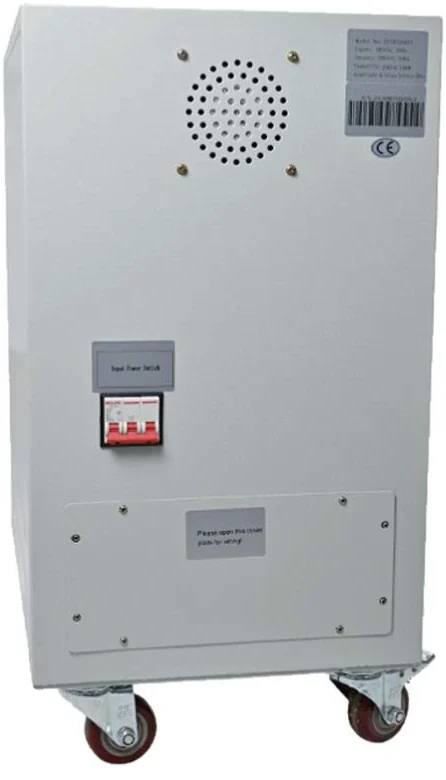
- Mechanisms
- 4
- Typical accuracy
- ±1–2%
- Range
- 0.5–2000 kVA
- Frequency
- 50/60 Hz
Buyers use “voltage regulator,” “voltage stabilizer,” and “AVR” to describe the same job: hold the output voltage steady when the input moves. The differences are the mechanism, the correction range, the accuracy, and the speed. A project specification should name the mechanism and the numbers, not just the word.
This page explains the four common mechanisms, the input and output windows, and the questions to ask before choosing a regulator for a factory, a building, or a single machine.
Voltage regulator, stabilizer, or AVR: what is the difference?
In common usage, all three mean an automatic AC voltage regulator. “Stabilizer” is more common in South Asia and Africa; “AVR” is common in generator and UPS contexts; “voltage regulator” is the generic term. The important difference is not the name but the mechanism and the specification.
A generator AVR regulates the excitation of an alternator. A mains AVR regulates the voltage fed to a load. They are different products. If a buyer asks for an “AVR” for a generator, do not quote a servo stabilizer without confirming the application.
The four mechanisms
| Mechanism | Correction range | Accuracy | Best for |
|---|---|---|---|
| Servo motor + toroidal transformer | Wide, 160–456 VAC | ±2% | Factory, building, three-phase |
| Contact / disc autotransformer | Moderate, ±20% | ±1% | Lab, clinic, precision equipment |
| Electronic (SCR / IGBT) | Moderate | ±1–2% | Small loads, fast response |
| Ferroresonant | Narrow | ±1% | Legacy, constant loads |
Which numbers should be in the specification?
A vague specification like “AVR 100 kVA” leaves the supplier to choose the mechanism. A precise specification names the input window, the output accuracy, the phase configuration, and the protection functions. That is the difference between a unit that solves the problem and a unit that trips on the first deep sag.
- Input voltage range and nominal voltage
- Output voltage and accuracy (±1%, ±2%, or a settable window)
- Rated kVA and load power factor
- Phase configuration and neutral requirement
- Response time and regulation speed
- Efficiency and no-load losses
- Protection functions and bypass arrangement
- Cooling, IP rating, and ambient temperature
- Communication and monitoring protocol
How do I choose the right regulator for my site?
Measure the input voltage over a week, not a single afternoon. Note the lowest and highest phase-neutral voltage, the phase imbalance, and the frequency. If the input stays within ±20%, a contact-type KPD can give ±1% precision. If it swings from 160 V to 260 V, a servo SVC is the better fit.
If the load is three-phase and the phases are unbalanced, choose independent phase regulation. If the load is a single machine, a dedicated smaller regulator may be cheaper than a building-wide unit.
Which standards and documents are referenced on this page?
The table lists the model-specific standards and conformity documents a project buyer should ask for. Availability depends on the frame, the battery, and the destination market; request the document that names your model.
Voltage stabilizer and AVR standards
| Reference | What it covers |
|---|---|
| IEC 61558-1 | Safety of power transformers and supply units |
| IEC 61000-3-2 | Harmonic current emission limits |
| IEC 61000-3-3 | Voltage fluctuation and flicker limits |
| IEC 62040-3 | Interface performance when feeding a UPS input |
| JB/T 10089 | Contact-type AC voltage stabilizer standard |
| GB/T 12325 | Voltage deviation limits for supply systems |
| CE / RoHS | EU conformity and restricted-substance declaration |
| ISO 9001 | Manufacturing quality management system |
| RS485 / MODBUS-RTU | Remote monitoring interface |
| IP20 / IP21 | Enclosure protection for indoor installation |
Certificates are issued against the exact model and configuration. See the certifications page for how to confirm scope and revision, or send the model to request the current document.
Confirm the inputs and documents before quoting.
Project inputs to confirm
| Item | What to confirm | Why it matters |
|---|---|---|
| Load | Running kW, largest motor, load step | Sets kVA, overload and topology |
| Runtime | Minutes, generator availability, battery room | Sets battery bank and charger |
| Supply | Voltage, frequency, phase, input current | Sets model, breaker and cable |
| Site | Country, altitude, ambient temperature, dust | Sets derating, IP and documents |
| Battery | VRLA, LiFePO4, footprint, weight limit | Sets chemistry and room layout |
| Documentation | Conformity route, test report, language | Sets document package and lead time |
Match the page to a platform.
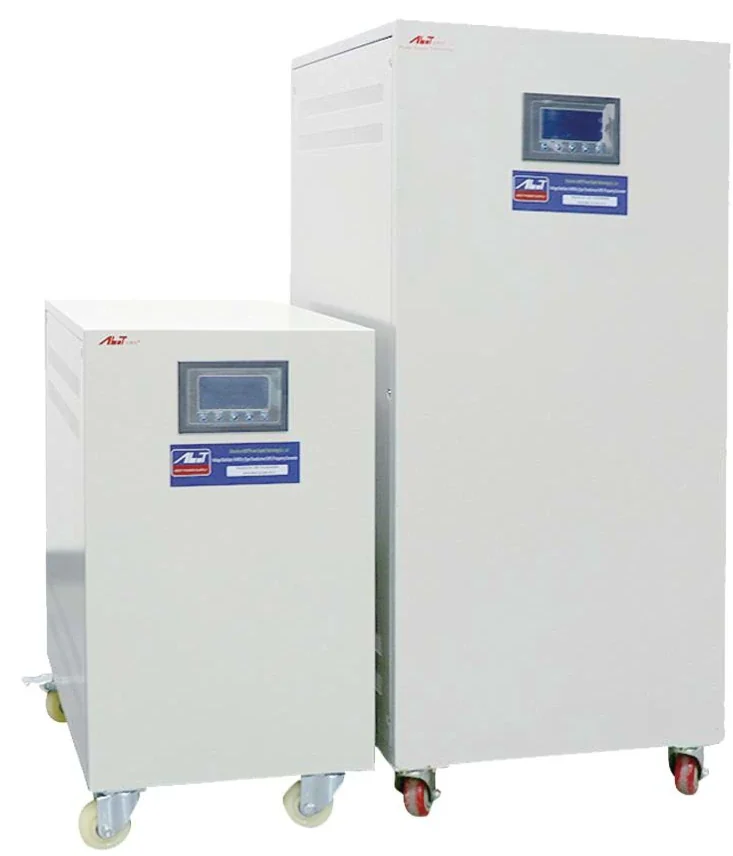
SVC Series · 0.5–100 kVA
Servo Voltage Stabilizer
±2% output from a 160–456 V input swing.
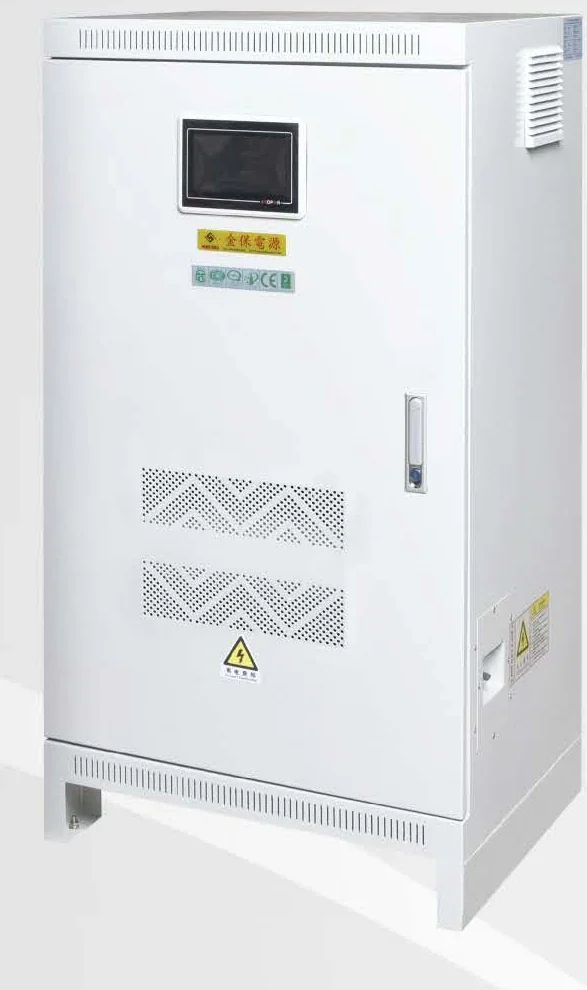
KPD Series · 10–30 kVA
Contact-Type Voltage Stabilizer
±1% precision from a carbon-brush autotransformer.
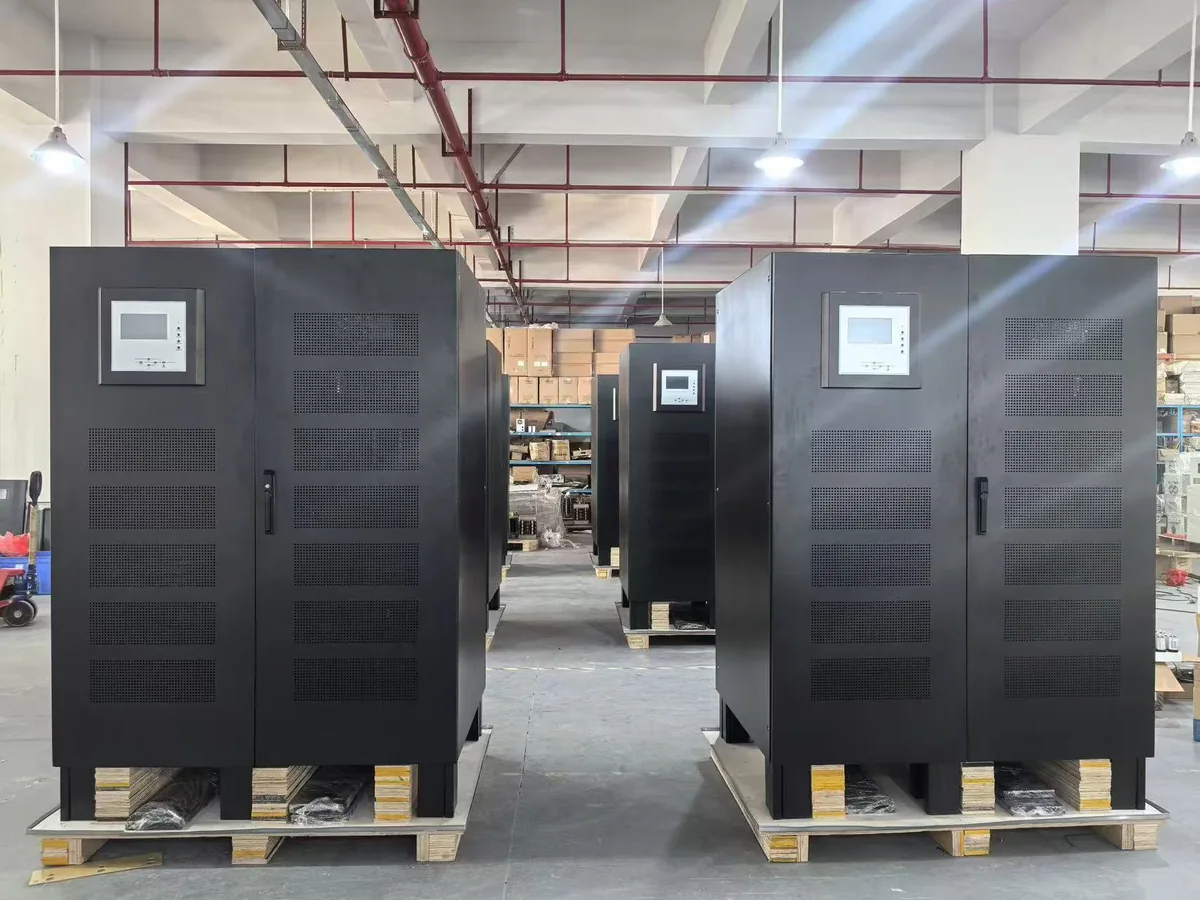
SVC-T Series · 10–100 kVA
Three-Phase Voltage Stabilizer
Independent phase regulation for unbalanced three-phase loads.
Questions from project buyers.
Project-specific answers. If your question is not here, send the load list and the site conditions.
Talk to an engineer Is a voltage regulator the same as a stabilizer?
In most buyer usage, yes. Both describe an automatic AC voltage regulator. The technical difference is the mechanism and the specification, not the name.
Can a voltage regulator fix a generator’s output?
A mains regulator can stabilize the voltage fed to the load, but it does not fix the generator’s excitation or frequency. For generator excitation, use the generator’s AVR.
What accuracy do I need?
±2% is sufficient for most industrial and commercial loads. ±1% is for laboratories, medical equipment, and precision test benches.
Does a regulator change frequency?
No. It regulates voltage only. If the frequency is unstable, the load may need a UPS or a frequency converter.
Can I install a regulator outdoors?
Standard units are IP20 for indoor equipment rooms. For outdoor installation, use a protected enclosure with ventilation and a higher IP rating.
Send the load list. We will return the configuration.
Tell us the kW, the backup time, the phase, and the site country. You will get a capacity recommendation, a battery configuration, and the model sheet.
- Capacity and topology recommendation
- Battery bank and runtime estimate
- Model sheet and commercial offer
Request a configuration and quotation
Send the load list, backup time, and site conditions. We will return a capacity recommendation, battery configuration, and commercial offer.