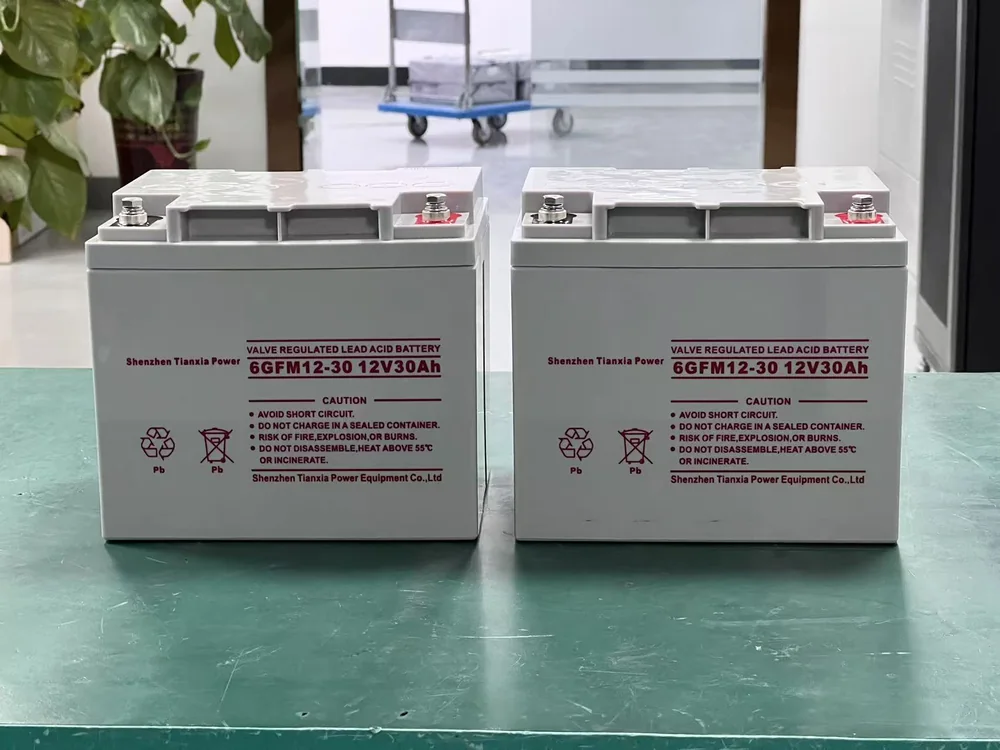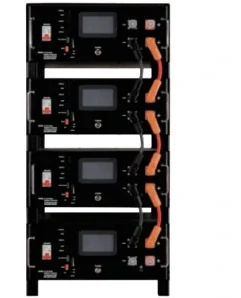
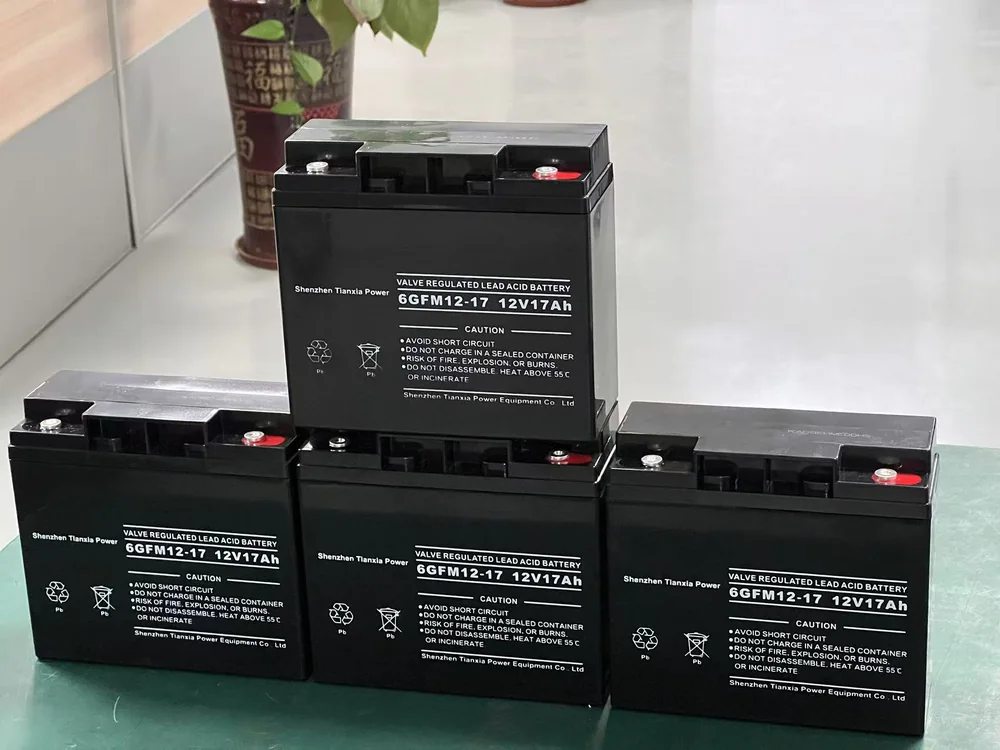
A UPS battery bank is often sized with a single division: load in watts, battery in amp-hours, and a result in hours. The result is usually optimistic. Batteries do not deliver their full 20-hour capacity at high current, the inverter is not 100% efficient, and the usable depth of discharge is not 100%.
This article explains the calculation, the two main chemistries, and the field checks that keep the runtime honest.
Why is runtime not a simple Ah division?
The Ah rating on a battery is usually measured at a 20-hour discharge rate. A 100 Ah block can deliver 5 A for 20 hours. At 100 A, it will not deliver 1 hour; the internal resistance and the electrochemical kinetics reduce the available capacity. The higher the current, the lower the effective capacity.
The inverter adds another loss. A 0.85 efficiency means 15% of the DC energy is lost before it reaches the load. The depth of discharge adds a third limit. A VRLA bank is typically limited to 50–60% depth of discharge for a reasonable cycle life; a LiFePO4 module can use 80–90%.
The correct method is to use the battery manufacturer’s discharge table at the expected end voltage and the expected current. The formula gives the starting point; the table gives the runtime.
How do I calculate the battery bank?
Use the simplified formula:
Ah = kW × 1,000 × hours ÷ (DC bus × inverter efficiency × usable depth of discharge)
For a 7.2 kW load, 1 hour, a 192 VDC bus, 0.85 efficiency, and 0.6 DOD, the result is about 73.5 Ah. A 16 × 12 V 100 Ah string gives 100 Ah nominal, so it covers the target with a small margin. At 2 hours, the required Ah doubles to about 147 Ah, so two strings are needed.
| Load | Runtime | DC bus | Estimated Ah | 12 V 100 Ah strings |
|---|---|---|---|---|
| 3 kW | 30 min | 72 V | 35 Ah | 1 (6 blocks) |
| 3 kW | 1 h | 72 V | 69 Ah | 1 (6 blocks) |
| 7.2 kW | 30 min | 192 V | 37 Ah | 1 (16 blocks) |
| 7.2 kW | 1 h | 192 V | 74 Ah | 1 (16 blocks) |
| 7.2 kW | 2 h | 192 V | 147 Ah | 2 (32 blocks) |
| 14.4 kW | 1 h | 192 V | 147 Ah | 2 (32 blocks) |
| 36 kW | 1 h | 384 V | 184 Ah | 2 (64 blocks) |
The block count assumes 100 Ah blocks. A smaller block means more parallel strings; a larger block means fewer. Do not exceed the manufacturer’s recommended parallel string count.
What is the difference between VRLA and LiFePO4 runtime?
A VRLA bank is usually sized with a 50–60% usable depth of discharge. A LiFePO4 module can use 80–90%, so the same nominal energy gives more runtime. LiFePO4 also has a flatter discharge curve, so the inverter sees a more stable DC voltage through the discharge.
The capital cost is higher for LiFePO4, but the usable energy per kWh, the cycle life, and the weight are better. For a 2-hour runtime in a tight room, the lithium bank may be smaller and lighter than the lead-acid bank. For a 5-minute ride-through in a cool room, VRLA is usually the lower-cost choice.
| Criterion | VRLA | LiFePO4 |
|---|---|---|
| Usable DOD | 50–60% | 80–90% |
| Cycle life | 300–600 at 50% DOD | 6,000 at 80% DOD |
| Weight | Heavy | About one-third |
| Footprint | Larger | Smaller |
| Charger | Lead-acid profile | Lithium profile + BMS |
| Temperature sensitivity | High | Moderate |
| Capital cost | Lower per kWh | Higher per kWh |
How does temperature change the runtime?
A battery’s available capacity falls at low temperature and its life falls at high temperature. A VRLA block at 0 °C may deliver 80–85% of its 25 °C capacity; at 40 °C it may deliver more capacity but its life is much shorter. A LiFePO4 module has a wider operating window but still needs a temperature-controlled room for the stated cycle life.
The battery room should be kept at 20–25 °C for VRLA. Every 10 °C above 25 °C roughly halves the design life. A battery that is “working” at 35 °C may fail at year 3 instead of year 8.
When should I use a lithium module?
Use LiFePO4 when the runtime is long, the room is tight, the cycle count is high, or the weight matters. A 51.2 V 100 Ah module stores about 5.12 kWh and weighs about 45 kg; a comparable lead-acid bank is much heavier and larger. For a rooftop or upper-floor room, the weight difference can decide the design.
Do not use lithium unless the UPS charger is compatible. A lead-acid charger may hold the bus at a voltage that is too high for the lithium cells, or it may not provide the correct charge profile. The BMS also needs to communicate with the UPS for full protection.
| Application | Recommended chemistry | Why |
|---|---|---|
| 5–15 min ride-through | VRLA | Lower cost, simple charger |
| 1–2 h server room | VRLA or LiFePO4 | Compare footprint and lifecycle |
| 4–8 h remote site | LiFePO4 | Usable energy and weight |
| Daily cycling / solar | LiFePO4 | Cycle life |
| Hot room | LiFePO4 or cooled VRLA | Temperature tolerance |
How do I test the runtime after installation?
Run a load-bank test at the design load and measure the time to the end-of-discharge voltage. Record the battery temperature, the string voltage, and the weakest block. A UPS that reports “battery OK” may still fail under load.
Test every 12–24 months and after any deep discharge or battery replacement. If the runtime falls below the site requirement, replace the string or add capacity. Do not wait for a real outage to discover the battery is weak.
The battery checklist
- Convert kW to Ah with the DC bus, efficiency, and usable DOD.
- Check the high-rate discharge table; do not rely on the 20-hour rating.
- Keep the battery room at 20–25 °C.
- Confirm the charger current and the maximum battery size.
- Do not mix old and new blocks in one string.
- Use LiFePO4 only with a compatible charger and BMS.
- Test the runtime at the design load every 12–24 months.
The battery is the part of the UPS that decides the autonomy. It deserves the same engineering attention as the UPS frame, not a last-minute line item.