
Inverters: pure sine wave power with grid and solar charging.
Pure sine wave inverters from 2.2 to 7 kVA with 12/24/48 VDC input, built-in MPPT, 10/20 ms transfer, and RS485 monitoring for off-grid and backup systems.
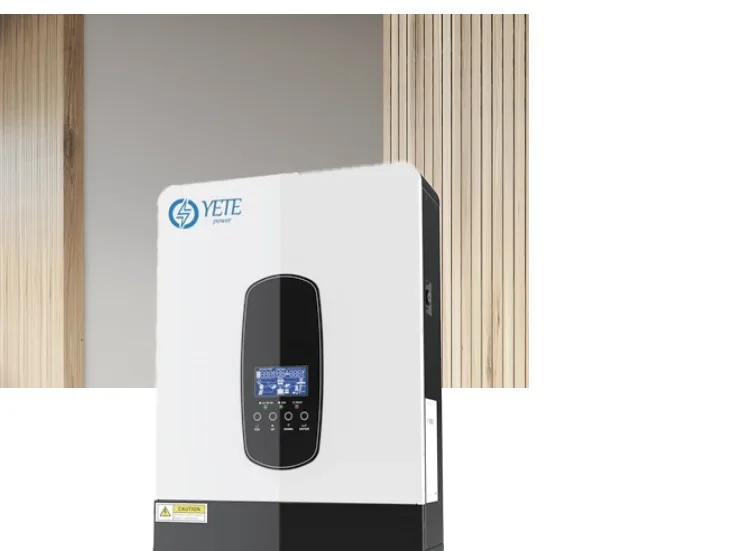
- Power range
- 2.2–7 kVA
- DC input
- 12/24/48 V
- MPPT PV
- 2–6 kW
- Transfer
- 10/20 ms
An inverter converts battery DC to AC. With a built-in AC charger and MPPT solar charger, it becomes the core of a small hybrid power system: grid when available, battery when not, solar when the sun is out. The SP series covers 2.2–7 kVA with pure sine wave output and 12/24/48 VDC input.
An inverter is not a UPS. Its transfer time is 10–20 ms, so some sensitive IT loads may reset. Use an online UPS when the load cannot tolerate a gap; use an inverter when the goal is energy storage, solar self-consumption, or backup for less sensitive loads.
When should I use an inverter instead of a UPS?
Use an inverter when the load is not sensitive to a 10–20 ms transfer and the priority is runtime, solar input, or cost. Typical loads are lights, fans, fridges, small pumps, office equipment, and telecom cabinets. Use a UPS when the load is a server, a medical device, or an industrial controller that cannot reset.
An inverter can also be paired with a UPS: the inverter carries the non-critical loads and the UPS carries the critical loads. That splits the runtime and avoids oversizing the UPS battery.
Inverter vs UPS
| Criterion | Inverter | Online UPS |
|---|---|---|
| Transfer time | 10–20 ms | 0 ms |
| Output waveform | Pure sine wave | Pure sine wave |
| Solar input | Built-in MPPT | Not typical |
| Runtime | Battery-bank dependent | Battery-bank dependent |
| Best for | Off-grid, solar, non-critical backup | Servers, medical, industrial control |
How much solar can the inverter accept?
The SP-2200 accepts 2,000 W of PV, the SP-3200 3,000 W, the SP-4000 5,000 W, and the SP-7000 6,000 W. The MPPT range is 55–450 VDC, and the maximum open-circuit voltage is 450 VDC. Do not exceed the PV voltage or the inverter will be damaged.
The PV array should be sized for the battery and the load, not just the inverter. A 6 kW array with a 5 kWh battery will be curtailed; a 6 kWh battery with a 2 kW array may not recharge fully in one day.
Which battery works with the inverter?
The SP series supports 12 V, 24 V, and 48 V banks. VRLA is the lower-cost choice for short backup; LiFePO4 is better for daily cycling and longer runtime. Confirm the charge profile, the maximum charge current, and the BMS communication.
For a 48 V 100 Ah LiFePO4 module, the stored energy is about 5.12 kWh. At 3 kW load and 90% inverter efficiency, the ideal runtime is about 1.5 hours; the usable depth of discharge and the low-voltage cut-off reduce it to roughly 1.2 hours.
What does installation require?
- A dedicated AC input breaker and output distribution
- A DC breaker or fuse between the battery and the inverter
- Correct cable size for the DC current (high current at 12/24 V)
- A ventilated location away from flammable materials
- A PV DC isolator and surge protection
- An earth connection and a neutral-earth bond per local code
- A battery monitor or BMS with low-voltage disconnect
Which standards and documents are referenced on this page?
The table lists the model-specific standards and conformity documents a project buyer should ask for. Availability depends on the frame, the battery, and the destination market; request the document that names your model.
Inverter standards and documents
| Reference | What it covers |
|---|---|
| IEC 62109-1 | Safety of power converters for photovoltaic systems |
| IEC 62109-2 | Particular requirements for inverters |
| IEC 61000-3-2 | Harmonic current emission limits |
| IEC 62040-3 | Output performance when used as a UPS source |
| UN38.3 / MSDS | Lithium battery transport test and material safety data |
| CE / RoHS | EU conformity and restricted-substance declaration |
| ISO 9001 | Manufacturing quality management system |
| MPPT / RS485 | Solar charging and remote monitoring interface |
Certificates are issued against the exact model and configuration. See the certifications page for how to confirm scope and revision, or send the model to request the current document.
Confirm the inputs and documents before quoting.
Project inputs to confirm
| Item | What to confirm | Why it matters |
|---|---|---|
| Load | Running kW, largest motor, load step | Sets kVA, overload and topology |
| Runtime | Minutes, generator availability, battery room | Sets battery bank and charger |
| Supply | Voltage, frequency, phase, input current | Sets model, breaker and cable |
| Site | Country, altitude, ambient temperature, dust | Sets derating, IP and documents |
| Battery | VRLA, LiFePO4, footprint, weight limit | Sets chemistry and room layout |
| Documentation | Conformity route, test report, language | Sets document package and lead time |
Match the page to a platform.
SP Series · 2.2–7 kVA
Pure Sine Wave Inverter
Grid or solar charging with a pure sine wave output.
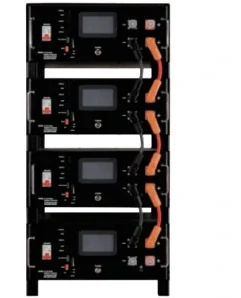
51.2 V rack · 50–280 Ah
LiFePO4 Battery
More usable cycles and less weight for long runtime.
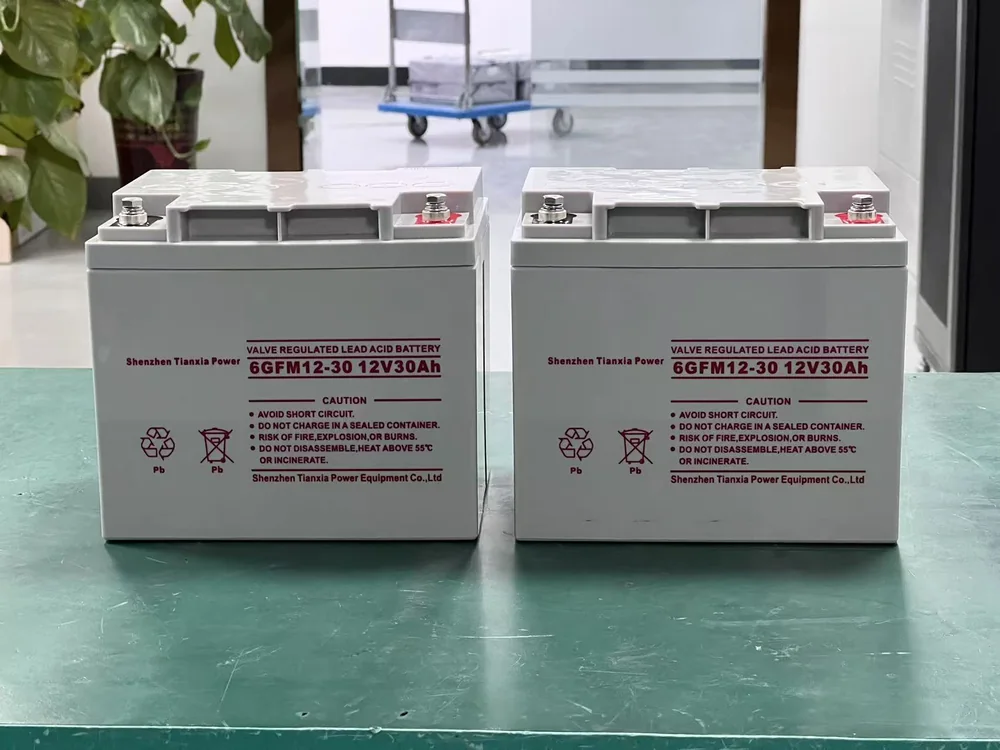
12 V blocks · 24–250 Ah
VRLA Battery
Maintenance-free sealed lead-acid blocks for UPS and telecom backup.
Questions from project buyers.
Project-specific answers. If your question is not here, send the load list and the site conditions.
Talk to an engineer Can an inverter run a fridge?
A pure sine wave inverter can run a fridge if the surge rating covers the compressor start. A 2.2 kVA inverter may start a small fridge; a larger fridge needs a 3.2–4 kVA unit.
Can I connect the inverter to the grid?
The SP series is a grid-interactive backup inverter, not a grid-tie inverter. It does not export power to the grid. Confirm the local utility rules before installing any grid-connected system.
How long will a 5 kWh battery last?
At 2 kW load and 90% efficiency, about 2.2 hours ideal, or roughly 1.8 hours at 80% DOD. At 500 W, about 9 hours ideal, or 7 hours usable.
Does the inverter support lithium batteries?
Yes, with the correct charge profile and BMS communication. Confirm the model and the battery protocol before commissioning.
What is the difference between MPPT and PWM?
MPPT tracks the maximum power point of the PV array and typically harvests 10–30% more energy than PWM, especially in cold or variable conditions. The SP series uses MPPT.
Send the load list. We will return the configuration.
Tell us the kW, the backup time, the phase, and the site country. You will get a capacity recommendation, a battery configuration, and the model sheet.
- Capacity and topology recommendation
- Battery bank and runtime estimate
- Model sheet and commercial offer
Request a configuration and quotation
Send the load list, backup time, and site conditions. We will return a capacity recommendation, battery configuration, and commercial offer.