
UPS vs AVR: one stores energy, the other only corrects voltage.
A UPS carries the load through an outage; an AVR only corrects voltage. What a built-in AVR in a UPS can and cannot do, and when a site needs both.
- AVR output at outage
- 0 V
- Typical UPS buck-boost window
- ±10–15%
- Servo AVR input range
- 150–456 V
- Online UPS transfer
- 0 ms
The difference is stored energy. An automatic voltage regulator (AVR) takes whatever voltage the grid delivers and holds the output near nominal — it contains no battery, so the moment the supply disappears, so does the output. A UPS contains a battery and an inverter, so it both corrects the voltage and carries the load through the outage.
Confusion comes from the middle case: most line-interactive UPS units include a small AVR stage, and are marketed as "UPS with built-in AVR". That stage is a buck-boost transformer with a narrow correction window. It is not the same device as a servo stabilizer, and it will not hold a 160 V supply. This page sets out what each device does, where the overlap ends, and how to combine them.
What is the actual difference between a UPS and an AVR?
An AVR is a voltage-conditioning device. It senses the input, compares it with the set point, and drives a servo motor, a set of tap-changing contacts, or a solid-state circuit to bring the output back to nominal. It has no stored energy, so it cannot bridge even a 20 ms interruption.
A UPS is a power-conversion device with storage. It rectifies or conditions the input, keeps a battery charged, and inverts DC back to AC for the load. The battery is what makes the difference: the load sees a continuous supply through sags, surges and complete outages.
UPS and AVR compared
| Property | AVR / voltage stabilizer | Line-interactive UPS | Online UPS |
|---|---|---|---|
| Stores energy | No | Yes, minutes | Yes, minutes to hours |
| Rides through an outage | No — output ends with the supply | Yes, 4–6 ms transfer | Yes, 0 ms transfer |
| Voltage correction | Continuous, ±1–3% output | Buck-boost, stepped | Full regeneration |
| Input window | 150–456 V (servo) | Typically ±15–20% | Typically 110–300 V |
| Output waveform | Same shape as input | Simulated or sine | True sine, low THD |
| Main wearing part | Servo motor and brushes | Battery | Battery and fans |
| Typical load | Whole house or plant | PCs, POS, CCTV, network | Servers, medical, industrial |
Can a UPS act as an AVR?
Partly — and only within the window the manufacturer built into it. A line-interactive UPS with a buck-boost stage will hold its output through moderate over- and undervoltage, typically ±15–20% of nominal. On a 230 V supply that covers roughly 190–275 V. Inside that band the UPS behaves like a coarse AVR and the battery stays charged.
Outside the band the UPS switches to battery. That is the crucial difference: a servo stabilizer would keep correcting a 165 V input indefinitely, while the UPS treats it as an outage and starts draining. On a weak grid where the voltage sits at 160–180 V for hours, a UPS alone will empty its battery every evening and fail early. That is the case for an AVR in front of the UPS.
- UPS buck-boost AVR: corrects ±15–20%, steps, no moving parts
- Servo AVR: corrects 150–456 V continuously, ±1–3% output, motor-driven
- Contact AVR: precise but slower, and a narrower input window
- Online UPS: regenerates the waveform, so input distortion does not reach the load
Which one does a site need?
If the problem is that equipment restarts or misbehaves when the voltage drifts, but the supply itself is continuous, an AVR is the cheaper and more durable answer. If the problem is that the supply disappears — load shedding, outages, generator changeover — only a UPS with a battery solves it.
Many sites have both problems. The usual configuration is AVR first, then UPS: the regulator holds the voltage inside the UPS input window, the UPS covers the interruptions, and neither device is abused. Order matters — putting the AVR after the UPS means the regulator has to carry the UPS output continuously and adds its own losses to the backup path.
Choosing by symptom
| What you observe | Likely cause | First device to add |
|---|---|---|
| Lights dim and brighten, equipment restarts | Voltage drift | AVR / servo stabilizer |
| Supply drops completely for minutes | Outage or load shedding | UPS |
| Both: drift, then outages | Weak grid | AVR in front of UPS |
| Equipment fails after a storm | Surge, not voltage | SPD, coordinated with both |
| Motors overheat and run hot | Low voltage and waveform | Servo AVR, then check waveform |
How are an AVR and a UPS combined correctly?
Feed the AVR from the mains, feed the UPS from the AVR output, and put the critical load on the UPS. Add a surge protective device at the incoming supply, ahead of both. Size the AVR for the UPS input current — which is higher than the UPS output current because of efficiency and charging — not for the load alone.
Two details are usually missed. First, the AVR must tolerate the UPS charging current, which can be a large fraction of its rating after an outage. Second, if a generator is involved, confirm that the AVR can follow the generator frequency and that the changeover does not put both devices through a simultaneous restart.
For a site above roughly 30 kVA, the AVR and UPS are usually specified together as one package so the input current, bypass and changeover are coordinated by the same supplier.
Is a "UPS with built-in AVR" enough for a home or small office?
For a home or a small office on a reasonably stable supply, yes. A line-interactive UPS with a built-in buck-boost stage handles the everyday dips and swells, keeps the router and PCs running through short outages, and costs far less than a separate stabilizer.
The limit is the grid. Where the voltage regularly sits below 190 V or above 270 V, the built-in stage runs out of range and the UPS starts cycling on battery. In those conditions a small servo stabilizer ahead of the UPS pays for itself by keeping the battery charged and extending its life.
Match the page to a platform.
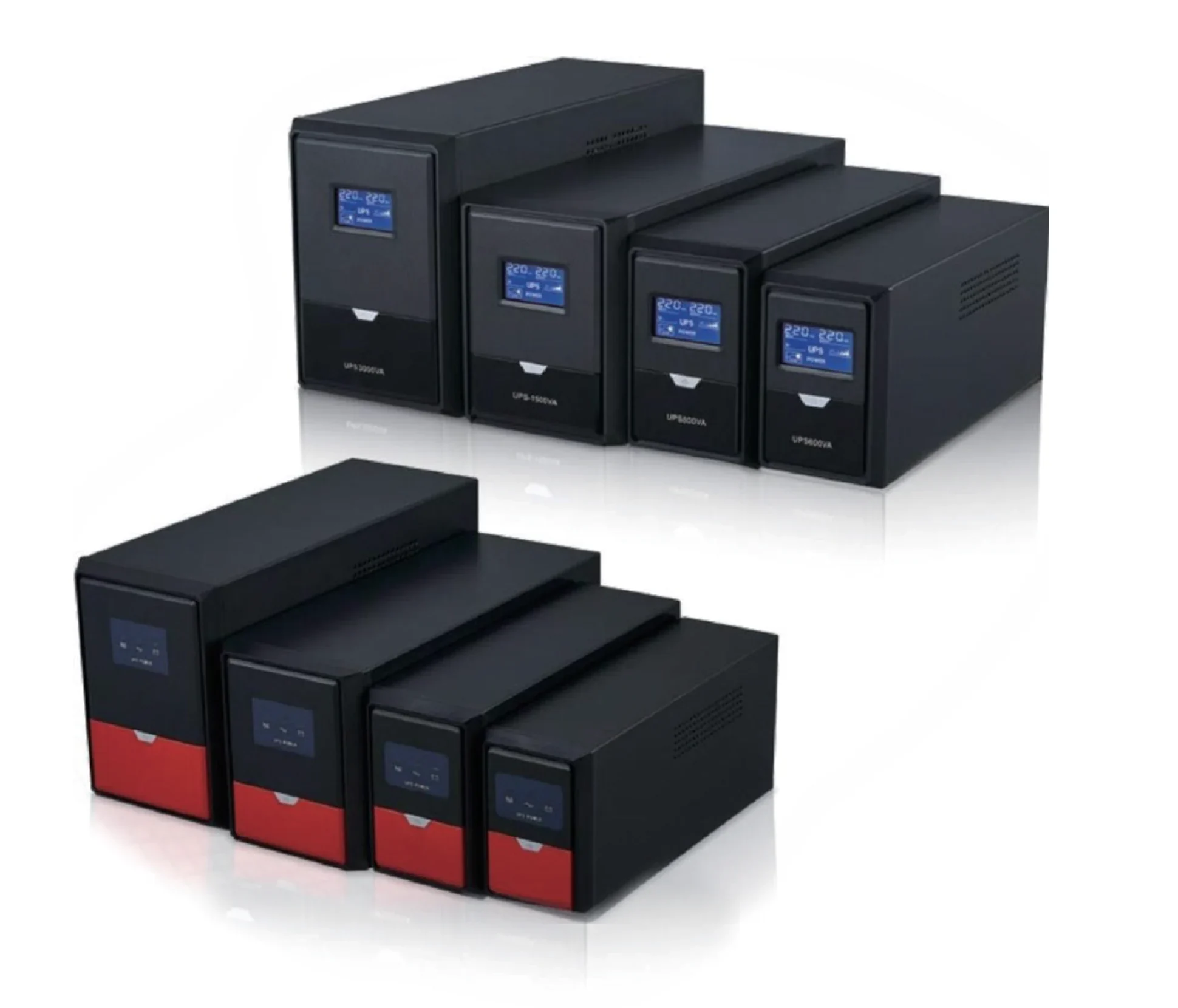
MT / HI11 / AP / AK · 500 VA – 5 kVA
Line-Interactive UPS
Compact, AVR-corrected backup for POS, security, and office loads.
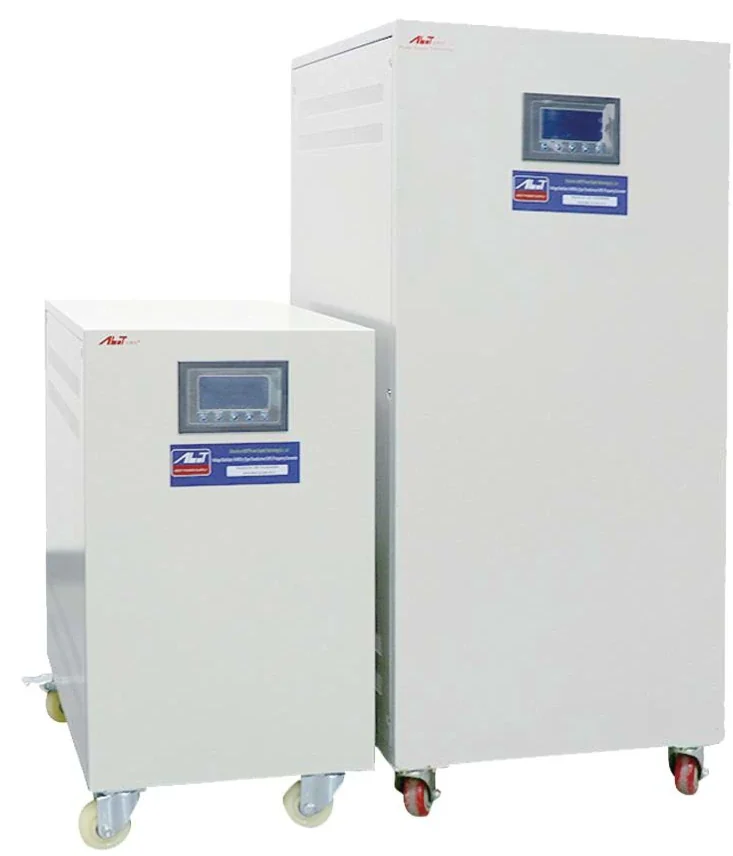
SVC Series · 0.5–100 kVA
Servo Voltage Stabilizer
±2% output from a 160–456 V input swing.
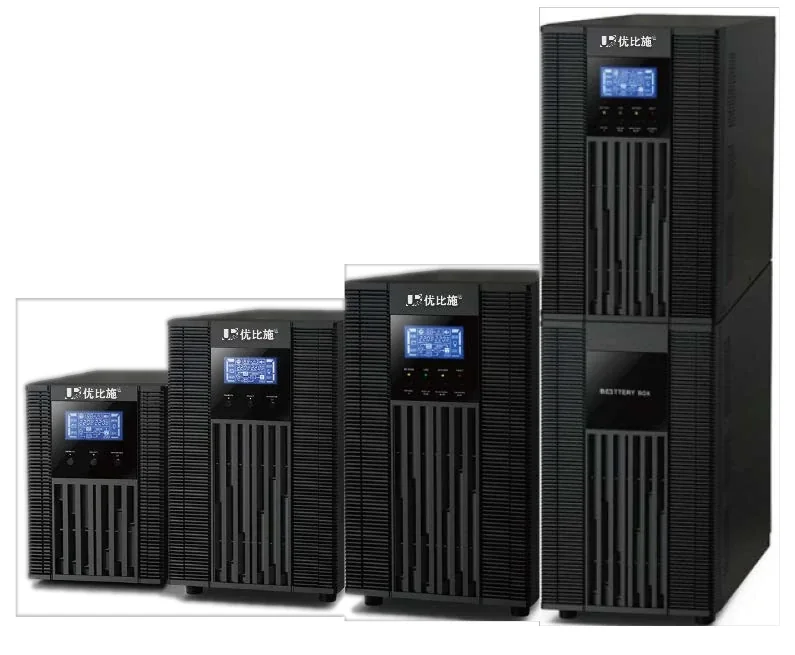
YT Series · 1–10 kVA
Single-Phase Online UPS
Double-conversion, 0 ms protection for servers, medical, and telecom loads.
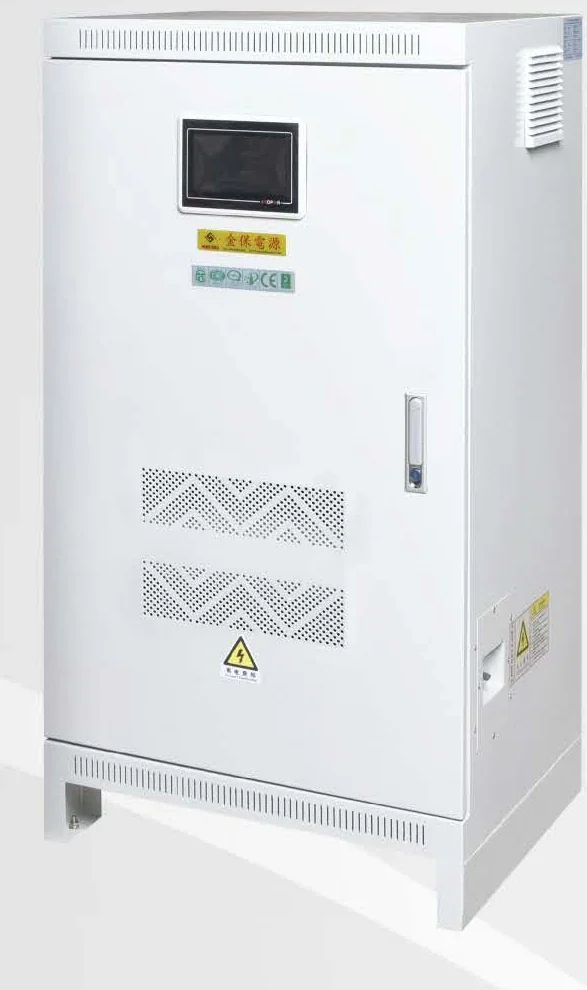
KPD Series · 10–30 kVA
Contact-Type Voltage Stabilizer
±1% precision from a carbon-brush autotransformer.
Questions from project buyers.
Project-specific answers. If your question is not here, send the load list and the site conditions.
Talk to an engineer Can a UPS replace an AVR?
Only within its buck-boost window, typically ±15–20% of nominal. Outside that range the UPS switches to battery instead of correcting the voltage, so it cannot replace a servo stabilizer on a grid that sits at 160–180 V.
Does a UPS have a built-in AVR?
Line-interactive models do. The AVR stage is a stepped buck-boost transformer, not a servo regulator: it corrects moderate drift and does nothing during an outage except hand over to the battery.
Which comes first, the AVR or the UPS?
AVR first, then the UPS, then the load. The regulator holds the voltage inside the UPS input window, and the UPS covers the interruptions. Add an SPD at the incoming supply ahead of both.
Is an AVR cheaper to run than a UPS?
Yes. An AVR has no battery to replace and draws only its own losses. A UPS carries a battery that ages and must be replaced every three to five years.
Do I need both for a generator-backed site?
Usually yes. The generator fixes the outage but not the voltage quality. Install the AVR after the changeover so it protects the load on both utility and generator supply.
Send the load list. We will return the configuration.
Tell us the kW, the backup time, the phase, and the site country. You will get a capacity recommendation, a battery configuration, and the model sheet.
- Capacity and topology recommendation
- Battery bank and runtime estimate
- Model sheet and commercial offer
Request a configuration and quotation
Send the load list, backup time, and site conditions. We will return a capacity recommendation, battery configuration, and commercial offer.