A surge protective device is one of the few components in a power system that is expected to do nothing for years and then absorb a lightning impulse in microseconds. That makes it easy to omit, easy to undersize, and easy to install in a way that looks correct but leaves the load exposed.
This guide explains what an SPD does, how the Type 1, 2 and 3 categories differ, where each belongs, and how to coordinate surge protection with a UPS and a voltage stabilizer.
What is a power surge?
A power surge is a short-duration increase in voltage above the normal operating level. It can be caused by a lightning strike, by switching a large load, by capacitor bank switching, or by the operation of a nearby electrical fault. The duration can be microseconds for a lightning impulse or milliseconds for a switching transient.
The damage mechanism depends on the load. A semiconductor may fail immediately at a high peak voltage. A power supply may degrade over repeated smaller surges. A motor may suffer insulation stress. The SPD limits the peak voltage and diverts the surge current to earth; it does not eliminate the surge, and it does not correct a sustained overvoltage.
For sustained voltage problems, use a voltage stabilizer or an automatic voltage regulator. For an outage, use a UPS. The SPD is the transient layer.
How does an SPD work?
An SPD is a voltage-dependent component, usually a metal-oxide varistor, a spark gap or a combination. At normal voltage it presents a high impedance and has little effect on the circuit. When the voltage exceeds its threshold, the impedance falls and the device diverts the surge current away from the load.
The key ratings are the maximum continuous operating voltage, the nominal discharge current, the maximum discharge current, the voltage protection level and the short-circuit current rating. The voltage protection level is the residual voltage that the load sees during the surge; lower is better for sensitive equipment, but the device must still be coordinated with the upstream protection.
An SPD has a finite life. Each surge consumes some of its capacity. A status indicator or a remote contact is not a luxury; it is the only way to know whether the device is still protecting the load.
SPD types 1, 2 and 3
The IEC 61643 series defines the common SPD categories. The exact test class and the required rating depend on the installation and the local code.
| Type | Location | Test focus | Typical use |
|---|---|---|---|
| Type 1 | Service entrance, upstream of the main breaker | Direct lightning current | Buildings with a lightning protection system or an overhead supply |
| Type 2 | Distribution board | Surge current after the first stage | Main and sub-distribution boards |
| Type 3 | Close to the load | Low residual voltage | Sensitive equipment, terminal boxes, control panels |
A Type 1 device is not automatically better than a Type 2. The right choice depends on whether the site has a lightning protection system, whether the supply is overhead or underground, and what the local code requires. In many projects, a Type 1 at the entrance and a Type 2 at the distribution board are used together.
Where does each SPD belong?
The location matters as much as the rating. A long connecting lead adds inductance and raises the residual voltage at the load. The SPD should be installed with short, straight leads and a low-impedance earth connection.
| Location | Device | What it protects |
|---|---|---|
| Service entrance | Type 1 or Type 2 | The installation and the main switchboard |
| Main distribution board | Type 2 | Sub-distribution and the feeders |
| Sub-distribution board | Type 2 or Type 3 | Local loads and control panels |
| UPS input | Type 2 upstream | The UPS rectifier and the bypass path |
| UPS output / critical panel | Type 3 | Servers, PLCs and sensitive electronics |
| DC battery circuit | DC-rated SPD | The battery bank and the DC bus |
The UPS input and output are often treated as separate protection zones. A surge on the input can damage the rectifier; a surge on the output can reach the load even when the UPS is running on battery. The single-line diagram should show both.
SPD, UPS and stabilizer: different jobs
These devices are often sold together, but they do different things. The table below is a quick reference for a project meeting.
| Device | Main function | Responds to | Does not replace |
|---|---|---|---|
| SPD | Clamps transient overvoltage | Lightning and switching surges | Voltage regulation or backup |
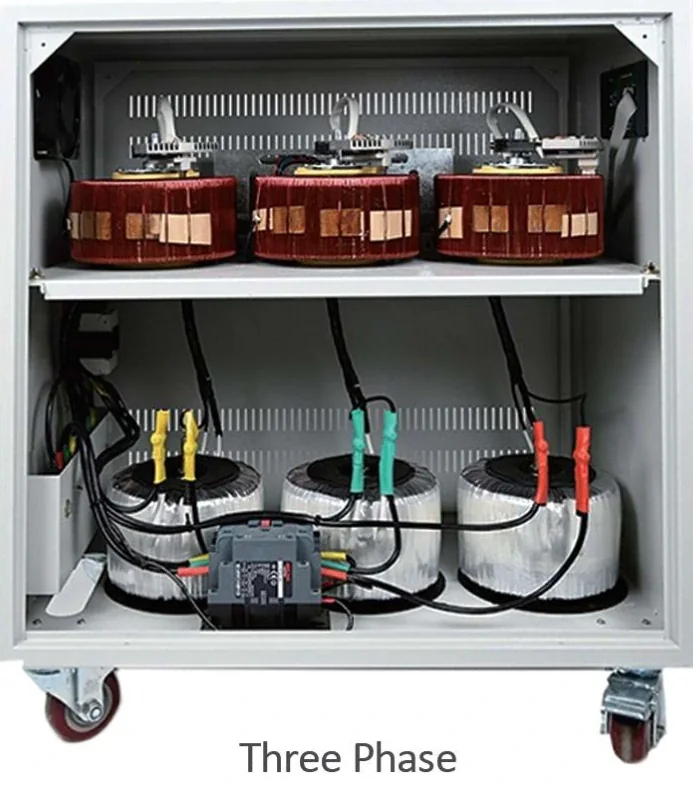
| Stabilizer / AVR | Corrects RMS voltage | Sustained overvoltage and undervoltage | Surge protection or backup |
| UPS | Conditions power and carries the load | Outage, sag, frequency drift | Surge protection at the service entrance |
| Generator | Generates energy for a long outage | Long outage | Transfer-time protection |
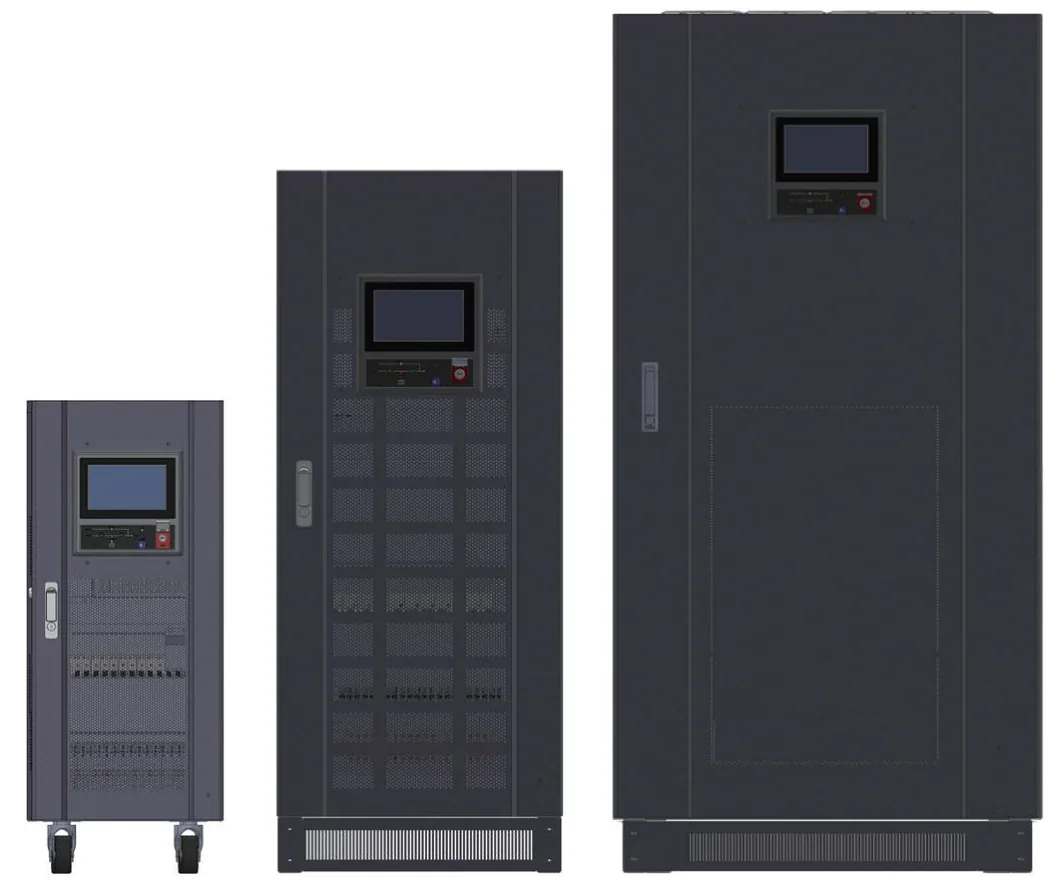
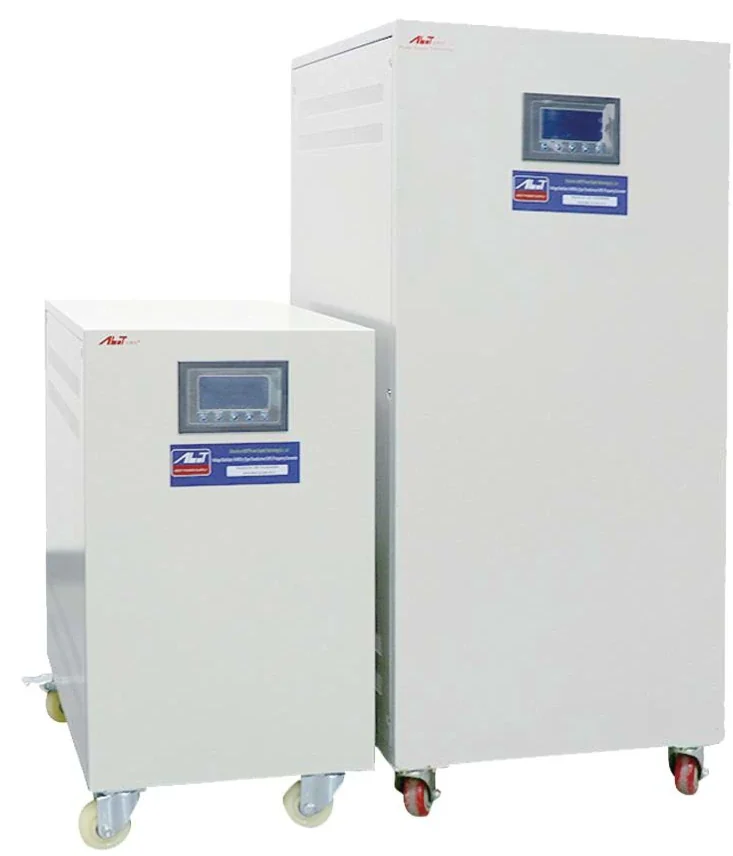
A common architecture is a Type 1 SPD at the service entrance, a servo stabilizer for the whole installation, a Type 2 SPD at the UPS input, and a Type 3 SPD at the critical load. The surge protection solution page describes this coordination in more detail.
How do I coordinate SPDs?
Coordination means selecting devices so that the downstream SPD does not absorb the entire surge and the upstream SPD does not leave too much residual voltage for the downstream device. The manufacturer’s coordination table or a calculated approach is used.
The practical checks are:
- The voltage protection level of the upstream device must be lower than the withstand voltage of the downstream device.
- The cable length between stages must be sufficient, or a decoupling inductor must be used.
- The backup fuse or breaker must be selected for the SPD’s short-circuit rating.
- The earth connection must be short and common to the building earthing system.
Do not mix devices from different manufacturers without checking the coordination. Two SPDs that are individually correct can still be poorly matched.
Lightning, grounding and the battery circuit
A lightning protection system and an SPD system are related but separate. The lightning protection system captures the strike; the SPD limits the surge that reaches the electrical installation. Both need a low-impedance earth path.
For a UPS, the DC battery circuit can also carry surge current. A DC-rated SPD may be required at the battery cabinet, especially in a site with a high lightning risk. Confirm the DC voltage rating and the polarity; an AC SPD is not suitable for the DC bus.
The VRLA battery range and the LiFePO4 battery range pages describe the battery configurations. The transformers and reactors range is relevant when the project needs isolation or impedance for surge coordination.
Maintenance and inspection
An SPD is a consumable. The status indicator should be checked at every maintenance visit, and the cartridge or unit should be replaced when the indicator changes. A remote contact can bring the status into the BMS or the UPS monitoring system.
The inspection should also check the connecting leads, the earth connection and the backup protection. A loose lead or a corroded earth connection can raise the residual voltage even when the SPD itself is healthy.
Project checklist
Use this checklist when specifying surge protection with a UPS project.
- Confirm whether the site has a lightning protection system and whether the supply is overhead or underground.
- Select the Type 1 or Type 2 device for the service entrance.
- Add a Type 2 device at the distribution board that feeds the UPS and the critical loads.
- Add a Type 3 device at the critical panel when the load is sensitive.
- Check the voltage protection level against the load withstand voltage.
- Check the short-circuit current rating and the backup fuse.
- Confirm the earth connection and the lead length.
- Add a DC-rated SPD at the battery bank when required.
- Record the status indicator and the remote contact in the maintenance plan.
- Include the SPD locations in the single-line diagram.
For the UPS side, use the sizing calculator and the full model index. For a data center, start with the data center UPS guide; for a server room, use the server room guide. Industrial sites can start with the industrial UPS page or the industrial UPS product family.
Which markets need extra attention?
Lightning and overhead distribution make surge protection more important in some markets than others. The South Africa guide, the Philippines guide and the Bangladesh guide describe the local supply conditions and the documentation that buyers usually request.
For telecom sites, see the telecom solutions page; for security rooms, see security and surveillance; for commercial buildings, see commercial buildings. These pages show where the SPD sits relative to the UPS, the stabilizer and the distribution board.
How do I specify an SPD with a UPS?
Send the single-line diagram, the service voltage, the UPS rating, the battery configuration, the load sensitivity and the site lightning risk. The engineering team can then propose the Type 1/2/3 arrangement, the voltage protection level and the backup protection.
Use the supplier and quotation page for the commercial checklist, or the contact page for a technical review. The certifications page explains the model-specific documents, and the downloads page lists the document package.
Surge protection is not a single device. It is a coordinated layer that starts at the service entrance and ends at the load. The UPS, the stabilizer and the SPD each do a different job; the project works when the boundaries between those jobs are drawn on the single-line diagram.