
UPS and AVR for the Philippines: brownouts, typhoons, and 60 Hz.
UPS and AVR systems for Philippine homes, offices and factories: 220 V 60 Hz, brownout and surge protection, PS/ICC documentation, Manila and Cebu.
- Supply
- 220 V / 60 Hz
- UPS range
- 400 VA–800 kVA
- AVR range
- 10–100 kVA
- Conformity route
- PS / ICC
The Philippines combines frequent brownouts, typhoon-related outages, and a 220 V / 60 Hz supply. A UPS alone does not fix a sustained brownout, and an AVR alone does not carry the load through an outage. The right architecture often uses an AVR to correct the voltage and a UPS to carry the critical load.
This page covers the 60 Hz configuration, the brownout problem, the AVR vs UPS decision, and the documentation a Philippine importer should confirm. It is a guide, not a substitute for a site survey.
What is a brownout, and why does it need more than a UPS?
A brownout is a sustained undervoltage, not a complete outage. The voltage may drop to 180 V or lower for minutes or hours. A UPS will transfer to battery and drain the battery quickly; an AVR will correct the voltage and keep the load on mains. That is why a brownout-prone site often needs both.
Install the AVR upstream of the UPS so the UPS sees a stable input, or use the AVR for the general loads and the UPS for the critical rack. Do not rely on the UPS battery to carry a long brownout; it is sized for minutes, not hours.
Brownout vs outage: which device?
| Condition | Duration | Best device | Why |
|---|---|---|---|
| Brownout | Minutes to hours | AVR / servo stabilizer | Corrects voltage without draining the battery |
| Momentary sag | Milliseconds | UPS | Carries the load through the sag |
| Outage | Minutes to hours | UPS + battery / generator | Provides real backup |
| Surge / lightning | Microseconds | SPD | Clamps the transient |
| Frequency instability | Minutes | Online UPS | Regenerates a stable waveform |
What size UPS or AVR do I need in the Philippines?
For a home office, a 3–5 kVA UPS or a 5–10 kVA AVR covers a computer, router, monitor, and a few lights. For a small office, a 10 kVA UPS and a 15–30 kVA AVR are common. For a factory or a commercial building, a 30–100 kVA three-phase AVR and a 20–100 kVA UPS may both be required.
At 60 Hz, confirm the UPS and AVR are set for 60 Hz, not 50 Hz. A 50 Hz unit may run, but the frequency setting, the fan speed, and the output calibration must be correct.
Typical Philippine site sizes
| Site | Critical load | UPS | AVR |
|---|---|---|---|
| Home office | 0.5–2 kW | 1–3 kVA | 5–10 kVA |
| Small office | 3–8 kW | 5–10 kVA | 15–30 kVA |
| Retail / restaurant | 5–15 kW | 10–20 kVA | 30–50 kVA |
| Clinic / lab | 5–15 kW | 10–20 kVA | 20–50 kVA |
| Factory | 20–80 kW | 20–100 kVA | 50–100 kVA |
What documentation should a Philippine importer confirm?
The Philippines uses the PS (Philippine Standard) and ICC (Import Commodity Clearance) route for many products. Confirm the product classification, the test reports, and the marking with the importer before shipment. The Bureau of Philippine Standards (BPS) is the authority.
For a tender, ask for the IEC 62040 test report, the CE report, the battery UN38.3 report, and the model-specific datasheet. The voltage and frequency must match 220 V / 60 Hz.
Can I become a UPS and AVR distributor in the Philippines?
Yes. We work with electrical distributors, IT integrators, and backup-power installers that already serve commercial, industrial, and telecom sites. The program is project-based: the distributor registers the project, and the factory supports model selection, documentation, and delivery.
A practical stock mix for the Philippines is a small number of 1–3 kVA line-interactive units for branch IT, 5–10 kVA online units for small server rooms, 10–30 kVA three-phase UPS for commercial sites, and servo stabilizers for areas with wide voltage swings. The 60 Hz configuration must be stated on every order.
- Project registration and protected project pricing
- PS/ICC and IEC 62040 document pack for tenders
- Co-branded datasheets and model selection support
- Spare parts and battery replacement planning
- Warranty handling through the distributor
- Technical training for sales and service teams
Distributor terms, stock commitments, and territory are confirmed in a written agreement; they are not published on this page.
How is equipment delivered to the Philippines?
Smaller units ship by air to Manila; larger UPS and battery cabinets ship by sea to Manila or Cebu. The quotation states the Incoterm and the packing. Clearing and inland transport are handled by the buyer’s agent unless a delivered term is agreed.
For typhoon-prone sites, specify a surge protective device and a weatherproof installation for outdoor equipment. The UPS and AVR themselves are indoor units.
Which standards and documents are referenced on this page?
The table lists the model-specific standards and conformity documents a project buyer should ask for. Availability depends on the frame, the battery, and the destination market; request the document that names your model.
UPS and Philippine conformity references
| Reference | What it covers |
|---|---|
| IEC 62040-1 | UPS general and safety requirements |
| IEC 62040-2 | UPS electromagnetic compatibility (EMC) |
| IEC 62040-3 | UPS performance and test requirements |
| IEC 60896-21 / -22 | VRLA stationary battery type and performance tests |
| IEC 62619 | Safety of lithium cells and batteries for industrial use |
| UN38.3 / MSDS | Lithium battery transport test and material safety data |
| CE / RoHS | EU conformity and restricted-substance declaration |
| ISO 9001 | Manufacturing quality management system |
| SNMP / MODBUS | Remote monitoring and BMS interface |
| IP20 / IP21 | Cabinet ingress protection for indoor installation |
| PS Mark / ICC | Philippine product safety conformity route |
| Philippine Electrical Code | PEC installation reference for the site |
| DOE / ERC | Utility and energy-regulator references for project interconnection |
Certificates are issued against the exact model and configuration. See the certifications page for how to confirm scope and revision, or send the model to request the current document.
Match the page to a platform.
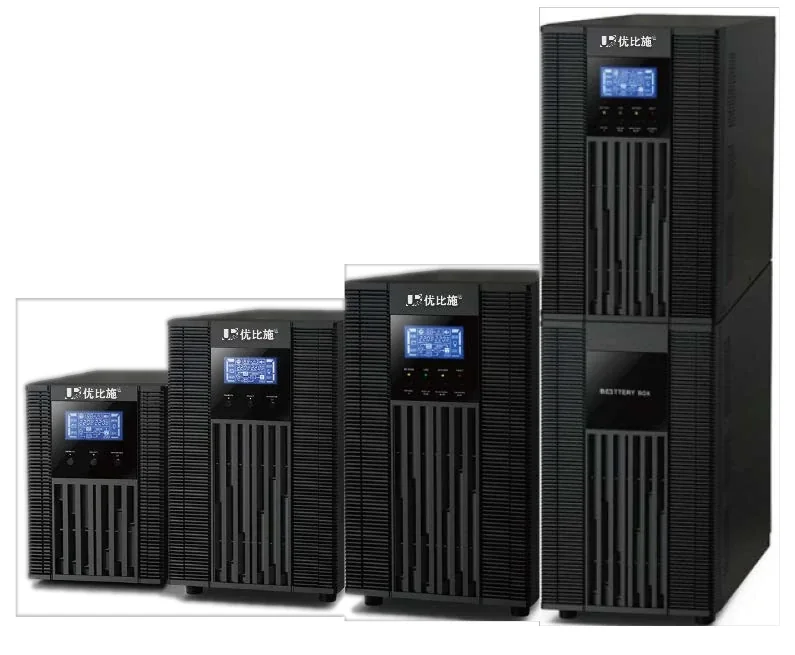
YT Series · 1–10 kVA
Single-Phase Online UPS
Double-conversion, 0 ms protection for servers, medical, and telecom loads.
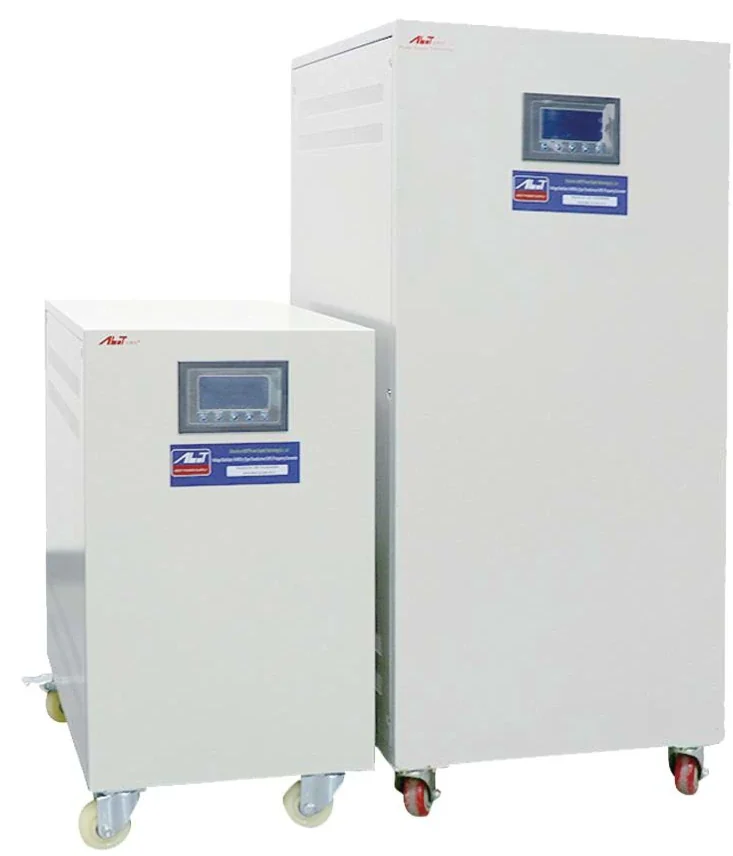
SVC Series · 0.5–100 kVA
Servo Voltage Stabilizer
±2% output from a 160–456 V input swing.
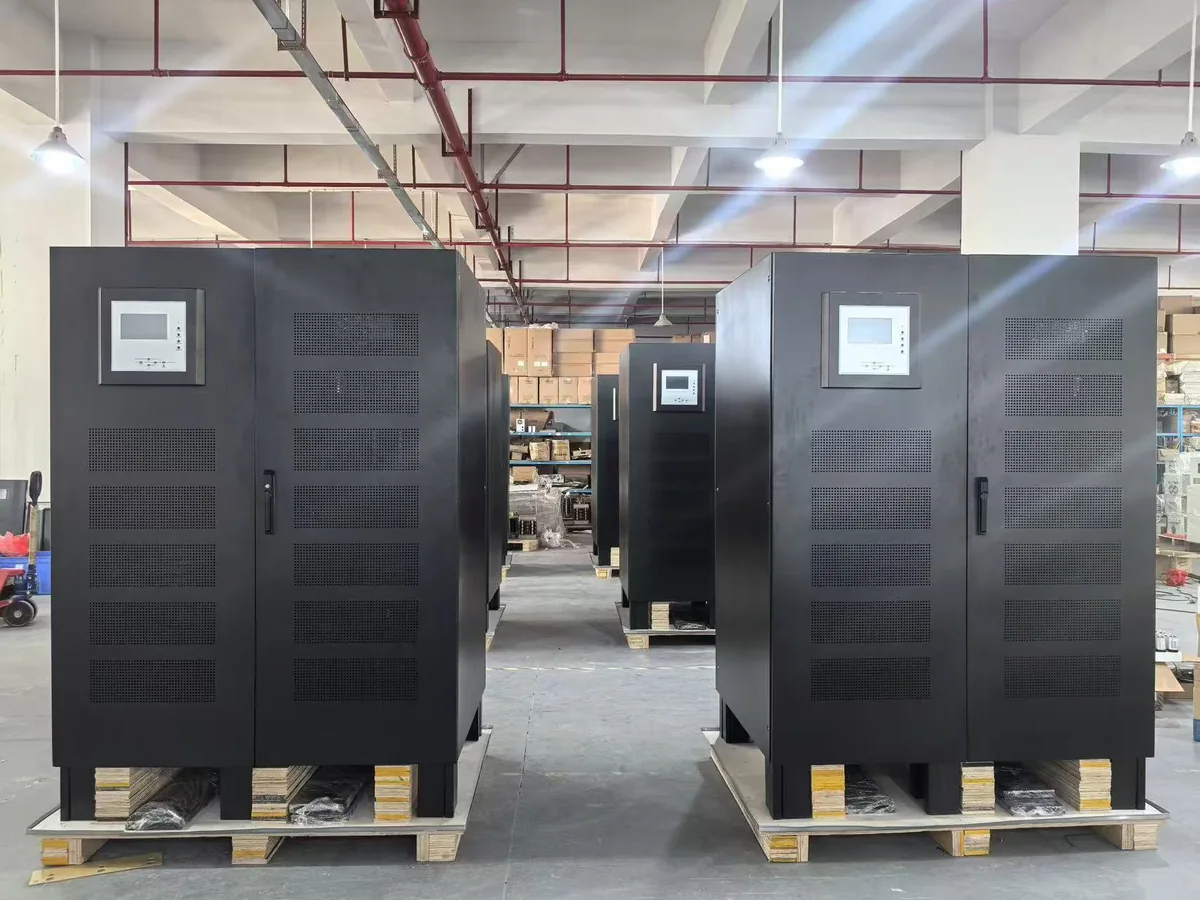
SVC-T Series · 10–100 kVA
Three-Phase Voltage Stabilizer
Independent phase regulation for unbalanced three-phase loads.
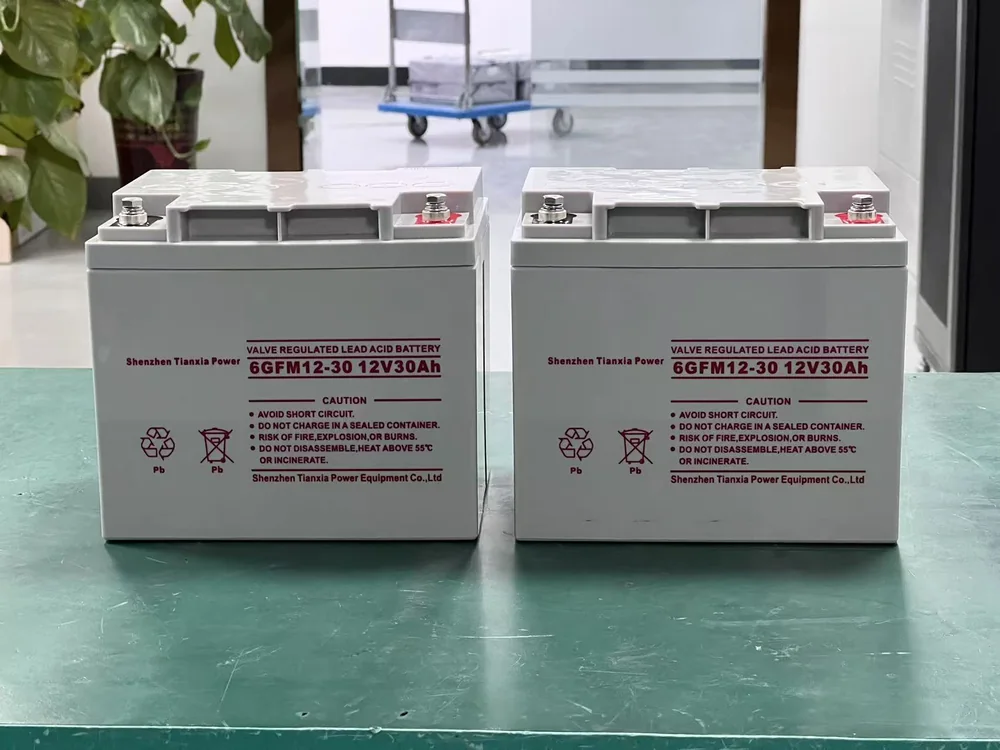
12 V blocks · 24–250 Ah
VRLA Battery
Maintenance-free sealed lead-acid blocks for UPS and telecom backup.
Questions from project buyers.
Project-specific answers. If your question is not here, send the load list and the site conditions.
Talk to an engineer What is the difference between a brownout and a blackout?
A brownout is a sustained undervoltage; a blackout is a complete loss of supply. An AVR corrects a brownout; a UPS with a battery carries the load through a blackout.
Do I need an AVR if I have a UPS?
If the input voltage falls outside the UPS input window, an AVR upstream can keep the UPS on mains and preserve the battery. For a stable input, the UPS alone may be enough.
Are your UPS systems 60 Hz?
Yes, the models can be configured for 50 Hz or 60 Hz. Confirm the frequency at the time of order; the output calibration and the fan settings are set accordingly.
What size UPS is best for a Philippine home?
A 1–3 kVA UPS covers a computer, router, and monitor. For a fridge or air conditioner, use an inverter or a larger system; a small UPS is not designed for motor loads.
Do you provide PS/ICC documents?
We provide the product test reports and model datasheets. The PS/ICC application is handled by the importer with the Bureau of Philippine Standards. Confirm the exact route before shipment.
Can I become a distributor in the Philippines?
Yes. We work with electrical distributors, IT integrators, and backup-power installers on a project-registration basis. Send your company profile, the product lines you carry, and the territories you cover; we will confirm the program terms and the model mix.
Send the load list. We will return the configuration.
Tell us the kW, the backup time, the phase, and the site country. You will get a capacity recommendation, a battery configuration, and the model sheet.
- Capacity and topology recommendation
- Battery bank and runtime estimate
- Model sheet and commercial offer
Request a configuration and quotation
Send the load list, backup time, and site conditions. We will return a capacity recommendation, battery configuration, and commercial offer.