
3 kVA UPS: the small-server and branch-office workhorse.
A 3 kVA UPS delivers 2.7 kW at 0.9 PF. Load tables, runtime estimates, rack and tower options, and selection guidance for server rooms.
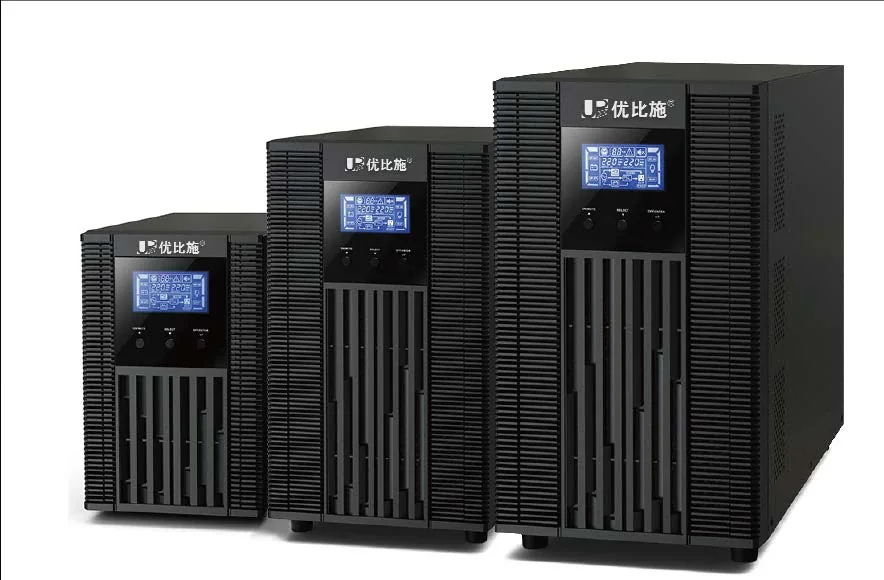
- Rated capacity
- 3,000 VA
- Real power at 0.9 PF
- 2,700 W
- Prudent continuous load
- 2,160 W
- Online transfer
- 0 ms
A 3 kVA UPS sits at the top of the small-system range. At 0.9 output power factor it delivers 2.7 kW, and at 80% loading it carries about 2.16 kW. That covers a small server rack, a branch-office network stack, a CCTV head-end, or a clinic reception area with several workstations.
The 3 kVA size is also where the choice between tower and rack becomes practical. A 2U–3U rack unit with external batteries fits a 42U cabinet; a tower unit with internal batteries is easier to place in a back office. The electrical topology is the same; the mechanical format is the decision.
What can a 3 kVA UPS run?
A 3 kVA online UPS can run a 10–15U server rack with two servers, a switch, a firewall, and a storage array; a branch office with 10–15 workstations and a network closet; a CCTV head-end with 16–32 cameras; or a clinic with reception, records, and diagnostic desk equipment.
It is not enough for a large laser printer, a central air-conditioning unit, a water pump, or a motor-driven door. Those loads need a dedicated circuit and a different starting-current calculation.
Typical 3 kVA load combinations
| Load | Typical running W | Recommended? | Runtime with internal battery |
|---|---|---|---|
| 2 servers + switch + storage | 1.2–1.8 kW | Yes | 5–8 min |
| 10–15 office workstations | 1.0–1.8 kW | Yes | 5–8 min |
| CCTV head-end + 32 cameras | 0.8–1.5 kW | Yes | 6–10 min |
| Clinic reception + records | 1.0–1.6 kW | Yes | 6–9 min |
| Laser printer / copier | 0.8–2.0 kW cyclic | Separate circuit | — |
| Small AC unit | 1.0–2.0 kW motor | No | — |
How much backup time can a 3 kVA UPS provide?
A standard 3 kVA online UPS with internal 12 V 7 Ah × 6 stores about 504 Wh. At 1.5 kW load and 85% efficiency, the ideal runtime is about 17 minutes; the high-rate discharge and usable depth bring it to roughly 5–8 minutes. That is a ride-through, not a long outage solution.
For 30–60 minutes, use a long-runtime 3 kVA with an external 72 VDC battery bank. For 2 hours or more, the battery bank becomes larger than the UPS; confirm the charger current and the room layout before committing.
3 kVA runtime examples at 1.5 kW
| Battery configuration | Nominal energy | Estimated runtime | Use case |
|---|---|---|---|
| 6 × 12 V 7 Ah internal | 504 Wh | 5–8 min | Shutdown / generator start |
| 6 × 12 V 26 Ah external | 1.87 kWh | 30–40 min | Branch office |
| 6 × 12 V 50 Ah external | 3.6 kWh | 60–80 min | Server room |
| 6 × 12 V 100 Ah external | 7.2 kWh | 2–2.5 h | Telecom / security |
Tower or rack for a 3 kVA UPS?
Choose tower if the UPS will sit in a back office or an electrical room and the battery can be internal. Choose rack if the load is already in a 19-inch cabinet and the site has a rail kit and front-to-back airflow. A rack unit also makes the battery pack easier to place in the same cabinet.
Check the rack depth. A 3 kVA online rack unit can be 500–600 mm deep, and the rear clearance for cables and airflow may exceed the usable depth of a shallow wall cabinet. Measure before ordering.
Which standards and documents are referenced on this page?
The table lists the model-specific standards and conformity documents a project buyer should ask for. Availability depends on the frame, the battery, and the destination market; request the document that names your model.
UPS standards and documents
| Reference | What it covers |
|---|---|
| IEC 62040-1 | UPS general and safety requirements |
| IEC 62040-2 | UPS electromagnetic compatibility (EMC) |
| IEC 62040-3 | UPS performance and test requirements |
| IEC 60896-21 / -22 | VRLA stationary battery type and performance tests |
| IEC 62619 | Safety of lithium cells and batteries for industrial use |
| UN38.3 / MSDS | Lithium battery transport test and material safety data |
| CE / RoHS | EU conformity and restricted-substance declaration |
| ISO 9001 | Manufacturing quality management system |
| SNMP / MODBUS | Remote monitoring and BMS interface |
| IP20 / IP21 | Cabinet ingress protection for indoor installation |
Certificates are issued against the exact model and configuration. See the certifications page for how to confirm scope and revision, or send the model to request the current document.
Match the page to a platform.
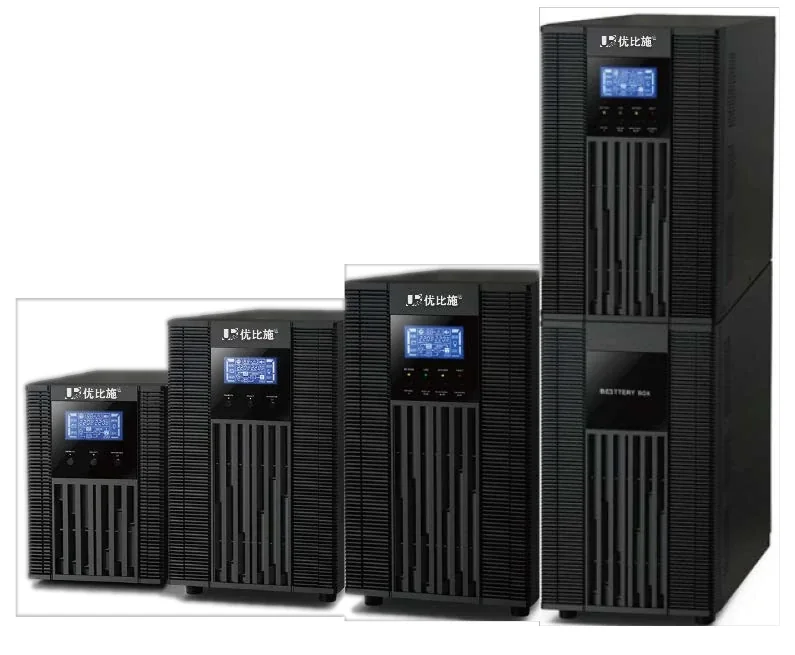
YT Series · 1–10 kVA
Single-Phase Online UPS
Double-conversion, 0 ms protection for servers, medical, and telecom loads.
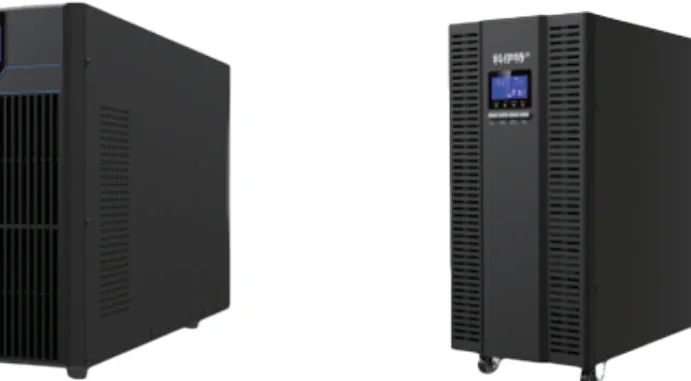
YT-R / UM / RT · 1–60 kVA
Rack-Mount UPS
Double conversion in 1U–3U, built for racks and edge rooms.
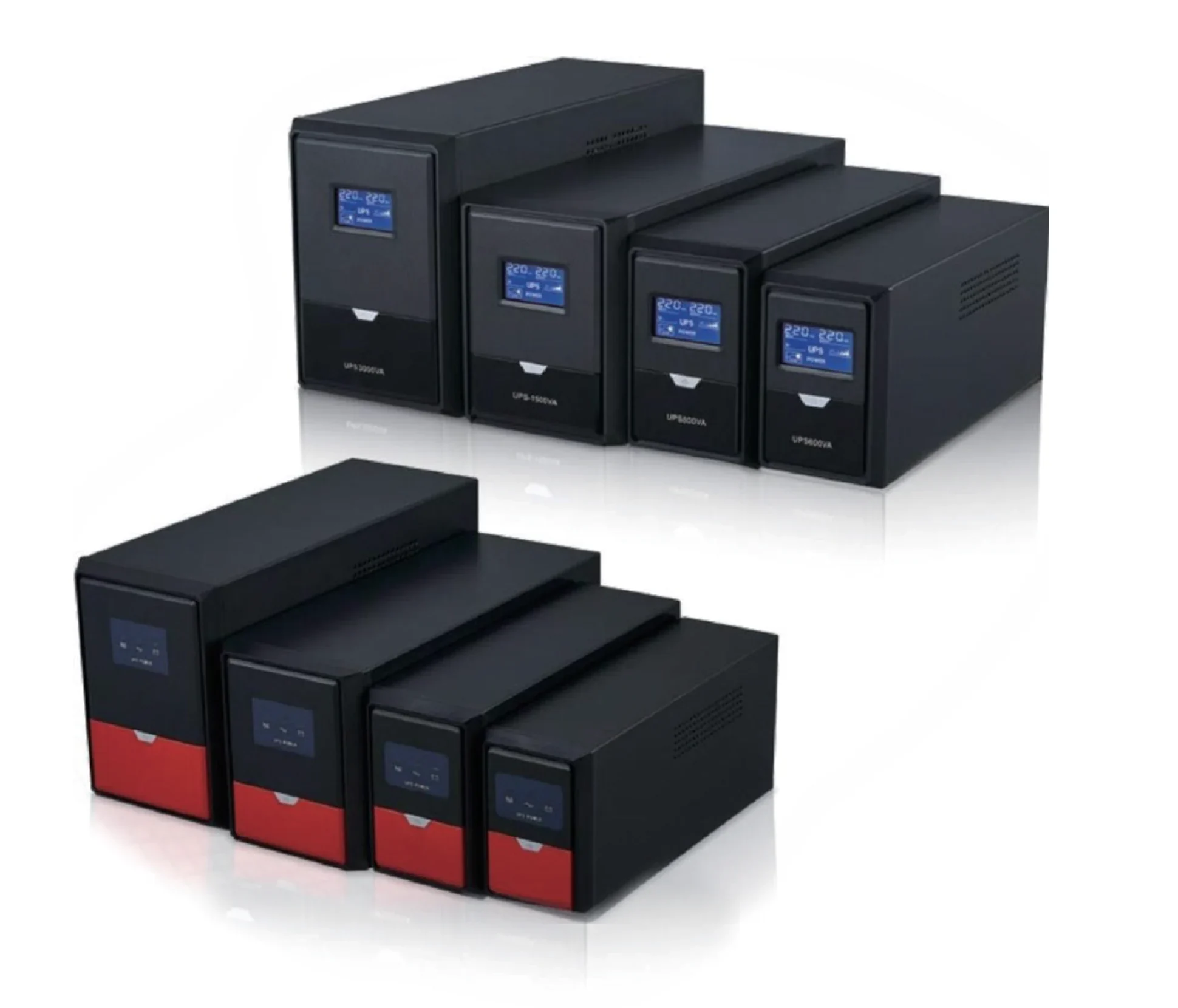
MT / HI11 / AP / AK · 500 VA – 5 kVA
Line-Interactive UPS
Compact, AVR-corrected backup for POS, security, and office loads.
Questions from project buyers.
Project-specific answers. If your question is not here, send the load list and the site conditions.
Talk to an engineer How many servers can a 3 kVA UPS support?
Two to four small servers, depending on the actual draw. Add the switch, storage, and monitors, and keep the total below about 2.1 kW for a prudent 80% load.
Can a 3 kVA UPS run a small office air conditioner?
No. Air conditioners are motor loads with high starting current. Use a separate circuit and a generator or a dedicated inverter/AC solution.
What is the difference between the tower and rack versions?
The topology and capacity are the same. The rack version is 2U–3U and uses external batteries; the tower version has internal batteries and a smaller footprint.
How long does the battery last?
At 1.5 kW, the internal battery gives about 5–8 minutes. For 30 minutes or more, specify an external battery bank and a long-runtime charger.
Can I add a second 3 kVA UPS for redundancy?
The standard 3 kVA models are not designed for parallel redundancy. For N+1, use a modular or parallel-capable three-phase frame, or a rack UPS with a static transfer switch.
Send the load list. We will return the configuration.
Tell us the kW, the backup time, the phase, and the site country. You will get a capacity recommendation, a battery configuration, and the model sheet.
- Capacity and topology recommendation
- Battery bank and runtime estimate
- Model sheet and commercial offer
Request a configuration and quotation
Send the load list, backup time, and site conditions. We will return a capacity recommendation, battery configuration, and commercial offer.