
UPS systems for Nigeria: sized for the grid you have, not the nominal one.
UPS sizing for Nigerian sites: 230 V 50 Hz supply, 160–260 V swings, generator changeover, load shedding runtime, and delivery to Lagos and Abuja.
- Nominal supply
- 230 V / 50 Hz
- Typical single-phase swing
- 160–260 V
- Common project sizes
- 1–200 kVA
- Delivery hubs
- Lagos / Abuja
A Nigerian site usually has three power sources — the distribution company, a generator, and increasingly a solar inverter — and the UPS has to survive the changeover between all of them. Sizing on the nominal 230 V is the most common mistake: the real supply swings between roughly 160 V and 260 V, and the UPS sees every one of those excursions on its input.
This page covers the site conditions, the sizes that fit homes, offices, clinics and factories, how the UPS interacts with a generator, and the runtime needed for load shedding. It is the UPS counterpart to the voltage stabilizer page for Nigeria.
What does a Nigerian site need from a UPS?
Three things at once: tolerance of a wide input window, enough battery to cover both short outages and scheduled load shedding, and clean output for equipment that restarts when the supply flickers. A unit specified only on capacity will meet the first two badly and the third not at all.
For offices and clinics, an online double-conversion UPS is the usual choice because it regenerates the waveform and gives 0 ms transfer across generator changeover. For homes and small shops, a line-interactive unit with a buck-boost stage is enough where the supply is not persistently below 190 V.
Site type, typical load and usual configuration
| Site | Typical load | UPS | Topology |
|---|---|---|---|
| Home / small shop | 0.5–2 kVA | 1–2 kVA | Line-interactive |
| Office / clinic | 3–10 kVA | 6–10 kVA | Online single-phase |
| Branch / server room | 10–20 kVA | 10–20 kVA | Online, rack or tower |
| Factory / plant | 30–200 kVA | 40–200 kVA | Online three-phase or modular |
How much runtime does load shedding require?
Load shedding is predictable in a way that faults are not, so runtime can be planned rather than guessed. The question is: how long between the supply going off and the generator starting, plus how long the generator needs to be off for maintenance, plus a margin. Most sites land between 30 minutes and 4 hours.
The table converts that into battery capacity for a typical office load. These are planning figures at 0.9 output power factor; the exact bank is confirmed against the model and the charger limit.
Battery capacity for a 10 kVA / 9 kW load
| Runtime | Battery energy needed | Typical configuration |
|---|---|---|
| 15 min | ≈ 2.6 kWh | Internal battery pack |
| 30 min | ≈ 5.3 kWh | Internal or one external string |
| 1 h | ≈ 10.6 kWh | External string, 192 VDC |
| 2 h | ≈ 21 kWh | Two strings, external cabinet |
| 4 h | ≈ 42 kWh | Dedicated battery room |
How does the UPS interact with a generator?
The generator fixes the outage but not the power quality. Its voltage and frequency move with load, and the changeover introduces a break of several seconds. An online UPS rides through the changeover on battery and then resynchronises to the generator; a line-interactive unit does the same but with a short transfer.
Size the generator for the UPS input current, not for the load. A UPS draws more on its input than it delivers on its output, and the charger adds to that after an outage. A generator sized only against the load will be overloaded every time the batteries recharge.
Where the generator is the primary source, put a servo stabilizer after the changeover. The UPS input window is narrower than a Nigerian generator’s voltage excursion under load steps.
How is the UPS sized for a Nigerian project?
Start from the measured load, not the connected load. Add the starting current for motor loads, apply a design margin of 20–25% for future growth, then choose the standard frame above the result. For three-phase sites, check phase balance: an unbalanced single-phase load can overload one phase while the total looks fine.
Where the measured voltage is persistently below 190 V, put a stabilizer in front of the UPS. Correcting the input keeps the UPS on mains instead of cycling on battery, which is the single largest cause of short battery life on weak-grid sites.
- Measure the actual load and the actual voltage range over a week
- Add motor starting current, not just running current
- Apply 20–25% design margin for growth
- Check phase balance on three-phase sites
- Add a stabilizer where the supply sits below 190 V
How is delivery to Nigeria handled?
Units ship in export cartons or wooden cases depending on frame size, by sea to Lagos or by air for urgent smaller units. The quotation states the Incoterm, the packing, the weight and dimensions, and the documents provided. Clearing and import duty are handled by the buyer’s agent unless a delivered term is agreed.
Confirm the site voltage, the phase configuration and the generator size before ordering. A unit built for 230 V single-phase will not run on a 415 V three-phase supply without a transformer, and that mistake is expensive to reverse after shipment.
Which standards and documents are referenced on this page?
The table lists the model-specific standards and conformity documents a project buyer should ask for. Availability depends on the frame, the battery, and the destination market; request the document that names your model.
UPS standards and documents
| Reference | What it covers |
|---|---|
| IEC 62040-1 | UPS general and safety requirements |
| IEC 62040-2 | UPS electromagnetic compatibility (EMC) |
| IEC 62040-3 | UPS performance and test requirements |
| IEC 60896-21 / -22 | VRLA stationary battery type and performance tests |
| IEC 62619 | Safety of lithium cells and batteries for industrial use |
| UN38.3 / MSDS | Lithium battery transport test and material safety data |
| CE / RoHS | EU conformity and restricted-substance declaration |
| ISO 9001 | Manufacturing quality management system |
| SNMP / MODBUS | Remote monitoring and BMS interface |
| IP20 / IP21 | Cabinet ingress protection for indoor installation |
Certificates are issued against the exact model and configuration. See the certifications page for how to confirm scope and revision, or send the model to request the current document.
Match the page to a platform.
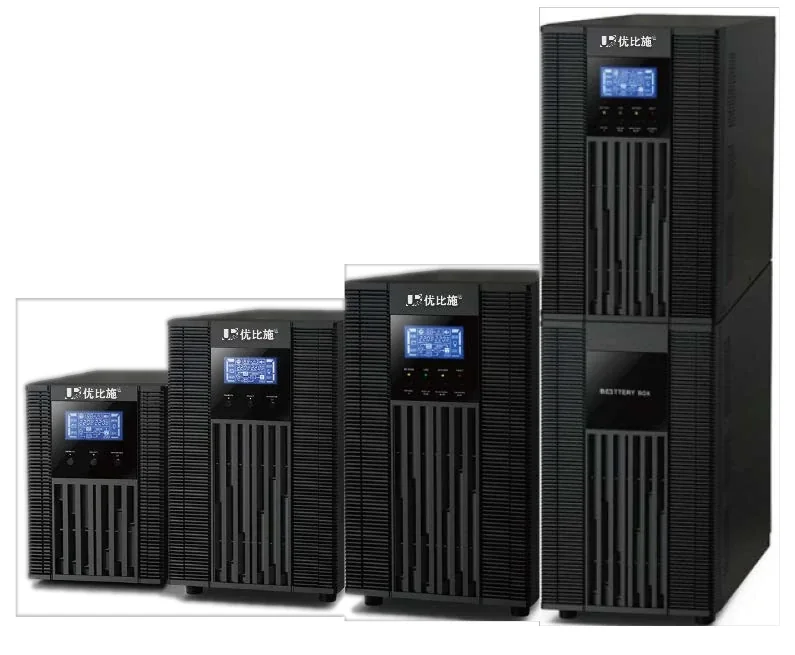
YT Series · 1–10 kVA
Single-Phase Online UPS
Double-conversion, 0 ms protection for servers, medical, and telecom loads.
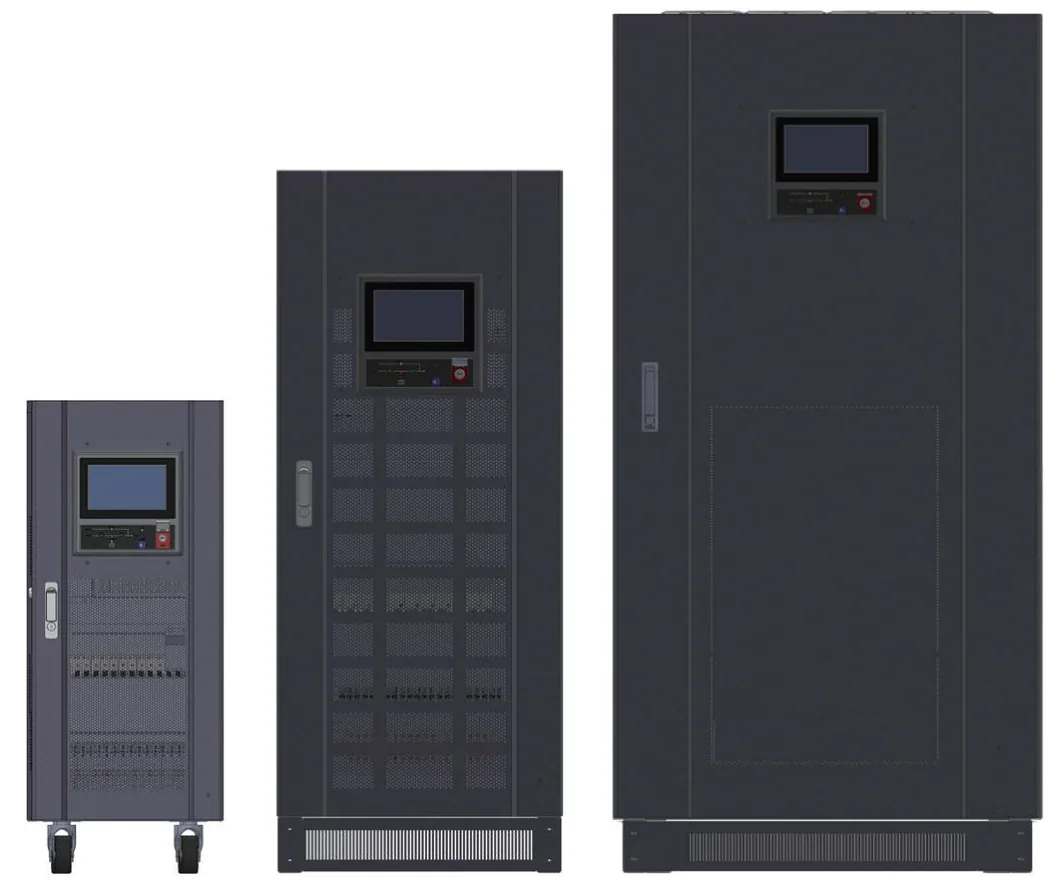
3YT / GP Series · 10–200 kVA
Three-Phase Online UPS
Three-phase double conversion for facility and industrial loads.
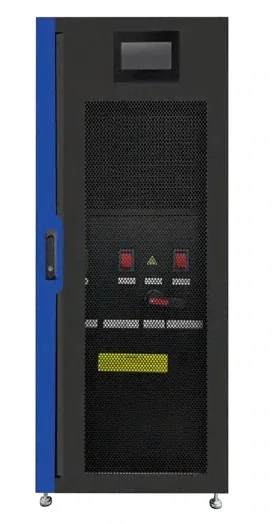
Modular frames · 10–600 kVA
Modular UPS
Scale capacity and redundancy one hot-swappable module at a time.
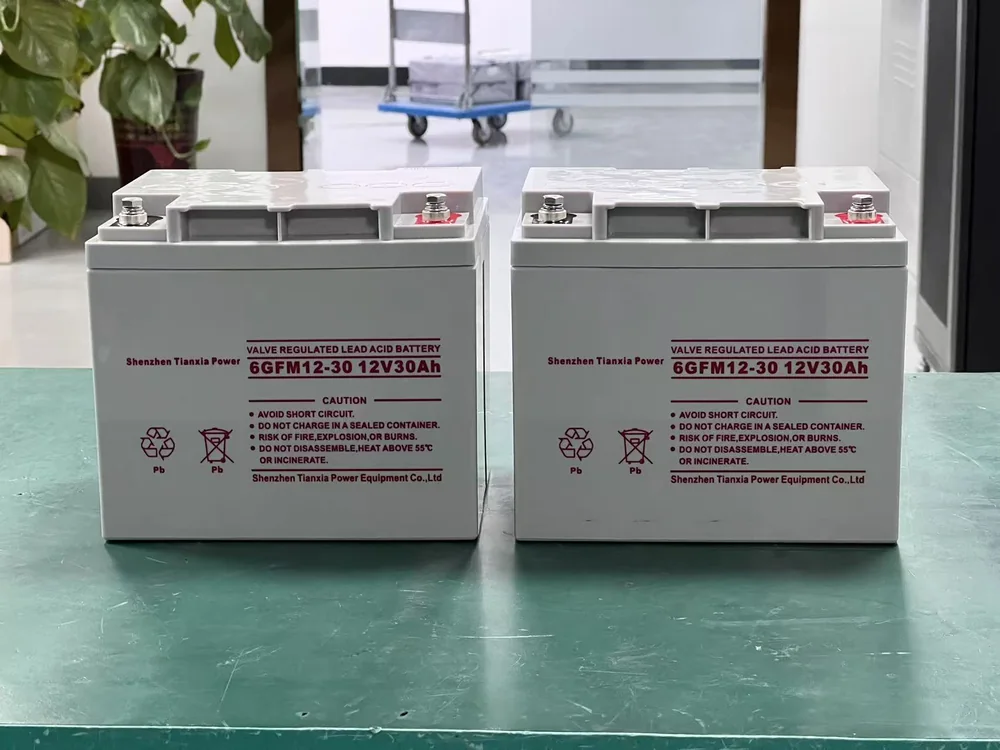
12 V blocks · 24–250 Ah
VRLA Battery
Maintenance-free sealed lead-acid blocks for UPS and telecom backup.
Questions from project buyers.
Project-specific answers. If your question is not here, send the load list and the site conditions.
Talk to an engineer What size UPS do I need for a Nigerian office?
Most offices land between 6 kVA and 20 kVA. Measure the actual load, add 20–25% for growth, and choose the next standard frame. For motor loads, size on starting current, not running current.
How long should a UPS last during load shedding?
Plan for the changeover gap plus the generator maintenance window: usually 30 minutes to 2 hours. Above two hours, confirm that the charger can recharge the bank before the next outage.
Can a UPS run on a generator?
Yes, if the generator is sized for the UPS input current including charging, not just the load. The UPS rides through the changeover on battery and then resynchronises to the generator.
Why do UPS batteries fail early in Nigeria?
Mostly because the UPS cycles on battery every time the voltage drops below its input window. A stabilizer ahead of the UPS keeps it on mains and is usually cheaper than the batteries it saves.
Do you deliver to Lagos and Abuja?
Yes. Sea freight to Lagos and air freight for smaller urgent units; the quotation states the Incoterm, packing and documents. Clearing is handled by the buyer’s agent unless a delivered term is agreed.
Send the load list. We will return the configuration.
Tell us the kW, the backup time, the phase, and the site country. You will get a capacity recommendation, a battery configuration, and the model sheet.
- Capacity and topology recommendation
- Battery bank and runtime estimate
- Model sheet and commercial offer
Request a configuration and quotation
Send the load list, backup time, and site conditions. We will return a capacity recommendation, battery configuration, and commercial offer.