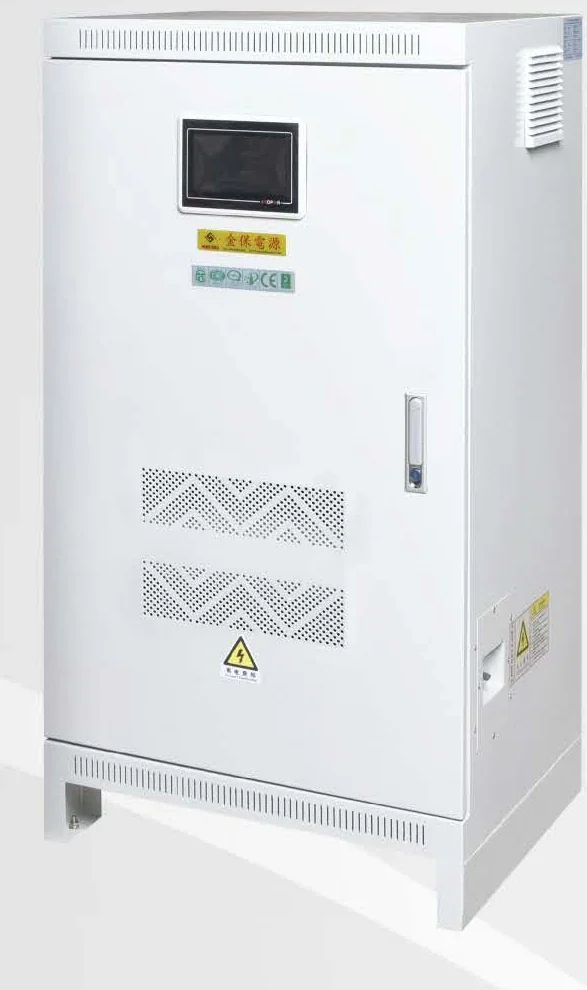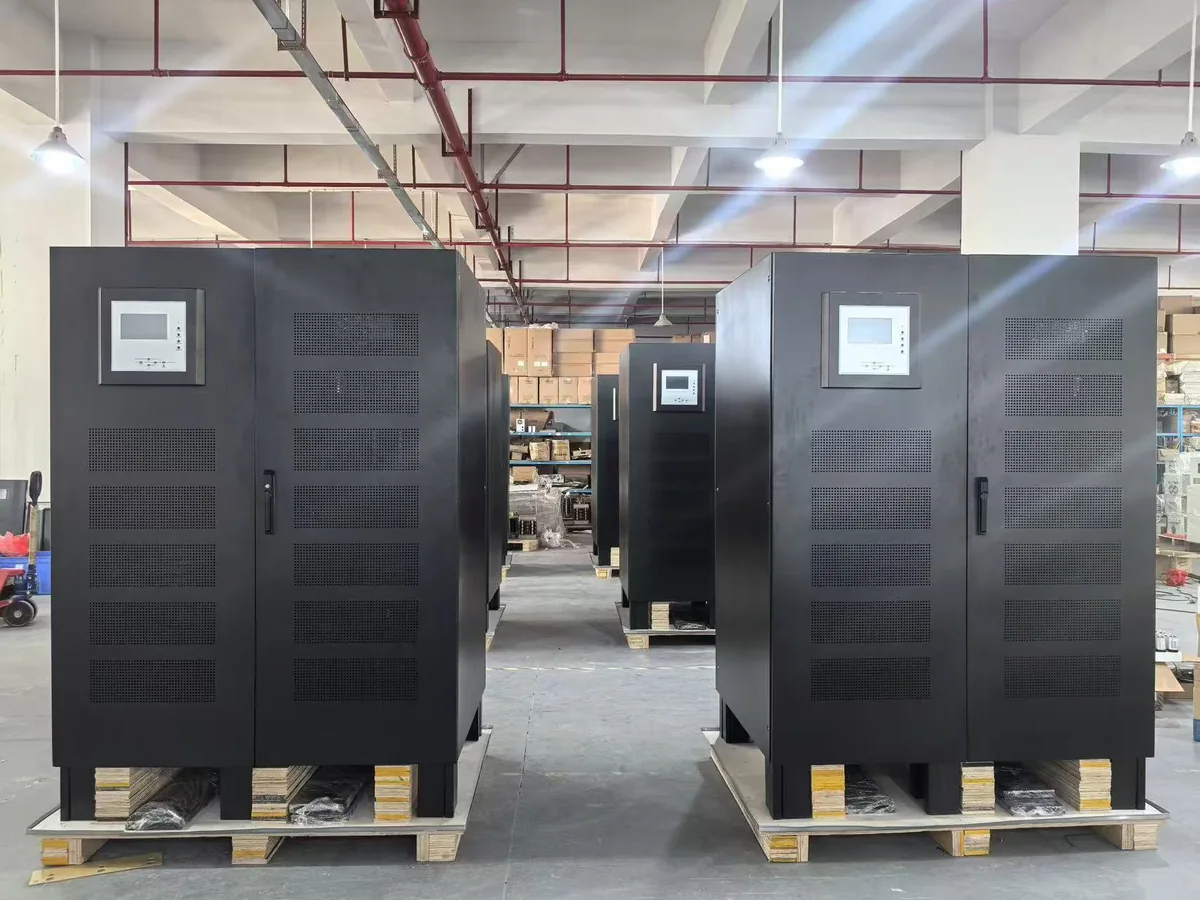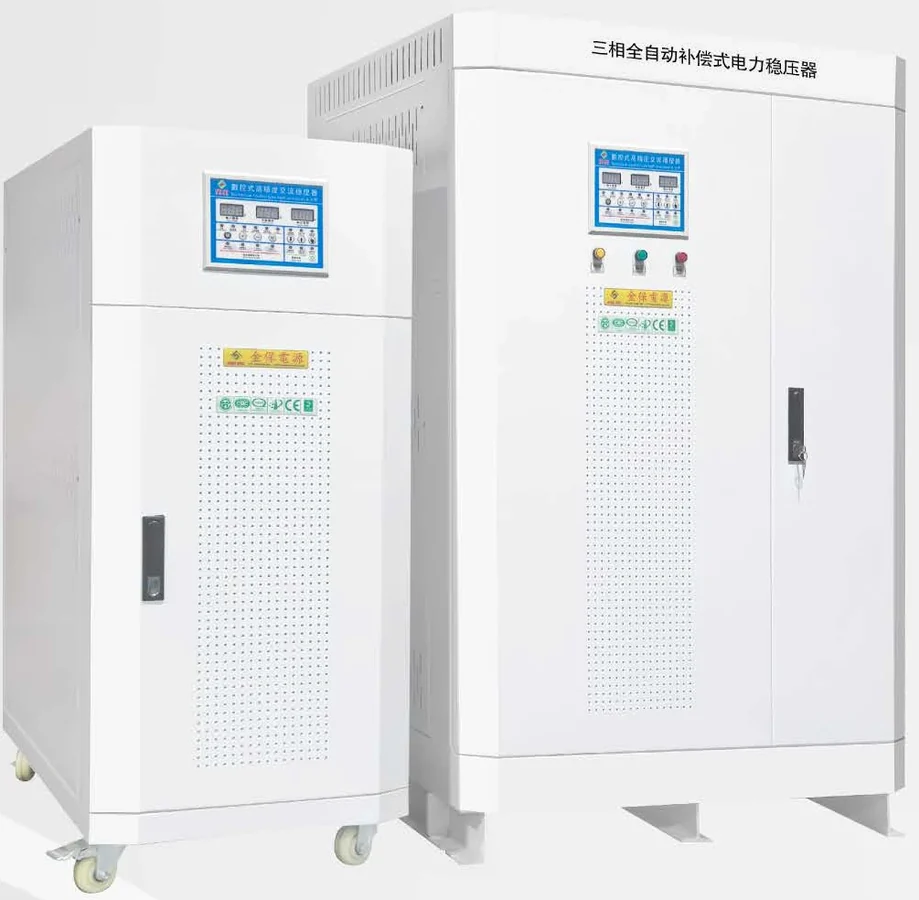
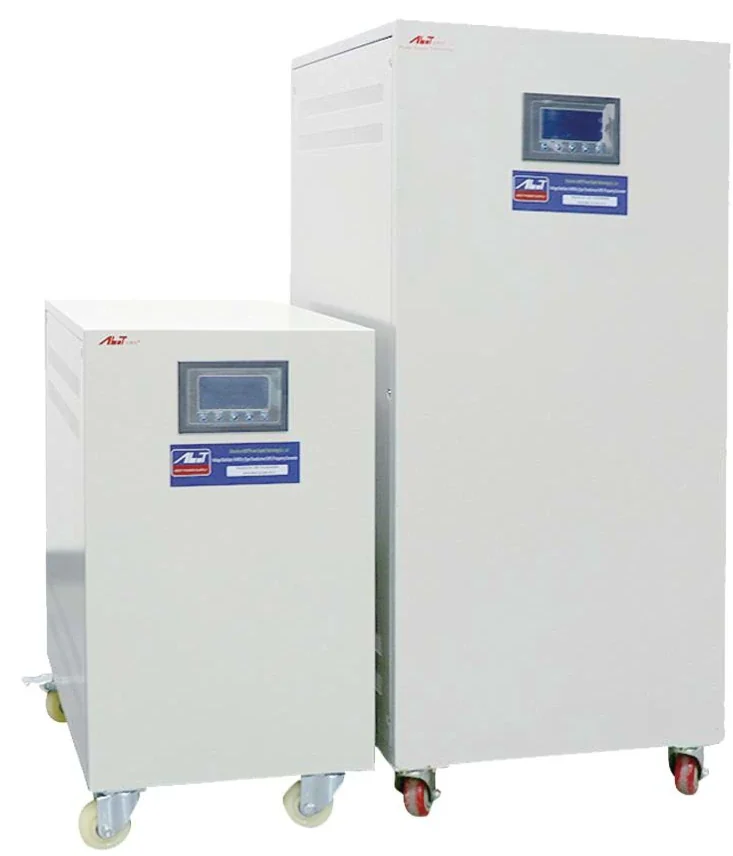
The three names are used interchangeably in tenders, catalogues and WhatsApp messages. That is convenient for conversation and dangerous for procurement, because a “voltage regulator” can be a 500 VA desktop box or a 2,000 kVA three-phase installation unit.
This guide separates the names from the mechanisms, shows where each device belongs in a power path, and gives a sizing method that works for both a single-phase workshop and a three-phase factory.
What is a voltage regulator?
A voltage regulator is a device that holds an output quantity within a defined band while the input changes. In a power system, the controlled quantity is usually the RMS voltage. The regulator measures the output, compares it with a setpoint and corrects the error by switching taps, moving a brush, or controlling a solid-state converter.
The term is broad. A generator’s automatic voltage regulator controls the exciter current. A mains voltage regulator controls the supply to a building or a machine. A UPS output regulator holds the inverter output at 220/230/240 V. The mechanism and the load matter more than the name.
What is a voltage stabilizer?
A voltage stabilizer is a packaged voltage regulator designed to supply a load. It usually includes an autotransformer, a correction mechanism, a controller, protection and an enclosure. The output is held at a nominal voltage, often with an accuracy of ±1% to ±3%.
In South Asia and Africa, “stabilizer” is the common commercial word. In Europe and North America, the same function is often sold as a voltage regulator or a power conditioner. The voltage stabilizer guide covers the product range; the voltage regulator page covers the alternative name and the applications.
What is an AVR?
AVR stands for automatic voltage regulator. In the UPS and stabilizer world, AVR usually describes the automatic correction stage: the controller monitors the output and adjusts the transformer ratio or the converter duty cycle without operator action.
There are two frequent sources of confusion. First, generator AVRs and mains AVRs share the abbreviation but not the hardware. Second, a UPS may describe its input or output stage as an AVR even when the UPS is a double-conversion unit. Always ask which stage is being regulated.
The automatic voltage regulator page explains the difference between generator AVR and mains AVR, and the industrial AVR range covers panel-mounted regulators for machines and production lines.
Are voltage regulator, stabilizer and AVR the same device?
They describe the same function at different levels of specificity. The table below is a practical guide, not a standards definition.
| Name | Most common meaning | Typical form | Where it appears |
|---|---|---|---|
| Voltage regulator | General function or a packaged unit | Desktop, panel, floor-standing | Tenders, generator controls, UPS output |
| Voltage stabilizer | Packaged mains regulator | Single-phase or three-phase cabinet | Shops, homes, workshops, factories |
| AVR | Automatic correction stage | Module, card or integrated stage | UPS, generator, stabilizer, industrial panel |
If the tender says “voltage regulator”, confirm the voltage, phase, kVA, input window, accuracy and application. If it says “stabilizer”, confirm the same items plus the enclosure and the protection class. If it says “AVR”, confirm whether the buyer means a mains regulator or a generator exciter.
Servo, contact and static AVRs: which mechanism?
The mechanism determines the input window, the accuracy, the response time and the maintenance.
| Mechanism | Input window | Accuracy | Maintenance | Best fit |
|---|---|---|---|---|
| Servo (motor-driven brush) | Wide, often 160–456 VAC | ±2–3% | Brush and track inspection | Unstable grid, industrial load |
| Contact-type (tap switching) | Narrower, often ±20% | ±1% | Contact wear inspection | Stable grid, sensitive electronics |
| Static / solid-state | Model-dependent | High | No moving parts | Clean rooms, low-maintenance sites |
A servo stabilizer is usually the right choice when the input voltage swings widely. A contact-type AVR is often the right choice when the grid is reasonably stable but the load needs tight accuracy. A static AVR is used where moving parts are unacceptable or where the response must be very fast.
For a direct comparison, read servo vs contact voltage stabilizer. The servo stabilizer range and the contact-type AVR pages list the available models.
Single-phase or three-phase?
Single-phase stabilizers are used for small loads: a shop, a clinic, a workshop, a single machine or a branch office. Three-phase stabilizers are used for three-phase loads, for a building with a three-phase supply, or for a project where the current must be balanced across phases.
Some three-phase models regulate each phase independently. That matters when the phases are unbalanced, which is common in weak rural networks. Other models use a single three-phase correction and assume a balanced load. Confirm the arrangement before ordering.
For a three-phase project, start with the three-phase stabilizer range and the three-phase stabilizer guide. For a large industrial installation, the SBW servo range and the ZBW static range cover higher capacities.
How do I size a stabilizer?
Sizing a stabilizer is similar to sizing a UPS, with one important difference: the stabilizer must carry the full load, including motors, heaters and non-electronic equipment. The UPS may carry only the critical electronics.
| Input | What to record | Effect on the selection |
|---|---|---|
| Total load | kVA or measured current | Sets the frame and the transformer |
| Starting load | Largest motor or compressor | Sets the overload and the frame margin |
| Input range | Minimum and maximum phase voltage | Sets the servo or contact type |
| Accuracy | Required output band | Sets the mechanism and the controller |
| Phase balance | Unbalanced phase voltage | Decides independent-phase regulation |
| Environment | Temperature, dust, altitude | Sets the enclosure and derating |
A practical first estimate is total running kVA × 1.25, then check the largest motor start. If the site voltage falls below the stabilizer’s input window, the output will not hold; the correct answer is a wider-window servo or a different tap range, not a larger kVA.
The capacity guide covers 5, 10 and 30 kVA selections. For a country-specific view, read the Nigeria stabilizer guide.
What a stabilizer cannot do
A stabilizer does not store energy. It cannot carry the load through an outage, and it cannot replace a UPS. It also does not remove every surge; a lightning surge can pass through the stabilizer and damage the load unless a surge protective device is installed.
A stabilizer also cannot fix a frequency problem. If the generator frequency moves outside the load’s input window, a voltage regulator will not correct it. The solution is a UPS with a wide frequency window or a generator with better speed control.
For surge protection, read the power surge protection guide and the surge protection solution page. For outages, use a UPS or an online three-phase UPS.
Selection checklist
Use this checklist before requesting a quotation.
- Measure the minimum and maximum input voltage at the distribution board for at least one week.
- Record the total load in kVA and the largest motor starting current.
- Decide whether the load needs ±1%, ±2% or ±3% accuracy.
- Confirm single-phase or three-phase, and whether each phase must be regulated independently.
- Check the ambient temperature, dust, altitude and installation room.
- Confirm the required protection: overvoltage, undervoltage, phase loss, phase sequence, overload and short circuit.
- Decide whether a bypass is required for maintenance.
- Confirm the documents required for the destination market.
The product catalogue and the full model index help compare frames. The sizing calculator is useful for the UPS side of the project; the stabilizer kVA still has to be checked against the full load.
How do I request a quotation?
Send the measured input range, the load list, the phase and voltage, the required accuracy and the site country. The engineering team can then select the mechanism, the frame and the protection scheme.
Use the supplier and quotation page for the commercial checklist, or the contact page for a technical review. The certifications page explains the model-specific documents, and the downloads page lists the usual document package.
A voltage regulator, a stabilizer and an AVR are not three different products in every project. They are three names for a voltage-correction function that must be matched to the measured grid, the load and the environment. The name is the beginning of the specification, not the end.