
1 kVA UPS: what it can actually run, and for how long.
A 1 kVA UPS delivers about 900 W at 0.9 PF. The real load list, runtime with internal and external batteries, and the right model for servers and POS.
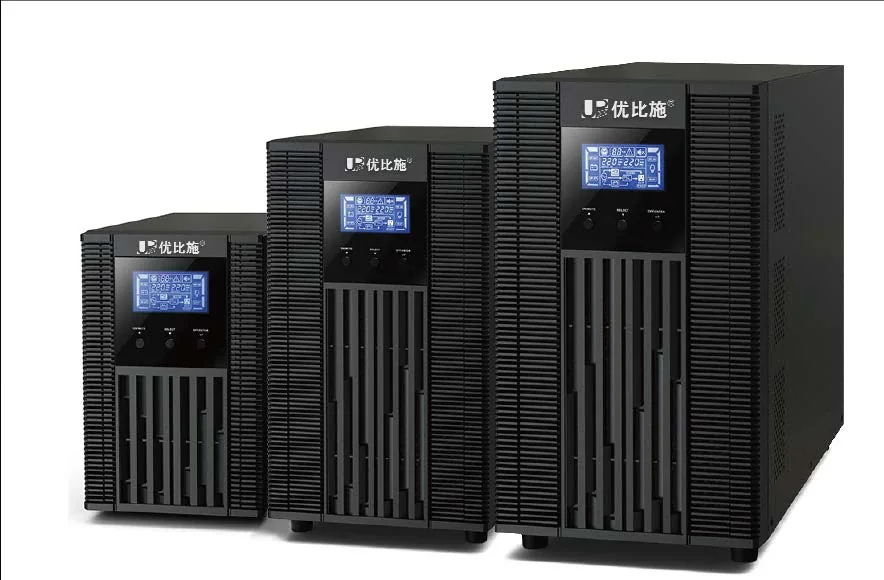
- Rated capacity
- 1,000 VA
- Real power at 0.9 PF
- 900 W
- Prudent continuous load
- 720 W
- Online transfer
- 0 ms
A 1 kVA UPS is a small system, but it is not a toy. At an output power factor of 0.9 it delivers 900 W, and at a prudent 80% loading it carries about 720 W continuously. That is enough for a small server, a network switch, a router, and a few access points, provided the load list is realistic.
The most common mistake is to size a 1 kVA UPS from the sum of the power-supply nameplates. A server with a 500 W power supply may draw 180 W; a monitor adds 30 W; a switch adds 40 W. Measure or use the actual load, then leave headroom for growth and battery aging.
What can a 1 kVA UPS run?
A 1 kVA online UPS can run a small server, a 24-port switch, a router, a firewall, and a few access points. It can run a desktop and two monitors, a POS terminal and receipt printer, or a small CCTV recorder with 4–8 cameras. It cannot run a laser printer, a fridge, a water pump, or a motor load.
Laser printers and motors have high inrush and cyclic loads that can overload a 1 kVA inverter even when the steady-state wattage looks acceptable. Keep those loads on a separate circuit.
Typical 1 kVA load combinations
| Load | Typical running W | Starts? | Runtime with internal 2 × 7 Ah |
|---|---|---|---|
| Small server + switch | 250–350 W | Yes | 8–12 min |
| Desktop + 2 monitors | 200–280 W | Yes | 10–15 min |
| POS + receipt printer | 150–250 W | Yes | 12–18 min |
| CCTV recorder + 8 cameras | 120–200 W | Yes | 15–25 min |
| Laser printer | 300–900 W cyclic | Not recommended | — |
| Fridge / pump | 300–800 W motor | No | — |
Runtime depends on battery age, temperature, and load. Internal 12 V 7 Ah × 2 is a short ride-through, not an overnight solution.
How long will a 1 kVA UPS last?
A 1 kVA online UPS with two internal 12 V 7 Ah blocks stores about 168 Wh. At 300 W load and 85% inverter efficiency, the ideal runtime is about 28 minutes, but the usable depth of discharge and the battery’s high-rate capacity reduce that to roughly 8–12 minutes. That is enough to ride through a generator start or shut down cleanly.
For 30–60 minutes, choose a long-runtime 1 kVA model with an external battery pack. A 100 Ah block at 24 V stores 2.4 kWh nominal, and at 300 W load gives roughly 5–6 hours of ideal runtime before derating; the actual runtime depends on the discharge curve.
1 kVA runtime examples at 300 W
| Battery configuration | Nominal energy | Estimated runtime | Use case |
|---|---|---|---|
| 2 × 12 V 7 Ah internal | 168 Wh | 8–12 min | Shutdown / generator start |
| 2 × 12 V 18 Ah external | 432 Wh | 25–35 min | Utility switching |
| 2 × 12 V 40 Ah external | 960 Wh | 60–80 min | Branch office |
| 2 × 12 V 100 Ah external | 2.4 kWh | 4–6 h | Telecom / security |
Which 1 kVA model should I choose?
For a server or network closet, choose an online 1 kVA with 0 ms transfer and pure sine wave output. For a POS or desktop, a line-interactive 1 kVA with AVR is sufficient and costs less. For a rack, choose the 1U or 2U rack version and confirm the depth and rail kit.
If the load is likely to grow, buy a 2 kVA or 3 kVA frame now and run it at 40–50% load. A UPS runs cooler and has more headroom for battery aging, and the incremental cost is smaller than replacing the unit later.
Which standards and documents are referenced on this page?
The table lists the model-specific standards and conformity documents a project buyer should ask for. Availability depends on the frame, the battery, and the destination market; request the document that names your model.
UPS standards and documents
| Reference | What it covers |
|---|---|
| IEC 62040-1 | UPS general and safety requirements |
| IEC 62040-2 | UPS electromagnetic compatibility (EMC) |
| IEC 62040-3 | UPS performance and test requirements |
| IEC 60896-21 / -22 | VRLA stationary battery type and performance tests |
| IEC 62619 | Safety of lithium cells and batteries for industrial use |
| UN38.3 / MSDS | Lithium battery transport test and material safety data |
| CE / RoHS | EU conformity and restricted-substance declaration |
| ISO 9001 | Manufacturing quality management system |
| SNMP / MODBUS | Remote monitoring and BMS interface |
| IP20 / IP21 | Cabinet ingress protection for indoor installation |
Certificates are issued against the exact model and configuration. See the certifications page for how to confirm scope and revision, or send the model to request the current document.
Match the page to a platform.
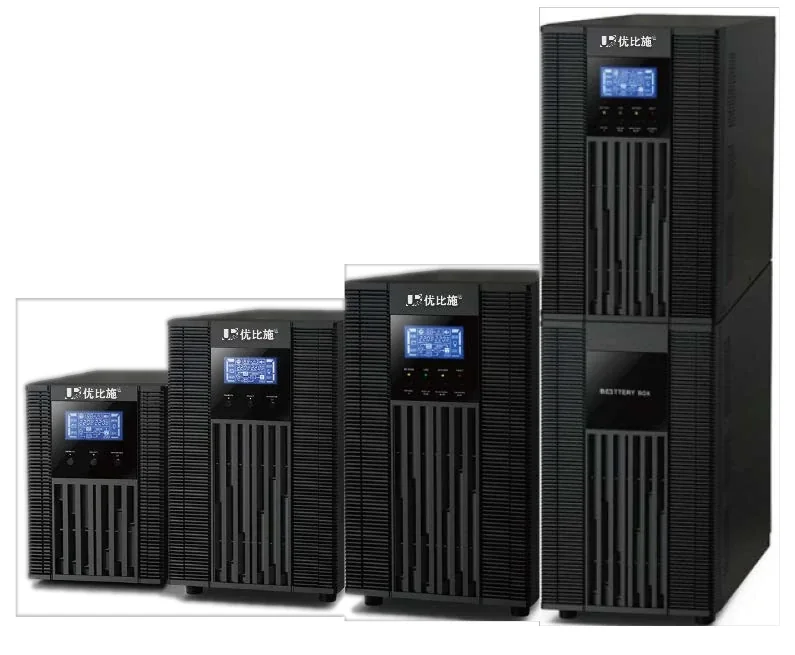
YT Series · 1–10 kVA
Single-Phase Online UPS
Double-conversion, 0 ms protection for servers, medical, and telecom loads.
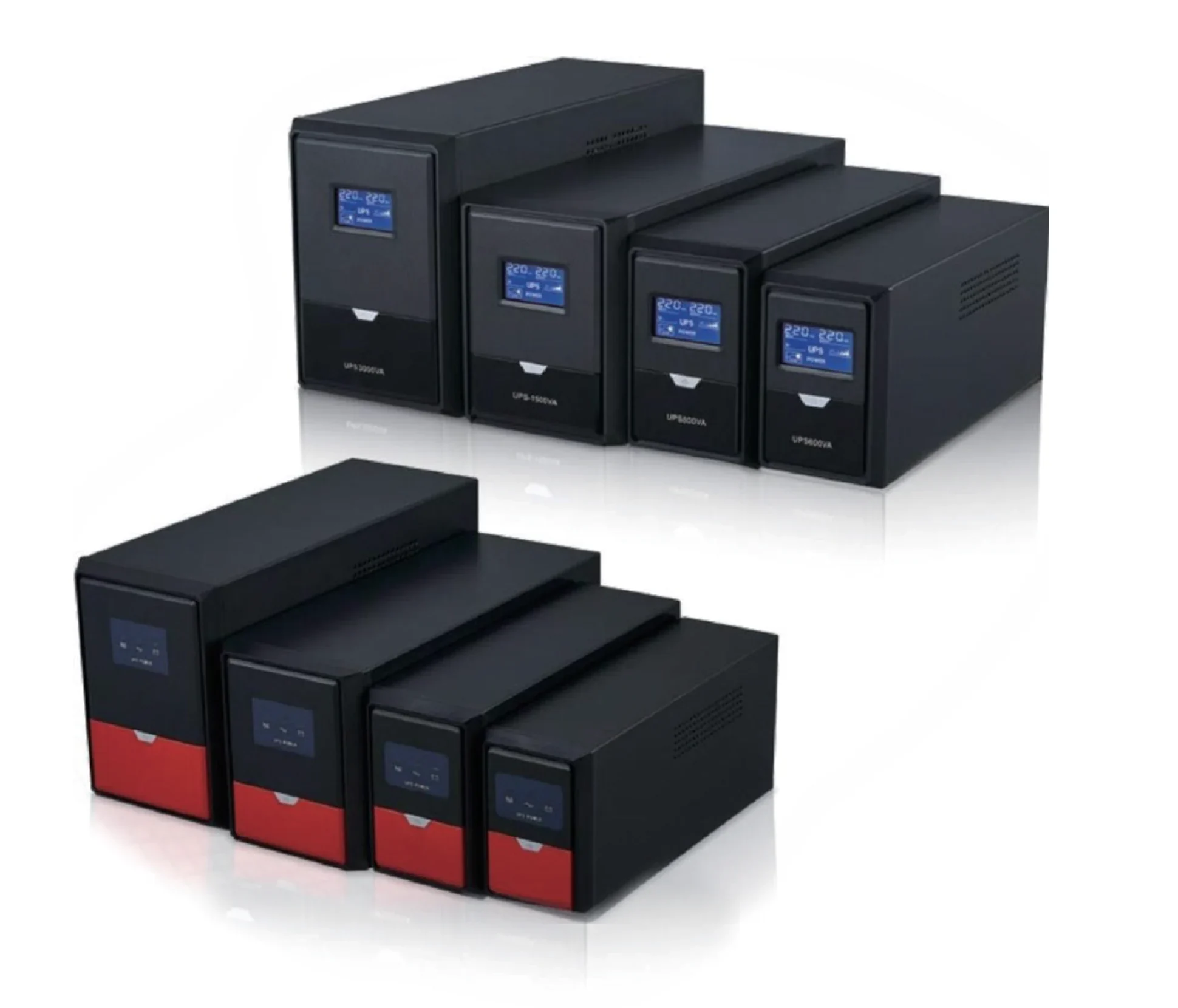
MT / HI11 / AP / AK · 500 VA – 5 kVA
Line-Interactive UPS
Compact, AVR-corrected backup for POS, security, and office loads.
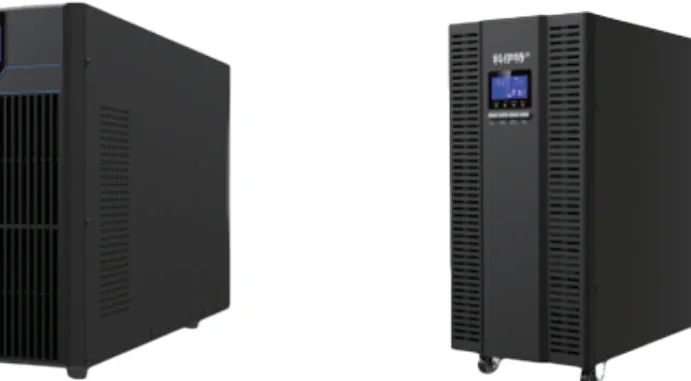
YT-R / UM / RT · 1–60 kVA
Rack-Mount UPS
Double conversion in 1U–3U, built for racks and edge rooms.
Questions from project buyers.
Project-specific answers. If your question is not here, send the load list and the site conditions.
Talk to an engineer Is a 1 kVA UPS enough for a server?
It depends on the server’s actual draw. A small server with one CPU and 4–8 drives may draw 250–350 W, which fits. A dual-CPU server with a GPU or many drives can draw 600–900 W and needs a 2–3 kVA unit.
Can a 1 kVA UPS run a laser printer?
Not recommended. Laser printers have high inrush and cyclic heating loads. Put the printer on a separate circuit or use a larger UPS with a higher overload rating.
How long does the internal battery last?
About 8–12 minutes at 300 W, depending on battery age and temperature. For 30 minutes or more, use an external battery pack and a long-runtime model.
Can I replace the internal battery myself?
Yes on most models, using the same voltage and capacity blocks. Follow the manufacturer’s procedure, disconnect the battery breaker, and recycle the old blocks. Do not mix old and new batteries in one string.
Does a 1 kVA UPS support remote monitoring?
Most online 1 kVA models include RS-232 or USB, with an optional SNMP card. Confirm the option before ordering if the site is unmanned.
Send the load list. We will return the configuration.
Tell us the kW, the backup time, the phase, and the site country. You will get a capacity recommendation, a battery configuration, and the model sheet.
- Capacity and topology recommendation
- Battery bank and runtime estimate
- Model sheet and commercial offer
Request a configuration and quotation
Send the load list, backup time, and site conditions. We will return a capacity recommendation, battery configuration, and commercial offer.